Trump Ally Says Midterms Far From Over
Former Trump adviser Roger Stone is warning political commentators against declaring the November midterm elections decided before voters have their say.
During an appearance on Newsmax, Stone challenged predictions that Democrats are headed toward a major “blue wave,” arguing that today’s political environment can change dramatically in a matter of days.
With control of Congress at stake, both Republicans and Democrats are watching closely as polling, campaign spending, voter concerns and major national events continue to shape the midterm election landscape.
Stone’s message was straightforward: several weeks can be an eternity in modern American politics.
“Anybody who says they can tell you definitively” which party will control the House and Senate is underestimating how quickly elections can change, Stone said.
He argued that nonstop television coverage, social media, breaking news and unexpected world events have created a political environment where public attention can shift almost overnight.
Stone Says Midterm Predictions Could Change Quickly
Stone made his comments while discussing polls showing Democrats performing strongly on the generic congressional ballot and competing closely in several important races.
Generic congressional polling asks voters whether they would generally prefer a Republican or Democratic candidate for Congress.
While such surveys can provide a broad picture of the national political mood, they do not determine the outcome of individual House or Senate races.
Congressional elections are ultimately decided state by state and district by district.
That could become particularly important in 2026 because control of the House may depend on a relatively small group of closely contested congressional districts.
Stone believes that makes sweeping predictions about a Democratic wave premature.
His argument is that the political environment could look very different by Election Day than it does today.
Trump Expected to Campaign in Key Battleground Races
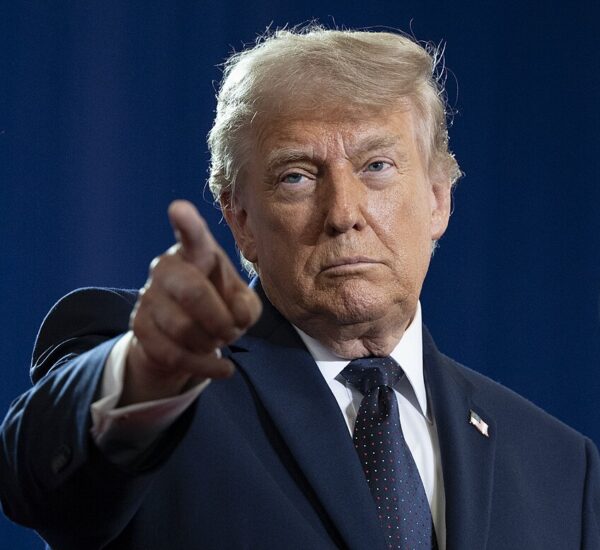
President Donald Trump could also play a major role during the closing weeks of the campaign.
Stone said Trump intends to campaign heavily in competitive races rather than focusing on Republican incumbents who are already considered relatively safe.
According to Stone, roughly 35 to 40 congressional districts could become especially important in determining which party controls the House.
Trump’s appearances could bring additional attention to those contests and potentially increase voter turnout among his supporters.
Presidential campaigning has long been an important part of midterm election strategy.
Presidents frequently travel to competitive states and congressional districts in an effort to energize their party’s voters, raise money and attract media coverage for candidates.
Stone expects Trump to follow that traditional strategy aggressively during the final stretch before Election Day.
Foreign Policy Could Reshape the Political Debate
Stone also pointed to international events as another major wildcard.
He suggested that an unexpected breakthrough involving a cease-fire or another significant foreign-policy development could quickly change the national political conversation.
His comments reflect the unusually unpredictable environment surrounding modern elections.
Developments involving the Middle East, Russia and other international conflicts can dominate headlines and temporarily push domestic political issues into the background.
Stone argued that the president’s ability to influence foreign policy gives Trump an unusually powerful platform heading into the midterms.
“Just think theoretically, how would the election be changed if the president announced a cease-fire?” Stone asked during the interview.
His point was not that such an announcement is guaranteed, but that major events can rapidly change what voters are discussing.
Economy Remains an Important Midterm Issue
Foreign policy is only one factor that could influence voters.
Economic concerns traditionally play an important role in midterm elections, particularly among older Americans and households living on fixed or carefully managed incomes.
Voters are likely to continue paying attention to issues including grocery prices, gasoline costs, housing expenses, taxes, retirement security and the broader direction of the economy.
Republicans and Democrats are offering very different explanations for current economic conditions and different proposals for addressing them.
Those debates could become increasingly important as Election Day approaches.
For many voters, national political controversies may matter less than the everyday question of whether their household finances are improving or becoming more difficult to manage.
House Control Could Come Down to Just a Few Districts
Stone emphasized that control of the House may ultimately be decided by a relatively small number of competitive districts.
That is an important distinction when looking at national polling.
A political party can lead the nationwide congressional vote while still struggling to win enough individual districts to secure a House majority.
District boundaries, local candidates, voter turnout and regional political differences all play a role.
Stone claimed Republicans are currently performing well in many of the races he considers most important, although he acknowledged some advantages may be narrow.
That assessment remains his interpretation of the political landscape rather than a guarantee of what will happen in November.
Close races can shift as campaigns spend more money, candidates debate, political advertisements increase and undecided voters make their final choices.
Republicans and Democrats Prepare for the Final Push
Both parties have powerful incentives to compete aggressively through Election Day.
Republicans are attempting to protect their congressional position while highlighting Trump’s agenda and arguing that GOP control is necessary to advance the president’s priorities.
Democrats are working to gain seats by focusing on areas where they believe voters are dissatisfied with Republican policies or the direction of the country.
Millions of dollars are expected to continue flowing into competitive congressional races as political groups attempt to influence turnout and persuade undecided voters.
Campaign advertising is also likely to intensify as Election Day approaches.
For Americans watching from home, that means the political environment could become even louder during the closing weeks of the campaign.
Polls Are a Snapshot, Not an Election Result
One of Stone’s central arguments is worth remembering regardless of political party: polls measure public opinion at a particular moment.
They are not election results.
Polling can help identify trends, voter concerns and competitive races, but polls cannot predict turnout with certainty.
Election outcomes depend on who actually votes.
That distinction becomes especially important during midterm elections, when turnout patterns can differ significantly from presidential election years.
Older Americans historically represent an important segment of the midterm electorate, making issues such as inflation, Social Security, Medicare, taxes, public safety and national security particularly prominent in political campaigns.
Both parties will be competing for those voters during the final weeks.
November Midterms Remain Highly Competitive
Stone’s warning ultimately centers on uncertainty.
Political commentators may point to national polls, fundraising numbers or recent election results as evidence that one party has momentum.
But the remaining campaign could still bring unexpected developments.
A major economic report, international crisis, diplomatic breakthrough, presidential announcement or political controversy could quickly dominate headlines.
Trump’s planned campaigning in closely contested races could add yet another factor.
For Republicans, the challenge will be motivating supporters to vote while defending vulnerable congressional seats.
For Democrats, the challenge will be converting favorable national polling into enough individual victories to capture congressional seats.
The final result will not be determined by television predictions, political consultants or early polling.
It will be determined by voters when they cast their ballots in November.
Until then, Stone argues that anyone confidently predicting a sweeping victory for either party may be getting ahead of the voters themselves.