Supreme Court Rejects Trump’s Map Again
The U.S. Supreme Court has stepped into Missouri’s closely watched congressional redistricting battle, leaving the state’s previous congressional map in place for the November 2026 midterm elections.
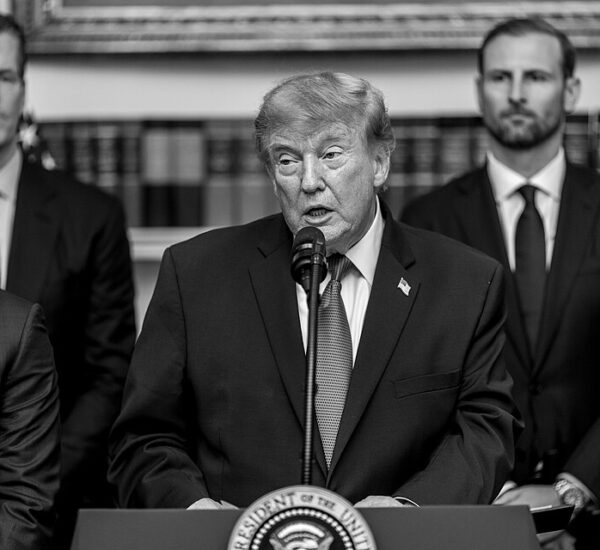
The Friday decision prevents Missouri from switching back to a Republican-backed congressional map approved in 2025 and supported by President Donald Trump.
With absentee voting already underway, the Supreme Court concluded that another last-minute change to congressional district boundaries could create serious problems for voters and election officials.
The ruling brings greater clarity to a complicated legal battle that has moved repeatedly between Missouri state courts, federal courts and the nation’s highest court.
Supreme Court Keeps Missouri’s 2022 Congressional Map
Missouri will conduct the November congressional election using the district boundaries that were previously used during the 2022 and 2024 election cycles.
The Supreme Court halted a federal appeals court decision that would have revived the newer 2025 map.
No dissents were publicly noted.
The justices said changing the districts again after voting had begun risked disrupting the election.
The decision leaves intact an earlier Missouri Supreme Court ruling that prevented the 2025 congressional map from being used while voters consider a referendum concerning the redistricting plan.
For Missouri voters, the immediate result is straightforward: the older congressional boundaries will remain in place for the November election.
Why Missouri Republicans Wanted the New Map
Missouri Republicans currently control six of the state’s eight seats in the U.S. House of Representatives.
The Republican-controlled state legislature approved new congressional boundaries in 2025 with support from Trump and Republican Gov. Mike Kehoe.
The revised map could have improved Republican prospects in a seventh congressional district.
That possibility made Missouri an important part of the nationwide battle over congressional redistricting ahead of the 2026 midterms.
Control of the U.S. House can hinge on a relatively small number of competitive districts, making changes to even a handful of congressional seats nationally significant.
Emanuel Cleaver’s Kansas City District Was Major Target of Changes
One of the biggest changes involved Missouri’s 5th Congressional District, represented by longtime Democratic Rep. Emanuel Cleaver.
The revised map removed portions of Kansas City from Cleaver’s district and placed them into neighboring districts represented by Republicans.
The remaining 5th District was extended farther east into rural areas where Republican candidates have historically performed more strongly.
The changes substantially altered the makeup of the district.
An Associated Press analysis estimated that roughly 59% of potential voters under the revised boundaries would have been new to Cleaver’s district.
The restructuring also affected voters elsewhere in Missouri because changing one district often requires adjusting neighboring congressional boundaries.
Missouri Already Held Its Primary Under the New Map
One of the most unusual elements of the dispute is that Missouri conducted its August 2026 congressional primary using the newer map.
That means candidates competed for party nominations using congressional boundaries that will no longer govern the November general election.
Cleaver was unopposed in the Democratic primary.
Republican state Sen. Rick Brattin won a six-candidate Republican primary and will face Cleaver in November.
Both candidates remain on the general election ballot, but they will compete under the restored 2022 district boundaries.
The situation became a central issue in the federal court battle over which map Missouri should use.
Federal Appeals Court Had Backed the Republican Map
Just days before the Supreme Court’s latest action, a three-judge panel of the 8th U.S. Circuit Court of Appeals sided with supporters of the newer congressional map.
The appeals court concluded that holding the primary election under one set of congressional boundaries and conducting the general election under another raised constitutional concerns.
The judges directed a lower federal court to block Missouri from using anything other than the 2025 map.
However, they delayed implementation of their decision long enough for the case to return to the Supreme Court.
The Supreme Court ultimately stopped that ruling from taking effect for the November election.
More Than One Million Missouri Voters Faced District Changes
The fight over Missouri’s congressional map affected a significant share of the state’s electorate.
More than one million potential voters had been moved between congressional districts under the revised boundaries.
For some residents, the repeated court decisions meant uncertainty over which congressional district they lived in and which candidates would ultimately appear on their ballots.
Absentee voting began using the older 2022 congressional districts while the court battle continued.
Some election officials had expressed concerns about the practical challenges of changing the boundaries again after voting procedures were already underway.
The Supreme Court’s decision removes that immediate uncertainty.
Citizen Referendum Changed the Redistricting Fight
A citizen-led referendum effort became one of the most important parts of the legal dispute.
Opponents of the 2025 congressional map collected signatures in an effort to let Missouri voters decide whether the redistricting legislation should take effect.
Republican Secretary of State Denny Hoskins rejected the petition in August, arguing that Missouri law did not allow a referendum challenging congressional redistricting legislation.
The Missouri Supreme Court disagreed.
On September 3, 2026, the state Supreme Court ruled that the referendum petition was valid and ordered election officials to place the matter before voters.
The court also prevented state officials from using the 2025 map for the November general election.
That ruling set off another round of federal court challenges.
Supreme Court Intervened More Than Once
The legal battle became particularly complicated in September.
After the Missouri Supreme Court ruled against use of the newer map, supporters of the plan turned to federal court.
A federal district judge issued an order favoring use of the 2025 boundaries.
The U.S. Supreme Court subsequently blocked that order.
The dispute continued when the 8th Circuit Court of Appeals ruled that the newer districts should be used.
That decision prompted yet another emergency appeal to the Supreme Court.
Friday’s action resolves the immediate question of which congressional districts will govern the November election.
Missouri Redistricting Triggered Numerous Lawsuits
Missouri’s congressional map has generated extensive litigation in both state and federal courts.
At least 16 lawsuits have been connected to the redistricting fight.
Earlier challenges raised questions about whether lawmakers could redraw congressional districts between censuses and whether the newer boundaries satisfied state requirements governing district design.
The 2025 map survived several of those challenges.
The referendum battle ultimately proved more consequential for the 2026 election.
The Missouri Supreme Court ruled that the citizen petition was valid, preventing the newer map from taking effect while the referendum remains unresolved.
What the Supreme Court Decision Means for Republicans
Republicans will enter the November election holding six of Missouri’s eight U.S. House seats.
The 2025 redistricting plan could have provided the party with a stronger opportunity to compete for a seventh seat, particularly through the changes made to Cleaver’s Kansas City-area district.
Those new boundaries will not be used this November.
Instead, Republican and Democratic candidates will compete under Missouri’s previous congressional map.
The decision does not determine who will win any congressional race. It determines only the district boundaries under which Missouri voters will make those choices.
What Missouri Voters Need to Know
For voters, the Supreme Court ruling settles the most immediate question surrounding the controversy.
Missouri’s congressional election in November 2026 will use the same district boundaries that were used in the 2022 and 2024 elections.
Candidates selected during August’s primary election will remain on the ballot even though that primary was conducted under different district boundaries.
Missouri voters will also have an opportunity to weigh in on the disputed redistricting plan through the referendum process.
The controversy illustrates how consequential congressional maps can become when control of the House is closely divided.
For now, however, the months-long battle over which Missouri congressional map will govern the 2026 general election has an answer: voters will cast their ballots under the state’s previous district lines.