This was uncalled for.
Republican Rep. Thomas Massie is delivering a grim prediction for President Donald Trump and the GOP as the 2026 midterm elections draw closer, arguing that Election Day could bring a major political “reckoning.”
Massie, the Kentucky congressman who recently lost his Republican primary to Trump-backed challenger Ed Gallrein, made the prediction during an appearance with CNN host Kaitlan Collins.
“I think his comeuppance will happen on Election Day, and the day after I think there’s going to be a reckoning,” Massie said.
The statement is the latest sign of the bitter divide between Trump and one of the Republican lawmakers who has been most willing to publicly challenge him.
Massie’s warning is a prediction rather than an established outcome. Voters will determine control of Congress in November, and political conditions can change before Election Day.
Still, his comments come as Republicans confront debates over immigration enforcement, foreign policy, the economy and the direction of the party heading into the midterms.
Massie Says Republicans Could Face Trouble in November
During his CNN interview, Massie argued that some Republican candidates are beginning to distance themselves from controversial administration policies as the general election approaches.
Collins specifically asked him about Republicans who have raised concerns regarding tactics used during federal immigration enforcement operations.
Massie responded by portraying the shift as political.
“I was the Republican who was speaking out for so long,” Massie said, before predicting that Republicans were “about to take a shellacking” in the general election.
He suggested that concerns over immigration enforcement and the war involving Iran were among the issues causing some Republicans to reconsider how closely they align themselves with the White House.
Whether Massie’s prediction proves correct remains uncertain. His remarks nevertheless highlight the pressure facing lawmakers as primary-election politics give way to general-election contests.
Trump and Massie Have Been at Odds for Months
The confrontation between Massie and Trump has been building for some time.
Massie has repeatedly broken with the president on major questions involving foreign policy, government spending and executive authority.
He also participated in a bipartisan effort seeking the release of government records connected to the late convicted sex offender Jeffrey Epstein.
Those disagreements eventually turned into a Republican primary battle.
Trump backed Ed Gallrein against Massie in Kentucky’s 4th Congressional District. Gallrein defeated Massie in the May 19 Republican primary, receiving roughly 55 percent of the vote compared with Massie’s approximately 45 percent.
The contest attracted more than $32 million in advertising spending, according to reporting at the time, making it an unusually expensive House primary.
Massie’s defeat demonstrated Trump’s continued influence among Republican primary voters in the district, but it did little to end the feud between the two men.
Massie has continued speaking publicly about Trump and the direction of the Republican Party even after losing the nomination.
Immigration Enforcement Enters the Political Debate
Immigration has once again become a major issue as Republicans prepare for the November elections.
Massie was asked about Republicans who have expressed concerns regarding the way some federal immigration enforcement operations have been conducted.
His argument was that Republican candidates were more willing to support Trump during their primaries but may be changing their rhetoric as they face a broader electorate.
That interpretation is Massie’s own assessment of the political situation.
The larger debate puts Republican candidates in a complicated position.
Trump has made stronger immigration enforcement a central element of his administration. At the same time, individual Republican lawmakers can disagree over how particular enforcement operations should be conducted without necessarily opposing the administration’s broader immigration agenda.
That distinction could become increasingly important as candidates try to explain their positions to voters before November.
Massie Also Takes Aim at Trump Over China
Massie did not limit his criticism to domestic politics.
He also criticized Trump for welcoming Chinese President Xi Jinping to the White House, arguing that the treatment of Xi contrasted with Trump’s harsh approach toward Republican lawmakers who have opposed him.
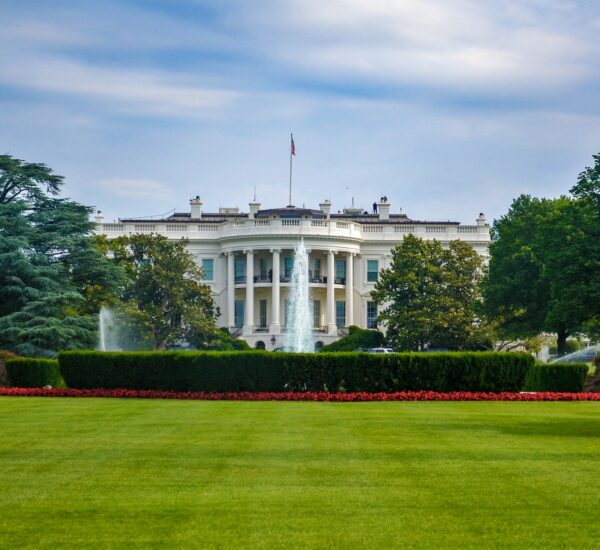
Trump welcomed Xi to the White House this week for discussions involving trade, artificial intelligence, national security and other major issues affecting relations between the United States and China.
Massie seized on the visit to make a pointed comparison.
“He will invite a communist to the White House, but I can’t even go there for the Christmas party,” Massie said.
He argued that Trump’s willingness to host Xi while feuding with Republican critics sent what he considered a “mixed message.”
The White House meeting with Xi, however, was part of the president’s diplomatic role and came amid substantial economic and national-security disputes between Washington and Beijing.
Massie Questions Trump’s Political Approach
Massie went further during the interview, personally criticizing Trump’s governing philosophy.
“He’s not an ideologue,” Massie said while arguing that the president does not consistently operate according to a fixed political doctrine.
That is Massie’s characterization of Trump, not an objective determination.
Trump and his supporters have frequently described his governing approach in terms of an “America First” agenda centered on immigration restrictions, tariffs, domestic manufacturing, military strength and a more transactional approach to foreign relations.
Massie, meanwhile, has often approached federal policy from a libertarian-leaning and constitutional perspective, particularly when it comes to government spending and overseas military involvement.
Those differences help explain why the relationship between the two Republicans deteriorated despite their agreement on some conservative policy issues.
A Bigger Battle Over the Republican Party
The disagreement also reflects a broader debate inside the GOP.
Trump has maintained considerable influence in Republican primary elections, and his endorsement helped Gallrein defeat Massie earlier this year.
Massie, however, represents a different strain of Republican politics — one that places particular emphasis on limiting federal power, reducing spending and questioning overseas military commitments.
Those competing approaches have repeatedly collided during Trump’s presidency.
Massie’s defeat means he will no longer represent his Kentucky district after his current term ends, but his willingness to criticize the president suggests he has no intention of quietly withdrawing from the national political conversation.
What Happens Next Could Matter for Trump and the GOP
Massie believes November will deliver a message to Trump.
The more important question is what voters actually decide.
Midterm elections traditionally become a referendum on the party controlling the White House, but individual races can turn on local candidates, economic conditions, turnout and issues unique to particular states and congressional districts.
Massie has already made his prediction clear: He expects Republicans to suffer politically and believes Trump could face a reckoning afterward.
For Republicans, the coming weeks will show whether candidates continue embracing the president’s agenda, begin drawing distinctions with the administration on individual issues, or combine both approaches depending on their states and districts.
And for Trump, Massie’s latest comments demonstrate that defeating a Republican critic in a primary did not necessarily silence him.
The political dispute that began inside the GOP is now becoming part of a much larger question facing voters in November: what direction they want Congress and the country to take next.