Here’s what was said.
President Donald Trump is facing unusually sharp criticism from members of his own party after giving Chinese President Xi Jinping a high-profile welcome in Washington.
Several Republican senators say Trump’s warm treatment of the Chinese leader appears difficult to reconcile with the tough-on-China message that has been central to Republican politics for years.
The criticism does not mean Republicans suddenly oppose talks between Washington and Beijing. Instead, the dispute centers on the symbolism of rolling out the red carpet for the leader of the Chinese Communist Party while Republicans continue warning Americans about China’s growing economic, military and political power.
That contrast is now creating an uncomfortable debate inside the GOP.
Republican Senators Question Trump’s Welcome For Xi
Sen. Roger Wicker of Mississippi, chairman of the Senate Armed Services Committee, emerged as one of the strongest Republican critics of Xi’s reception.
Wicker said he would have advised Trump against giving the Chinese president such an elaborate welcome because of the serious disputes between the United States and China.
“Had the White House asked me for advice, I would have suggested the president not invite Xi Jinping to Washington for such a lavish welcome here in the United States,” Wicker said ahead of the visit.
Wicker has also raised concerns about China’s military expansion, treatment of religious and ethnic minorities, support for Iran and pressure on neighboring countries.
His criticism carries additional weight because he leads the Senate committee responsible for overseeing major national defense issues.
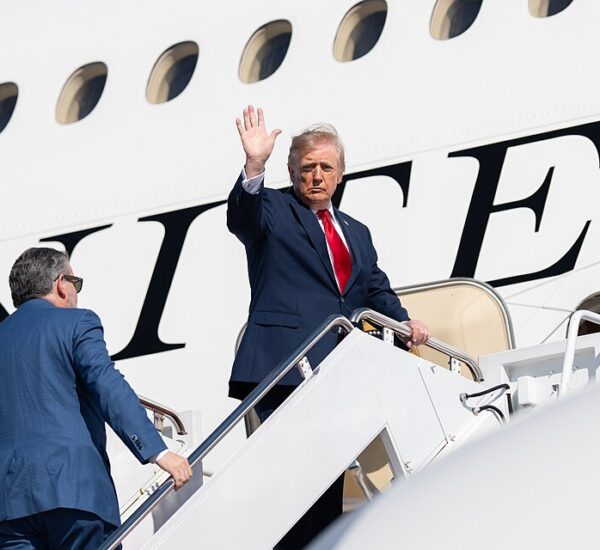
Xi’s arrival included an unusually prominent reception at Joint Base Andrews, where Trump personally greeted the Chinese leader. The visit also featured a White House state dinner and meetings between the two presidents.
Trump’s Tough-On-China Record Comes Under Scrutiny
Trump built a significant part of his political reputation around promises to confront China.
During his campaigns and presidency, Trump repeatedly criticized Beijing over trade practices, manufacturing, national security and America’s economic dependence on China.
That history is one reason some Republicans were uncomfortable watching Xi receive such a warm reception.
Sen. Thom Tillis of North Carolina openly questioned the apparent change in tone.
Tillis said Trump spent years campaigning on a tough approach toward China and noted that those promises routinely generated strong reactions at Trump’s political rallies.
He later questioned what had caused what he described as a major shift in Trump’s posture toward Beijing.
Tillis also expressed concern about giving authoritarian leaders more favorable treatment than some democratic allies.
His objections highlight the central political tension surrounding the summit: Republicans can support diplomacy with China while still questioning whether Xi should receive the prestige associated with an elaborate presidential welcome.
White House Says Diplomacy Serves American Interests
The Trump administration has defended the visit.
The White House argues that Xi previously hosted Trump in China and that the Washington reception was therefore reciprocal.
Administration officials have also emphasized that Trump is willing to meet with foreign leaders — including adversaries — when he believes those discussions can advance American interests.
That distinction is important.
Meeting with Xi does not necessarily indicate agreement with the Chinese government. Presidents from both parties have maintained diplomatic relationships with governments they strongly oppose on major issues.
Supporters of Trump’s approach argue that direct communication between the leaders of the world’s two largest economies can help reduce tensions and create opportunities for agreements involving trade, technology and national security.
John Cornyn Warns Trump About China
Sen. John Cornyn of Texas also expressed reservations about the summit.
Cornyn said he was not enthusiastic about the gathering and warned that China should not be mistaken for a genuine American ally.
His comments reflected a broader concern among national-security Republicans who view China as one of America’s most serious long-term strategic competitors.
China’s relationship with Russia, Iran and North Korea has also become a growing concern in Washington.
Republican lawmakers have increasingly argued that those countries are cooperating in ways that could challenge American influence and security around the world.
Cornyn said he hoped Trump would remain clear-eyed about the government he was dealing with.
Other Republicans Defend Trump’s Strategy
Not every Republican sees the summit as a mistake.
Senate Majority Leader John Thune of South Dakota said there is value in maintaining direct communication with adversaries.
The United States and China have enormous economies, powerful militaries and deeply interconnected trade relationships.
Even during periods of intense disagreement, supporters of diplomatic engagement argue that the two governments must maintain some form of communication.
Sen. Steve Daines of Montana offered a similar defense.
Daines spent years working in China before entering politics and said the relationship between the two nations is too important to ignore.
He also noted that China had previously extended significant hospitality to Trump during the president’s visit to Beijing.
From that perspective, Xi’s reception in Washington was less about endorsing the Chinese government and more about normal diplomatic reciprocity.
Some Republicans Dislike The Optics But Trust Trump
Sen. Kevin Cramer of North Dakota acknowledged that he personally disliked seeing Xi receive such favorable treatment.
However, Cramer said he was reluctant to second-guess Trump’s negotiating approach.
Trump has frequently relied on personal relationships and high-profile hospitality when dealing with foreign leaders.
Supporters believe that approach can create negotiating opportunities that might not otherwise exist.
Critics worry that lavish treatment can provide authoritarian governments with valuable propaganda and prestige without guaranteeing meaningful concessions in return.
That disagreement is now playing out publicly among Republican senators.
China Remains A Major Economic And Security Challenge
The summit comes as the United States and China remain divided on some of the most important global issues.
Trade continues to be a major source of tension.
Artificial intelligence and advanced technology have also become increasingly important as both countries compete for economic and military advantages.
Washington has additionally raised concerns about Taiwan, intellectual property, espionage, supply chains and China’s rapidly expanding armed forces.
China, meanwhile, has objected to American tariffs, technology restrictions and U.S. security relationships throughout Asia.
Despite those disagreements, the two countries remain economically connected on a massive scale.
That creates a difficult balancing act for any American president.
Washington wants to compete aggressively with Beijing while avoiding an economic or military confrontation that could carry enormous consequences.
Republicans Face A Political Messaging Problem
Trump’s summit with Xi may also complicate Republican messaging heading into the midterm elections.
Republicans have frequently portrayed China and communism as threats to American prosperity and national security.
Many GOP candidates have made opposition to the Chinese Communist Party a central part of their political message.
Against that backdrop, images of Trump warmly welcoming Xi provide critics with an obvious contrast.
The question for Republicans is whether voters will view the summit as smart diplomacy or as inconsistent with the party’s previous rhetoric toward China.
The disagreement inside the GOP shows that there is no single answer even among Republican lawmakers.
Trump’s Results Could Determine How The Summit Is Remembered
Ultimately, the political reaction to Trump’s meeting with Xi may depend on what the United States receives from the negotiations.
A major trade agreement, stronger protections for American businesses or progress on national security disputes could strengthen the administration’s argument that personal diplomacy produces results.
If the visit produces mostly ceremony without significant concessions, critics are likely to continue questioning why Xi received such an elaborate welcome.
That is why Republicans who criticized the summit appear focused not only on the imagery but also on what happens next.
Trump has long argued that he can negotiate effectively with foreign leaders while still putting American interests first.
His Republican critics are now watching to see whether the latest meeting with Xi delivers enough substance to justify the symbolism.
For voters, the larger debate is straightforward: Can Washington maintain a tough approach toward China while still giving its leader the diplomatic treatment normally associated with an important international partner?
That question is likely to remain part of the political conversation long after Xi leaves Washington.