Here’s what happened.
The Trump administration is taking a major immigration detention battle to the U.S. Supreme Court after an earlier case was disrupted by a pardon involving New York Gov. Kathy Hochul.
The administration is asking the justices to settle a growing legal dispute over how long certain noncitizens with qualifying criminal histories can be held without a bond hearing while their deportation cases move through the courts.
The new case, Genalo v. D.C., could have nationwide consequences for immigration enforcement and the federal government’s detention authority.
Trump Administration Returns To Supreme Court
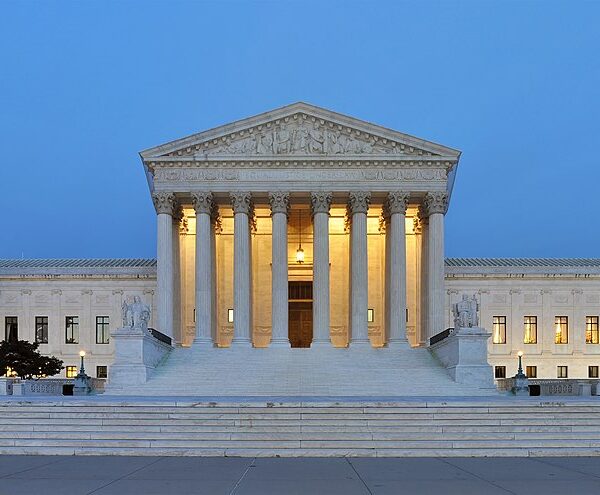
Solicitor General John Sauer filed a petition on September 21 asking the Supreme Court to hear the dispute before the U.S. Court of Appeals for the Second Circuit finishes reviewing it.
That is an unusual request.
Normally, the Supreme Court waits until a federal appeals court has issued its decision before considering whether to take a case.
But the administration argues that the justices were already preparing to address essentially the same legal question in another case and should resolve the issue now rather than allowing the dispute to remain unsettled.
The Justice Department’s petition asks the Supreme Court to establish a uniform constitutional rule governing prolonged detention during immigration removal proceedings.
Hochul Pardon Changed Earlier Supreme Court Case
The controversy follows an earlier case known as Genalo v. Black.
The Supreme Court had agreed to hear that dispute and scheduled oral arguments for October 13, 2026.
However, developments involving a pardon by New York Gov. Kathy Hochul affected the circumstances underlying the case, leading to a dispute over whether it remained legally active.
The Supreme Court’s docket shows that the justices had granted review of the earlier case after years of litigation in the Second Circuit.
The Trump administration is now attempting to put the same broader constitutional issue back before the Court through Genalo v. D.C.
What The Immigration Case Is About
At the center of the latest case is a Dominican Republic national identified in court filings as D.C.
Federal immigration law requires mandatory detention for certain categories of noncitizens with specified criminal convictions while their removal proceedings are pending.
The central question is whether that mandatory detention can continue without a bond hearing when the legal process becomes prolonged.
Courts in different parts of the country have reached different conclusions.
That means someone detained under the same federal immigration law may receive different constitutional protections depending on where the case is being heard.
The administration wants the Supreme Court to establish one nationwide standard.
Second Circuit Requires Additional Review
Under precedent followed within the Second Circuit, prolonged immigration detention can eventually require an individualized bond hearing.
At such a hearing, a judge considers whether continued detention is justified.
Factors can include whether the detainee poses a danger to the community or is likely to flee before removal proceedings are completed.
The dispute is therefore not simply about whether someone should automatically be released.
Instead, it concerns whether the Constitution eventually requires the federal government to provide an additional hearing before continuing detention.
Who Has The Burden Of Proof?
Another important issue involves who must prove whether detention should continue.
Under the approach applied in D.C.’s case, the government can be required to demonstrate why continued detention is necessary.
The Trump administration disputes that standard.
It argues that if a bond hearing is constitutionally required, the detainee seeking release should bear the burden of showing why release is appropriate.
That distinction could significantly affect future immigration cases.
A rule requiring the government to justify detention places one type of legal burden on federal authorities.
A rule requiring the detainee to justify release creates a very different process.
The Supreme Court could ultimately clarify which approach is constitutionally required.
Administration Warns About Delayed Proceedings
Supporters of the administration’s position also argue that the current system can encourage some detainees to prolong their immigration cases.
They contend that repeated requests for delays, additional filings or changes in legal strategy can extend proceedings for months.
If the length of detention later becomes a reason for obtaining a bond hearing, critics of the current approach argue that the system could create an incentive to stretch the legal process.
That argument remains disputed.
Immigration proceedings can also take substantial amounts of time because of court schedules, complicated legal questions, government actions and other circumstances outside a detainee’s control.
The Supreme Court could therefore be asked to balance the federal government’s immigration enforcement authority against constitutional protections involving prolonged detention.
Nationwide Court Split Raises Stakes
The larger issue extends far beyond one detainee.
Federal appeals courts have taken different approaches to prolonged immigration detention, creating different rules across the country.
Such disagreements between federal circuits are one reason the Supreme Court often agrees to hear a case.
The Trump administration argues that immigration law should operate under one nationwide constitutional standard rather than different standards depending on geography.
If the justices agree to hear the case, their eventual decision could affect immigration detention proceedings throughout the United States.
Supreme Court Has Addressed Mandatory Detention Before
The Supreme Court has previously upheld aspects of mandatory immigration detention.
But questions surrounding detention that becomes unusually lengthy have continued to generate litigation in federal courts.
The administration’s latest petition asks the justices to resolve that remaining constitutional dispute.
The Justice Department describes the filing as a petition for certiorari before judgment, meaning the administration is asking the Supreme Court to intervene before the Second Circuit completes its review.
That procedural step underscores how strongly the administration wants the issue resolved during the current Supreme Court term.
Another Major Immigration Test For The Court
The Supreme Court has not yet issued a final ruling in Genalo v. D.C.
For now, the administration is asking the justices to accept the case.
If they do, the dispute could answer several major questions involving immigration enforcement:
How long may certain noncitizens with criminal convictions remain in mandatory detention?
When does prolonged detention trigger a constitutional right to a bond hearing?
And if a hearing is required, should the government have to justify continued detention, or should the detainee have to justify release?
Those questions could shape immigration detention policy nationwide.
The case also ensures that a legal battle affected by the earlier New York pardon will remain part of the Trump administration’s broader immigration fight.
What began as a dispute in the lower courts has now reached the doorstep of the nation’s highest court — with the potential to establish rules affecting federal immigration enforcement across the country.