Here’s the big problem.
Republicans are heading into the final stretch of the 2026 midterm campaign facing an uncomfortable political reality: many voters remain deeply concerned about the cost of living, rising gas prices, immigration and America’s involvement in the war with Iran.
Those concerns are forcing Republican leaders to adjust their message as they campaign to maintain control of Congress.
Rather than telling Americans that every problem has been solved, Vice President JD Vance and other GOP leaders have increasingly argued that Republicans inherited serious challenges and need additional time to address them.
The strategy comes as recent polling shows Democrats holding advantages with voters on several major issues, including the cost of living and health care.
Voters Remain Worried About The Cost Of Living
Affordability has become one of the most important issues of the 2026 midterm election.
A New York Times/Siena University poll released September 15 found that likely voters trusted Democrats over Republicans by 51 percent to 43 percent on the cost of living.
The same survey found Democrats ahead by 60 percent to 36 percent on health care and 52 percent to 45 percent on immigration.
When voters were asked which congressional candidate they supported in their own district, Democrats held a 51 percent to 43 percent advantage in the poll. Those numbers represent voter sentiment when the survey was conducted and are not a prediction of the November election.
For Republicans, those findings underscore the challenge of campaigning while many families continue to feel financial pressure.
Groceries, transportation, housing, utilities and other everyday expenses remain important concerns for households across the country.
And one expense has become particularly difficult for voters to ignore.
Gas Prices Are Back In The Spotlight
Gasoline prices have climbed sharply.
AAA reported that the national average for regular gasoline reached approximately $4.47 per gallon on September 18.
One week earlier, the national average was roughly $4.30. A year earlier, it was about $3.20.
Diesel prices have risen even more sharply, reaching approximately $6.45 per gallon nationally on September 18.
AAA said the national gasoline average had risen by roughly 16 cents during the previous week as crude oil prices remained elevated amid continued instability involving the Strait of Hormuz.
Those numbers matter well beyond the gas station.
Higher fuel costs can affect commuters, retirees, farmers, trucking companies and small businesses. Diesel prices can also increase transportation expenses throughout the economy because trucks carry much of the food and merchandise purchased by American consumers.
That gives both parties another major economic issue to address before Election Day.
Iran War Creates New Pressure For Republicans
The war with Iran has become another complicated issue for Republican lawmakers.
On September 15, the House approved a War Powers Resolution directing President Trump to remove U.S. forces from hostilities with Iran unless Congress authorized continued involvement.
The measure passed 220-204.
The vote demonstrated that concerns about the conflict are not confined to Democrats.
Several Republican lawmakers have questioned how long American forces should remain involved and what the administration’s ultimate objective should be.
For those lawmakers, the political calculation involves both national security and the economic consequences of the conflict.
Disruptions involving the Strait of Hormuz have contributed to volatility in global energy markets, according to AAA, connecting developments overseas with prices Americans see at home.
That connection could make the Iran conflict particularly important to voters who might otherwise pay less attention to foreign policy.
Some Republicans Push Back On Immigration Enforcement
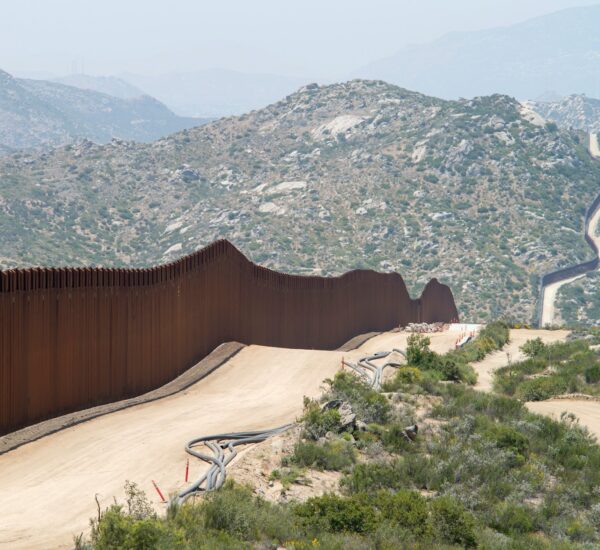
Immigration has traditionally been a central issue for President Trump and the Republican Party, but even that debate has produced disagreements inside the GOP.
Florida Republican Rep. María Elvira Salazar publicly criticized portions of the administration’s immigration enforcement strategy in a campaign advertisement released September 17.
“Some of your immigration enforcement efforts have gone too far,” Salazar told Trump in the advertisement.
She also warned that some Hispanic voters who supported Trump in 2024 now felt alienated by the administration’s approach.
Salazar represents Florida’s 27th Congressional District, a Miami-area district that is approximately 74 percent Hispanic, according to The Washington Post.
Reuters also reported that Salazar’s criticism comes as she seeks reelection against Democratic challenger Eliott Rodriguez.
Her comments illustrate the balancing act facing some Republicans.
Candidates may support many parts of Trump’s agenda while disagreeing with individual administration policies they believe are unpopular with voters in their districts.
GOP Leaders Say More Time Is Needed
Republican leaders are responding to voter concerns by emphasizing the work they say has already been accomplished while arguing that major economic and government reforms require additional time.
Vance has urged Republicans to acknowledge that many Americans remain frustrated instead of pretending every problem has disappeared.
That message gives the GOP a different argument heading into November: conditions may not be where voters want them to be, but Republicans contend that changing course could interrupt policies they believe will ultimately improve the economy and strengthen the country.
Democrats are making the opposite argument.
They are pointing to voter concerns about affordability, health care, immigration and foreign conflicts as evidence that Americans should reconsider continued Republican control of Washington.
The competing messages are likely to dominate the remaining weeks of the campaign.
Republicans Face A Difficult Midterm Environment
Midterm elections have historically created challenges for the president’s party, making voter dissatisfaction especially important when control of Congress is closely contested.
But the biggest concern for Republican candidates may not come from any single issue.
Instead, voters are confronting several major questions simultaneously.
Families are watching household expenses.
Drivers are seeing higher prices at the pump.
Americans are debating how long U.S. forces should remain involved in Iran.
Communities are arguing over the proper balance between border enforcement and immigration policy.
And candidates in competitive districts are deciding when to defend the White House and when to emphasize their independence.
The Economy Could Decide The Debate
For many voters, complicated political arguments eventually come back to a much simpler question: Is everyday life becoming more affordable?
That is why gasoline, groceries, housing and other routine expenses could matter so much during the final weeks of the campaign.
AAA’s September 18 figures put the national average price for regular gasoline more than $1.26 per gallon above its level one year earlier. Diesel was roughly $2.74 per gallon higher than a year earlier.
Those increases do not establish which party voters will blame for higher prices. Energy prices can be influenced by numerous factors, including global oil markets, supply disruptions, demand and geopolitical events.
Politically, however, the numbers give candidates another reason to keep affordability at the center of the conversation.
Republicans Make Their Case To Voters
Republicans are expected to spend the remaining campaign emphasizing their legislative record, border policies, tax priorities and economic agenda.
At the same time, some GOP candidates are openly acknowledging that voters have concerns.
That may explain why Republican messaging has increasingly focused on asking Americans for more time rather than claiming that every challenge has already been resolved.
Democrats, meanwhile, are arguing that voters should judge Republicans on conditions during their period of control in Washington.
The September Siena poll suggests Democrats currently have an advantage with likely voters on several issues that could play an important role in the campaign, including affordability, immigration and health care.
But polling provides only a snapshot of opinion at a particular moment.
Between now and Election Day on November 3, 2026, economic conditions, international developments and campaign events could continue to reshape the debate.
For Republicans, the warning from current voter sentiment is clear enough: Americans are paying close attention to their wallets, the country’s foreign commitments and what is happening in their communities.
Both parties now have just weeks remaining to convince voters that their approach offers the better path forward.