Here’s what happened.
President Donald Trump is taking center stage at a major Republican gathering in Dallas, but several GOP candidates fighting closely watched election battles have decided to skip the event and remain on the campaign trail.
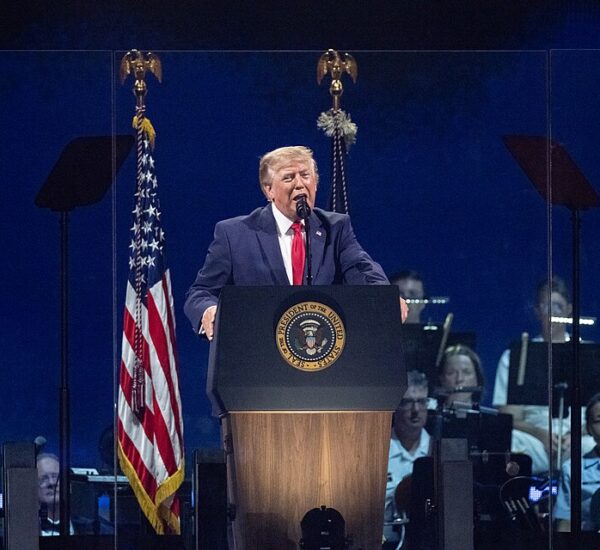
The Republican Party’s first midterm convention opened Wednesday at the American Airlines Center in Dallas, bringing together party leaders, candidates, activists and supporters ahead of the November elections.
Trump is the convention’s biggest attraction and is scheduled to address the gathering during both nights. Vice President JD Vance and numerous Republican officials are also participating.
But while the convention is designed to build enthusiasm around Trump’s agenda and Republican candidates, not everyone facing a difficult election has made the trip to Texas.
Some Republicans have decided their time is better spent campaigning directly with voters back home.
The split highlights an important strategic question facing Republican candidates this year: Is appearing alongside Trump at a massive national event more valuable than spending those same hours campaigning in their own states and districts?
Some Republicans Are Staying Home
Maine Sen. Susan Collins is among the Republicans skipping the Dallas convention.
Instead of traveling to Texas, Collins is remaining in Maine as she campaigns for another term against Democrat Troy Jackson.
Collins represents a state where statewide elections can be highly competitive, making her campaign strategy particularly important as Election Day approaches.
Alaska Sen. Dan Sullivan is also staying away from the convention.
His campaign says the senator is spending the week traveling across Alaska as he campaigns against former Democratic Rep. Mary Peltola.
The decision attracted additional attention because Sullivan had previously been expected to attend the Dallas gathering.
His spokesman, Nate Adams, emphasized that Sullivan remains supportive of Trump and looks forward to the president visiting Alaska before the November election.
Former New Hampshire Sen. John E. Sununu is another Republican candidate who is not attending.
Sununu is seeking a return to Washington, and his campaign pointed to the timing of New Hampshire’s primary, which occurred just one day before the Dallas convention began.
The decisions illustrate how individual Republican campaigns are balancing national party events against the demands of competitive races back home.
Other Republicans Are Joining Trump in Dallas
The convention is hardly lacking Republican candidates.
Several GOP Senate contenders have decided that appearing at the high-profile gathering provides an important opportunity to reach voters and strengthen their connections with the national Republican Party.
Texas Attorney General Ken Paxton is among those participating.
Paxton is running against Democratic state Rep. James Talarico in a Senate contest attracting considerable national attention.
Trump backed Paxton during the Republican primary process, and the president’s political operation has invested heavily in supporting the Republican candidate.
The Texas contest is particularly significant because Republicans have traditionally enjoyed a strong advantage in statewide races there. Both parties, however, are paying close attention to the Senate battle this year.
North Carolina Republican Michael Whatley is also participating in the Dallas gathering.
Whatley, a former Republican National Committee chairman, is running against former Democratic Gov. Roy Cooper for an open Senate seat.
Ohio Sen. Jon Husted is appearing as well.
Husted was appointed to the Senate seat previously held by JD Vance after Vance became vice president. He is now campaigning to keep that seat while facing former Democratic Sen. Sherrod Brown.
Georgia Rep. Mike Collins is another Republican candidate taking part.
Collins is challenging Democratic Sen. Jon Ossoff in one of the country’s closely watched Senate contests.
Former Michigan Rep. Mike Rogers is also appearing as he campaigns for an open Senate seat against Democrat Abdul El-Sayed.
Why Would Candidates Skip Such a Major Event?
Skipping a major Republican convention headlined by a sitting Republican president can attract attention, but there are practical reasons a candidate might decide to remain home.
Every day becomes valuable as an election approaches.
Candidates must hold rallies, attend community events, meet local leaders, raise money, speak with voters and generate local media coverage.
Traveling to Dallas means sacrificing some of that valuable campaign time.
At the same time, attending the convention provides its own benefits.
Candidates appearing in Dallas can receive national exposure, meet Republican activists and donors, and speak directly to voters enthusiastic about Trump’s presidency.
There is therefore no single strategy that works for every campaign.
A Republican running in Texas may see enormous value in appearing alongside Trump in Dallas. A candidate thousands of miles away may conclude that spending the day meeting voters back home is more important.
Those different calculations help explain why some Republicans are embracing the convention while others are staying away.
Trump Remains the Main Attraction
There is little doubt about who occupies the spotlight in Dallas.
Trump remains at the center of the Republican Party’s midterm strategy, and the convention is heavily focused on his administration and political agenda.
The gathering is unusual because national political conventions are typically associated with presidential election years.
Republicans are attempting something different in 2026 by holding a major convention during a midterm election year.
The objective is straightforward: generate enthusiasm among Republican voters and encourage them to participate in November even though Trump himself is not on the ballot.
That can be a challenge for any president’s party during a midterm election.
Presidential campaigns naturally receive enormous attention, while congressional races can sometimes struggle to generate the same level of enthusiasm among occasional voters.
Republicans hope putting Trump at the center of the Dallas gathering can help close that enthusiasm gap.
Battle for the Senate Raises the Stakes
The convention comes as Republicans and Democrats compete for control of Congress.
Senate contests across the country have attracted enormous amounts of campaign money and national attention, with both parties targeting races they believe could determine control of the chamber.
That makes states such as Texas, Georgia, North Carolina, Michigan, Ohio, Maine, Iowa, New Hampshire and Alaska particularly important to the national political picture.
The stakes extend well beyond individual candidates.
Whichever party controls the Senate gains substantial influence over federal legislation and presidential nominations, including nominees to the federal courts.
That makes every competitive Senate contest important to both parties.
Different Candidates, Different Strategies
The most important takeaway from the Republican convention may be that GOP candidates are not all following the same campaign playbook.
Some believe appearing alongside Trump and other Republican leaders offers the best opportunity to energize supporters.
Others have decided they would rather spend those crucial campaign days talking directly to voters in their home states.
Skipping the Dallas gathering also does not automatically mean a candidate is breaking with Trump.
Sullivan’s campaign, for example, has made clear that the Alaska senator still wants Trump to campaign in his state.
Instead, the different decisions demonstrate the difficult choices candidates must make as Election Day approaches.
Every hour spent at a national convention is an hour that cannot be spent campaigning locally. But every candidate who stays home also gives up the national exposure that comes with appearing at one of the Republican Party’s biggest political events of the year.
Republicans Face a Crucial Final Stretch
The Dallas convention gives Republicans a national platform to promote their agenda and encourage supporters to vote in November.
Trump’s presence ensures the gathering will receive significant attention.
But the decision by some candidates to stay home demonstrates that national attention is only one part of winning an election.
Candidates ultimately must convince voters in their own states and districts to support them.
For some Republicans, that means standing beside Trump in Dallas.
For others, it means skipping the major event and spending those valuable days campaigning back home.
With control of Congress at stake, Republicans are taking different paths toward the same objective: winning enough races in November to maintain their power in Washington.