Supreme Court Justice Reject GOP-Friendly Map
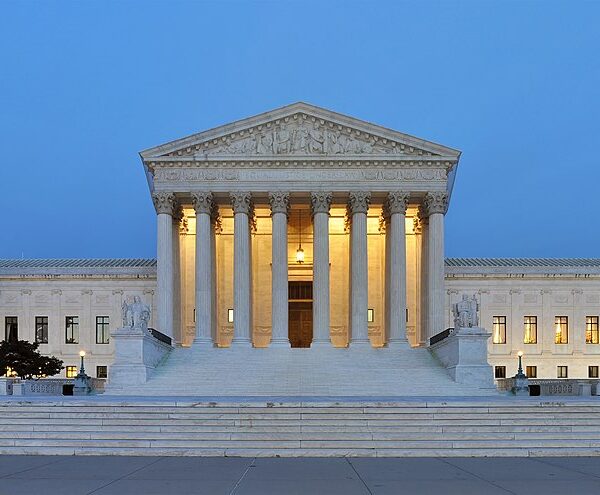
Supreme Court Justice Brett Kavanaugh declined to intervene Tuesday in Missouri’s high-stakes congressional redistricting battle, delivering an initial setback to Republicans seeking to use newly drawn districts in the November midterm elections.
But the situation changed dramatically just moments later.
A federal judge issued a separate order temporarily requiring Missouri to continue using the newer congressional map, creating competing court directives and fresh uncertainty over which districts voters will actually use on Election Day.
The rapidly developing legal fight could have consequences beyond Missouri. Republicans are defending a narrow House majority, and the disputed map could give the GOP an opportunity to gain another congressional seat.
With Election Day less than two months away, election officials now face difficult questions about congressional boundaries, certified primary winners and the ballots voters will ultimately receive.
Kavanaugh Declines Missouri’s Emergency Request
Missouri officials had asked the U.S. Supreme Court to intervene after the Missouri Supreme Court unanimously ruled that the state’s newly drawn congressional districts could not currently be used in the general election.
Kavanaugh, who handles emergency matters originating from the federal appeals circuit that includes Missouri, declined the request in a brief order.
He did not provide an explanation for his decision.
The move initially appeared to leave Missouri’s previous congressional map in place for November.
Under those boundaries, Republicans currently hold six of Missouri’s eight U.S. House seats.
The newer map was designed in a way that could potentially produce a 7-1 Republican advantage by making a Democratic-held Kansas City-area district more favorable to the GOP.
But Kavanaugh’s decision was not the final word.
Federal Judge Issues Conflicting Order
Shortly after the Supreme Court action, U.S. District Judge Stephen Clark issued a temporary restraining order preventing Missouri from returning to its previous congressional districts.
Clark’s decision means state officials are, for now, being directed to continue implementing the newer Republican-backed map.
The federal lawsuit was brought by Republican Rep. Bob Onder and others who argued that switching congressional maps between the primary and general elections could severely disrupt Missouri’s election process.
That argument has taken on additional significance because Missouri already conducted its August congressional primaries using the newer districts.
Candidates won nominations under those boundaries, and election officials certified the results.
Changing the districts now raises questions about candidates who were nominated by voters living within one set of congressional boundaries but could face a general election conducted under another.
Clark concluded that such a change could create substantial problems for the election system.
He warned that changing maps at this stage could cause widespread voter confusion and undermine the orderly administration of the election.
Why Missouri Republicans Want the New Map
The political stakes center largely on Missouri’s congressional delegation.
Republicans currently control six of the state’s eight House seats, while Democrats hold two.
The newer congressional map significantly changes Missouri’s 5th Congressional District, represented by longtime Democratic Rep. Emanuel Cleaver.
Cleaver’s district has historically been anchored around Kansas City.
Under the newer boundaries, portions of Kansas City were shifted into neighboring Republican-held districts while Cleaver’s district was extended farther into Republican-leaning areas.
The changes could make the seat considerably more competitive for Republicans.
That means the dispute is not simply about lines on a map. One congressional seat could matter in the broader fight for control of the U.S. House.
Missouri Supreme Court Sides With Referendum Effort
The controversy began after opponents of the new congressional map launched a referendum effort seeking to give Missouri voters the final decision.
Organizers submitted more than 300,000 petition signatures challenging the new boundaries.
Missouri Secretary of State Denny Hoskins rejected the petition, arguing that the state’s referendum process could not be used to challenge congressional redistricting.
The Missouri Supreme Court disagreed.
In a unanimous decision, the state’s highest court determined that the referendum petition was legally valid and submitted on time.
That finding carried major consequences.
The court concluded that the legislation creating the new congressional districts had been suspended and therefore had not legally taken effect.
Under that ruling, Missouri’s previous congressional map would remain in place unless voters approve the new boundaries in November.
Republicans Warn About Election Disruption
Missouri Republicans argue that the timing creates an extraordinary problem.
The state already conducted its August primary using the newer congressional districts.
More than a million Missouri voters participated, candidates were nominated and results were certified.
Republican officials argue that requiring an entirely different set of congressional boundaries for the November general election could create confusion for voters and serious administrative difficulties for election officials.
Missouri Attorney General Catherine Hanaway said the state intends to comply with Clark’s federal court order requiring officials to continue using the newer map for now.
Hanaway has argued that changing congressional districts between the primary and general election is impractical and unfair to Missouri voters.
Supporters of the referendum take a different position.
They argue that Missouri’s constitutional process gives citizens the right to challenge legislation through a statewide vote and that election logistics cannot eliminate that right.
The competing arguments have created an unusual confrontation between election administration concerns and Missouri’s referendum process.
Election Deadlines Add Pressure
Time is becoming increasingly important.
Election officials have deadlines for preparing ballots and determining which voters belong in each congressional district.
Federal law also requires absentee ballots to be sent to military personnel and Americans living overseas ahead of Election Day.
That means Missouri does not have unlimited time to resolve the dispute.
Every additional court ruling or appeal could complicate preparations for November.
The uncertainty could also affect candidates campaigning for Congress because they need to know exactly which voters they are attempting to represent.
Missouri Fight Could Affect Control of Congress
The Missouri battle comes as Republicans and Democrats are fighting nationally over congressional maps ahead of the 2026 midterm elections.
Republican-led states have pursued new boundaries that could create additional opportunities for GOP candidates.
Democratic-led states have responded with redistricting efforts of their own.
Missouri is particularly important because Republicans already hold six of the state’s eight congressional seats.
Winning a seventh would give the party another seat as it attempts to maintain control of the House.
The disputed Kansas City-area district therefore has national political significance despite representing only one of Missouri’s eight congressional seats.
What Happens to Missouri’s Congressional Map Now?
For voters, the biggest question remains simple:
Which congressional map will Missouri actually use in November?
There still isn’t a definitive answer.
Kavanaugh’s refusal to grant Missouri’s emergency request left the Missouri Supreme Court’s decision standing in that proceeding.
Clark’s separate federal order, however, temporarily prevents the state from abandoning the newer congressional districts.
Opponents of the new map have already moved to appeal the federal ruling, ensuring the legal battle will continue.
Further court action could therefore determine whether Missouri uses the 6-2 map under which its current congressional delegation was elected or the newer boundaries that could improve Republican chances of winning seven seats.
Until those legal questions are settled, candidates, election officials and Missouri voters remain caught between competing court decisions.
And with the November midterms rapidly approaching, the courts are running out of time to provide a final answer.