Judge Blocks State’s Election Move
Missouri’s congressional elections have been thrown into uncertainty after conflicting court decisions left voters, candidates and election officials facing a major question just weeks before the November 2026 midterm elections: Which congressional map will actually be used?
A federal judge on Tuesday temporarily prevented Missouri from returning to its older congressional districts, ordering election officials to continue using the newer Republican-backed map that was supported by President Donald Trump.
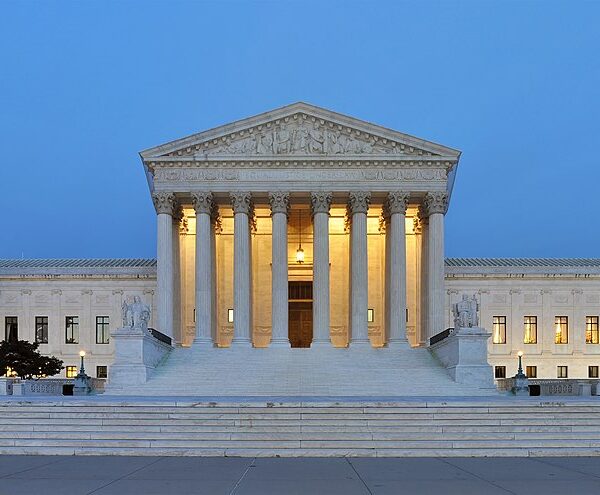
The federal decision came shortly after the U.S. Supreme Court declined Missouri’s request to block a separate Missouri Supreme Court ruling concerning the disputed congressional boundaries.
The result is an extraordinary legal standoff over Missouri redistricting, with state and federal court decisions pointing in different directions as Election Day approaches.
Federal Judge Orders Missouri to Keep New Congressional Map
U.S. District Judge Stephen Clark issued a temporary restraining order preventing Missouri from using congressional districts other than the newer boundaries approved by the Republican-controlled state legislature.
Those districts were already used during Missouri’s August primary elections, and election officials have certified the candidates who won under the new boundaries.
Clark’s order is temporary and is scheduled to remain in effect for 14 days while additional legal proceedings take place.
The judge concluded that forcing Missouri to change congressional maps between the primary and general elections could create serious problems for voters, candidates and election administrators.
Switching district boundaries after candidates had already competed in primaries under a different map, Clark reasoned, could raise questions about the nomination process while producing widespread voter confusion.
Missouri Attorney General Catherine Hanaway said state officials were prepared to comply with the federal court order.
For now, that means Missouri election officials are moving forward with the newer congressional districts.
But the legal battle is far from finished.
Missouri Supreme Court Previously Blocked the New Map
The federal decision followed a major ruling from the Missouri Supreme Court that reached a different conclusion about the congressional boundaries.
Missouri’s highest court determined that the newer map had not legally taken effect because opponents submitted a referendum petition before the legislation’s effective date.
The petition effort sought to give Missouri voters the opportunity to decide whether the new congressional boundaries should become law.
As a result, the Missouri Supreme Court determined that the congressional districts adopted following the 2020 census remained legally effective for the November 2026 general election unless voters ultimately approved the replacement map.
That ruling created an unusual problem.
Missouri had already conducted its August congressional primaries using the newer districts.
The question then became whether voters would participate in the November general election under the same boundaries used in the primary or return to the previous map.
U.S. Supreme Court Declines Missouri’s Request
Missouri officials sought emergency intervention from the U.S. Supreme Court after the state Supreme Court ruling.
Justice Brett Kavanaugh, who handles emergency matters originating from Missouri, declined the state’s request Tuesday.
The decision left the Missouri Supreme Court injunction in place.
But shortly afterward, Clark issued his federal restraining order requiring state officials to continue using the newer congressional map.
Those competing court decisions have created significant uncertainty over the rules governing Missouri’s November congressional elections.
Opponents of the newer map have already moved to appeal the federal decision, meaning another court could soon weigh in on the controversy.
Trump Supported Missouri’s Redistricting Push
The dispute began after Missouri Republicans pursued a new congressional map ahead of the 2026 midterm elections.
President Trump had encouraged Republican-controlled states to examine opportunities for mid-decade congressional redistricting as the GOP sought to protect its narrow majority in the U.S. House.
Republican Gov. Mike Kehoe called Missouri lawmakers into a special legislative session in 2025 to redraw the state’s congressional boundaries.
Missouri currently has eight U.S. House seats.
Six are held by Republicans and two by Democrats.
The newer map was drawn in a way that could improve Republican prospects of capturing an additional congressional seat.
The biggest changes involve Missouri’s 5th Congressional District, currently represented by Democratic Rep. Emanuel Cleaver.
Emanuel Cleaver’s Kansas City District Becomes Key Battleground
The previous 5th Congressional District was centered heavily around Kansas City.
Under the revised congressional map, portions of Kansas City were moved into neighboring Republican-held districts.
The remaining portion of Cleaver’s district was extended farther east into more Republican-leaning areas.
The changes could make the district more competitive for Republicans than it had been under the previous boundaries.
Cleaver ran unopposed in the Democratic primary.
Republican state Sen. Rick Brattin won the GOP primary for the newly configured district.
Because those primary elections were conducted using the newer map, state officials argue that returning to the older boundaries for November could create logistical and constitutional problems.
Opponents counter that the newer congressional map never legally took effect because Missouri residents successfully invoked the state’s referendum process.
That disagreement now sits at the heart of the court battle.
More Than 300,000 Petition Signatures Challenged the Map
The controversy intensified after People Not Politicians gathered more than 300,000 signatures seeking a statewide referendum on the congressional redistricting legislation.
Missouri Secretary of State Denny Hoskins initially rejected the petition.
Hoskins argued that the Missouri Constitution does not permit the referendum process to be used against congressional redistricting legislation.
A lower court agreed with that interpretation.
The Missouri Supreme Court did not.
The state’s highest court unanimously determined that the petition was legally sufficient and submitted on time.
The judges concluded that Missouri’s constitutional provision allowing voters to challenge “any act” of the legislature through a referendum was broad enough to include congressional redistricting legislation.
Because the petition was submitted before the legislation took effect, the court concluded that the new congressional districts were placed on hold pending a vote.
Proposition A Heads to Missouri Voters
The redistricting referendum is now expected to appear before Missouri voters as Proposition A on the November ballot.
That creates another unusual element in an already complicated election.
Voters could be casting ballots for congressional candidates under disputed district boundaries while simultaneously deciding whether the newer congressional map should ultimately be approved.
The referendum gives Missouri voters a direct role in determining the future of the state’s congressional districts.
But the immediate question — which map applies to the November 2026 congressional election — remains tied up in court.
Missouri Redistricting Fight Could Affect Control of Congress
The stakes extend beyond Missouri.
Republicans hold a narrow majority in the U.S. House, making individual congressional districts particularly important during the 2026 midterm elections.
Missouri became one of several states to pursue mid-decade congressional redistricting as both Republicans and Democrats looked for opportunities to improve their positions in competitive House races.
Trump encouraged Republican-controlled states to redraw congressional boundaries where possible.
Republicans pursued new maps in states including Missouri, Texas, North Carolina, Ohio, Florida, Tennessee, Louisiana and Alabama.
Democratic-controlled states also pursued redistricting changes as the national battle over congressional boundaries intensified.
The fight could influence which party controls the House during the final two years of Trump’s presidency.
What Happens Next in Missouri?
For the moment, the newer Republican-backed congressional map remains in use because of Clark’s temporary federal order.
But that does not mean the dispute is settled.
Opponents have moved to appeal the federal ruling to the 8th U.S. Circuit Court of Appeals, while the Missouri Supreme Court’s separate order remains part of the ongoing legal fight.
Additional court decisions could therefore change the situation again before Election Day.
That leaves Missouri voters confronting an unusually complicated election.
The state has already conducted its primary under one congressional map. Missouri voters are expected to consider Proposition A in November. And state and federal courts are simultaneously deciding which congressional boundaries can legally govern the general election.
With control of the U.S. House at stake nationally, the outcome of Missouri’s redistricting fight could carry consequences well beyond the state.
For voters, however, the immediate concern is simpler: knowing which congressional district they belong to and which candidates will appear on their ballot.
Until the courts provide a more definitive answer, Missouri’s congressional map remains one of the biggest unresolved election disputes heading into the November 2026 midterms.