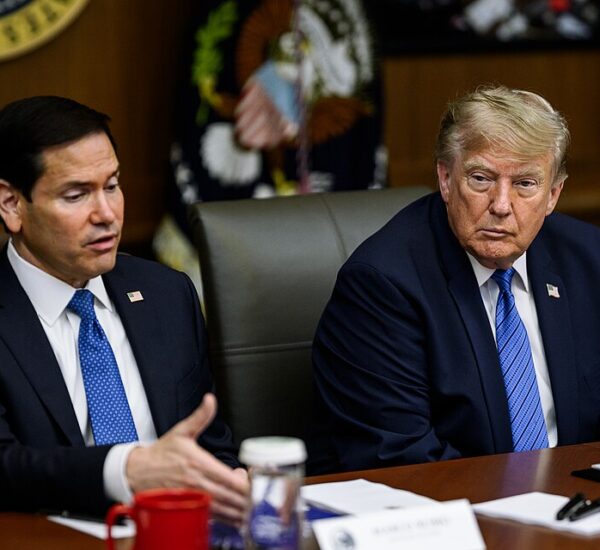
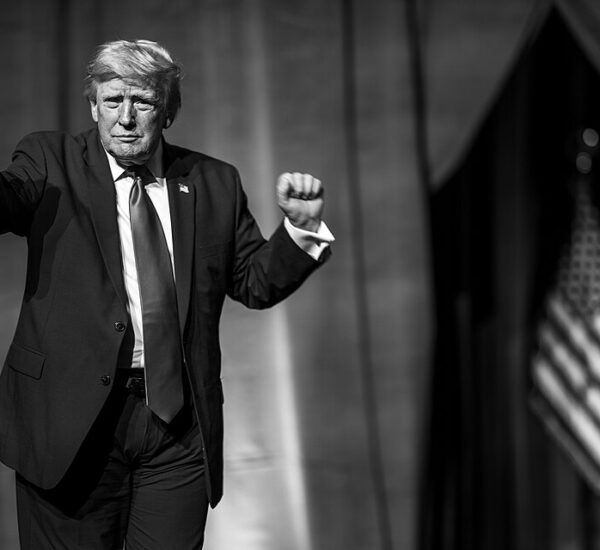
President Donald Trump’s next White House press secretary will inherit one of the toughest jobs in Washington — and the timing could hardly be more important.
With the 2026 midterm elections approaching and Republican control of Congress potentially at stake, Trump’s next top spokesperson will be responsible for defending the president’s record, promoting his agenda and navigating daily confrontations with a national press corps that Trump and his allies have frequently accused of treating the administration unfairly.
James Blair, a senior political adviser to Trump, says the person who succeeds departing White House press secretary Karoline Leavitt should expect to face intense scrutiny almost immediately.
According to Blair, Leavitt has set an unusually high standard.
“She was just really tremendous,” Blair said Saturday during an appearance on “My View.”
Blair argued that Leavitt’s effectiveness came partly from the relationship she developed with Trump and her ability to understand how the president wanted his policies communicated to the American people.
“She understood him and understood the way he wanted to tell the American people his message, and she did it with honor and loyalty,” Blair said.
Now someone else will have to take her place.
“I think she’s a really hard act to follow,” Blair added. “I don’t envy the next person, but it is a critical job.”
Trump’s Next Press Secretary Faces Immediate Pressure
Serving as White House press secretary is difficult under any administration. Under Trump, however, the position carries additional political significance because of the president’s often-combative relationship with major news organizations.
The next press secretary will be expected to answer questions from reporters while simultaneously promoting the administration’s accomplishments and defending Trump against criticism from Democrats and other political opponents.
Blair suggested the challenge will be especially difficult because he believes much of the national media is hostile toward Trump and Republicans.
He argued that Trump’s next spokesperson will have to work aggressively to communicate what Republicans say they have accomplished during the first two years of Trump’s second term.
That task becomes even more important with Americans preparing to vote in the midterm elections.
For the White House, this will not simply be about winning individual news cycles.
It will be about convincing voters that Trump and congressional Republicans deserve another two years of unified Republican control in Washington.
Control of Congress Could Be on the Line
Republicans currently control both the House and Senate, but their congressional majorities leave the party with little room for error.
That means a relatively small number of competitive races could dramatically alter the balance of power in Washington.
Every House seat will be on the ballot in the 2026 midterms, along with dozens of Senate contests.
For Trump, the outcome could determine how easily he can advance his agenda during the second half of his term.
A Republican Congress could continue working with the White House on legislation involving taxes, spending, immigration, energy, national security and other administration priorities.
A Democratic takeover of either chamber, meanwhile, could produce a very different political environment.
Democrats would gain greater ability to block Republican legislation, conduct investigations and challenge the administration through congressional oversight.
That makes the upcoming election about considerably more than individual candidates.
It could determine the direction of Washington for the remainder of Trump’s presidency.
White House Messaging Becomes Critical
That is where Trump’s next press secretary enters the picture.
The administration will need a spokesperson capable of turning complicated policy debates into straightforward arguments that ordinary Americans can understand.
For voters concerned about retirement, taxes, inflation, Social Security, Medicare, immigration, crime and national security, the administration will want to demonstrate how its policies affect everyday life.
The challenge is maintaining that message amid the constant stream of controversies and breaking news coming out of Washington.
A modern White House press secretary also has responsibilities extending well beyond the traditional briefing room.
Television interviews, social media, online video and alternative media have become major avenues for presidents to reach voters directly.
Trump has been particularly successful at bypassing traditional political communication and speaking directly to supporters.
His next press secretary will have to operate effectively in both worlds.
Karoline Leavitt Leaves Big Shoes to Fill
Blair’s praise of Leavitt illustrates another problem facing her replacement: comparisons will begin immediately.
Leavitt became one of the administration’s most recognizable public figures while defending Trump’s policies from the White House podium.
Blair believes one of her greatest strengths was understanding the president personally as well as politically.
That relationship matters.
A White House press secretary must know administration policy, but the job also requires understanding what the president considers important, how he wants an issue framed and when the White House should push back against criticism.
Blair suggested Leavitt mastered that balancing act.
Her successor will have to prove capable of doing the same.
Every briefing-room exchange, television appearance and major statement could be dissected by supporters, critics and political commentators.
That explains Blair’s warning that the next person will effectively be operating under a “microscope.”
Republicans Prepare Their Midterm Message
Blair remains optimistic about the Republican Party’s chances in November.
He framed the election as a choice between what he described as “mainstream Republicans” and “extreme liberal Democrats.”
Blair also accused Democrats of favoring higher taxes, weaker law-enforcement policies and sweeping amnesty for illegal immigrants.
Those statements represent Blair’s characterization of the Democratic agenda, and Democratic candidates are likely to dispute that description and campaign on their own positions involving taxes, immigration, healthcare, the economy and public safety.
But Blair’s remarks offer an important preview of the political argument Republicans may take to voters.
The GOP is likely to emphasize border security, taxes, crime, energy, economic growth and Trump’s record in office while portraying Democratic control of Congress as a threat to the president’s agenda.
Democrats, meanwhile, are expected to make the midterms a referendum on Trump and Republican control of Washington.
That battle places enormous importance on political communication.
Older Voters Could Play a Decisive Role
Americans over 50 are likely to pay particularly close attention to several major issues in the midterm campaign.
The cost of groceries, gasoline, housing and healthcare can have an especially significant impact on retirees and people approaching retirement.
Taxes and the long-term future of Social Security and Medicare also remain major concerns for millions of older Americans.
Immigration, crime and national security are likely to remain prominent parts of the political debate as well.
Both parties will be competing for these voters, making clear and effective communication increasingly important.
Trump’s next press secretary will therefore have to do more than win arguments with reporters.
The administration will need someone capable of explaining what Trump’s policies mean for families, workers, seniors, veterans, small-business owners and retirees across the country.
The Real Test Comes in November
Trump’s next press secretary will enter the White House briefing room facing enormous expectations.
Following Leavitt would already be difficult. Doing it during a midterm election year raises the stakes considerably.
The new spokesperson will have to defend Trump’s record, respond to Democratic attacks, deal with an aggressive press corps and help communicate the administration’s priorities to voters.
There will be little time for a learning curve.
If Republicans maintain control of Congress, Trump will have a much clearer path for advancing his agenda during the remainder of his term.
If Democrats capture the House or Senate, the political landscape could change dramatically.
That makes the next White House press secretary far more than another administration hire.
The person taking over the podium will become one of Trump’s most visible defenders at precisely the moment Republicans need to persuade Americans to keep them in power.
For Trump’s new hire, the spotlight will be immediate.
The bigger test will come when voters head to the polls.