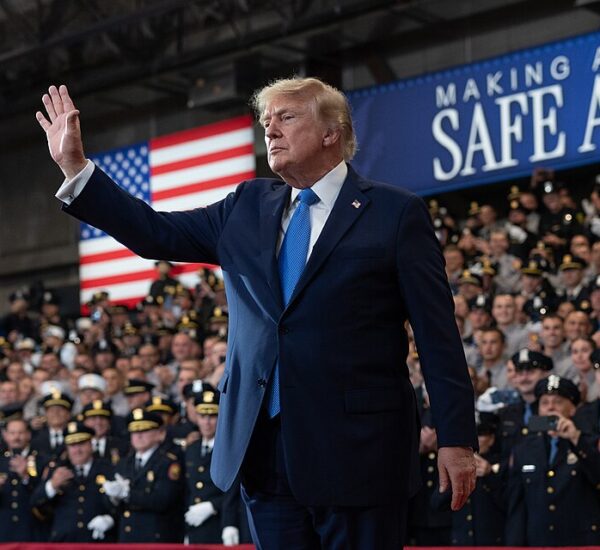
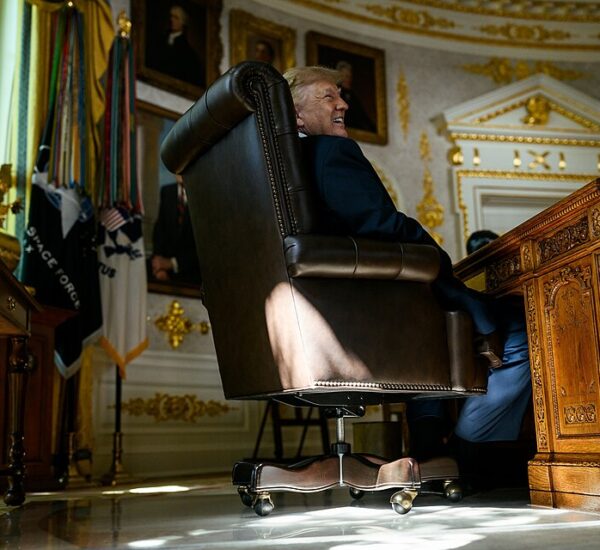
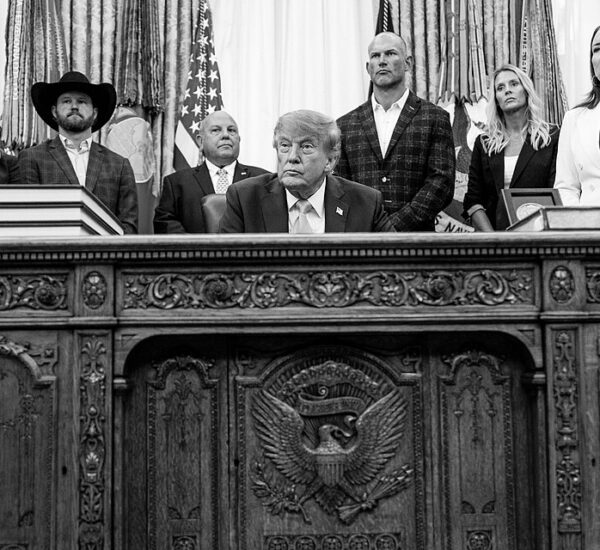
President Donald Trump suddenly walked away from the podium during a speech in New York on Friday, creating an unexpected moment that quickly drew attention.
But Trump wasn’t leaving because of a protest, interruption or apparent security problem.
The president had just realized that the grieving parents of 12-year-old Jacob Freytes were in the audience.
Trump stopped his remarks, stepped away from the stage and personally approached the family of the Bronx boy whose life was tragically cut short by a stray bullet.
What followed was an emotional encounter that temporarily shifted the event away from politics and toward a family dealing with an unimaginable loss.
Trump Stops His Speech After Spotting Jacob’s Parents
Trump was addressing law enforcement officials at the Nassau County Police Academy when he began discussing crime, public safety and repeat offenders.
During those remarks, the president brought up Jacob’s case.
The 12-year-old was killed in the Bronx late last month after being struck by a stray bullet while outside a neighborhood bodega.
Trump described the circumstances surrounding Jacob’s death before telling the audience that the boy was the son of a loving mother and a retired New York City police officer.
Then Trump revealed that he had heard Jacob’s parents might be attending the event.
The president looked toward the audience and asked whether they were there.
Once he located them, Trump did something that was not part of the normal rhythm of a presidential speech.
He left the stage.
Trump Embraces Grieving Mother and Father
Trump approached Jacob’s mother, Migdalia Martinez, and his father, retired NYPD Sgt. Jesus Freytes.
The president embraced the emotional parents and appeared to exchange several private words with them before returning to the podium.
White House press secretary Karoline Leavitt later highlighted the unscripted encounter on social media, describing Trump’s decision to leave the stage and comfort the couple.
For several moments, the political message surrounding the event took a back seat.
The focus was instead on two parents mourning their 12-year-old son.
After Trump returned to the stage, he called Jacob’s death a horrible tragedy and pledged that authorities would continue pursuing dangerous offenders.
The emotional exchange also reinforced one of the central themes of Trump’s appearance: law and order.
WATCH:
In a beautiful impromptu moment, President Trump exits the stage in the middle of his speech to embrace Migdalia Martinez and retired NYPD Sergeant Jesus Freytes, whose 12-year-old son Jacob was tragically killed by a stray bullet in the Bronx. 💔 pic.twitter.com/u7Ffnh7bZO
— Karoline Leavitt (@PressSec) August 14, 2026
Jacob Freytes’ Death Puts Repeat Offenders Back in Spotlight
Jacob’s death has become part of a much larger political debate over crime and criminal justice policies in New York.
According to authorities, the 12-year-old was an innocent bystander when gunfire erupted.
Police arrested 45-year-old William Ferrer in connection with the case.
Ferrer faces multiple criminal charges, including second-degree murder, and has pleaded not guilty. He is presumed innocent unless proven guilty in court.
Published reports have also raised questions about Ferrer’s previous encounters with law enforcement.
According to the New York Post, his arrest history stretches back more than two decades and includes previous allegations involving offenses such as drug possession, menacing, criminal contempt and drunk driving.
Those circumstances have intensified criticism from Republicans who argue that New York needs tougher policies for repeat offenders.
For conservatives who have long called for stronger law-and-order policies, Jacob’s case is likely to become another example in the debate over whether the criminal justice system is adequately protecting innocent families.
Republicans Respond With “Jacob’s Law”
The tragedy has already prompted action from Republican lawmakers in New York.
Republicans have introduced a proposal known as “Jacob’s Law,” which would seek stronger criminal penalties in cases where reckless conduct results in the death of a child.
Supporters say tougher consequences are necessary to hold offenders accountable and protect the public.
The proposal comes as New York continues debating bail policies, repeat offenders, policing and the proper balance between criminal justice reform and public safety.
Democrats and criminal justice reform advocates have generally argued that changes to the system must protect constitutional rights and avoid unnecessarily harsh incarceration policies.
Republicans, meanwhile, have repeatedly argued that policies they view as too lenient can allow dangerous repeat offenders to return to the streets.
Jacob’s death gives that political debate a deeply personal face.
He was only 12 years old.
Jacob’s Mother Describes Their Final Goodbye
Perhaps the most heartbreaking part of the story came from Jacob’s mother herself.
Martinez previously recalled saying goodbye to her son before leaving for work.
She described sharing a small family ritual with Jacob — a special kiss between mother and son — before heading out for the day.
Hours later, everything changed.
Martinez said she received a call informing her that Jacob had been shot.
Like any parent receiving such terrifying news, her immediate concern was getting to her child as quickly as possible.
When she finally arrived, she learned that her son was gone.
The account illustrates why Jacob’s death has resonated far beyond another crime statistic.
Behind every number is a family.
In this case, it is a mother and father who expected their 12-year-old son to be waiting for them at the end of the day.
Instead, they are now pushing forward without him.
Trump Makes Crime and Public Safety a Priority
Trump’s appearance in New York was centered heavily on crime and law enforcement.
The president has continued promoting a law-and-order agenda while arguing that government has a fundamental responsibility to protect law-abiding Americans.
That message could resonate particularly strongly with voters concerned about neighborhood safety, police staffing, repeat offenders and the direction of criminal justice policy.
For many older Americans, the debate is about more than political statistics.
It concerns whether parents and grandparents feel comfortable allowing children to play outside, visit neighborhood businesses or ride bicycles without fearing violent crime.
Trump’s encounter with Jacob’s parents transformed those broader political arguments into something much more personal.
An Unexpected Moment Captured on Video
Presidential speeches are normally carefully organized events.
Friday’s encounter was different.
Trump was discussing Jacob’s death when he learned the boy’s parents were actually sitting in the audience.
Instead of simply acknowledging them from the podium, Trump walked away from the stage and went directly to them.
He embraced the grieving parents, spoke privately with them and eventually returned to continue his remarks.
Whatever Americans think about Trump politically, the video captured an unusual presidential moment centered on a family facing profound grief.
It also ensured that Jacob’s name — and the debate surrounding the circumstances of his death — would reach a much larger national audience.
Now the political question turns to what happens next.
Will New York lawmakers respond by strengthening penalties involving repeat offenders and crimes that claim the lives of children?
Or will the state continue largely along its current criminal justice path?
Jacob’s family has already suffered a loss that no legislation can reverse.
The debate now centers on whether changes in law could help prevent another family from experiencing the same tragedy.
What do you think? Should New York adopt tougher penalties when repeat offenders are responsible for crimes that result in the death of an innocent child?