Trump just shocked the world.
President Donald Trump made a stunning declaration Friday, saying he intends to claim the Strait of Hormuz as United States territory after the war with Iran ends.
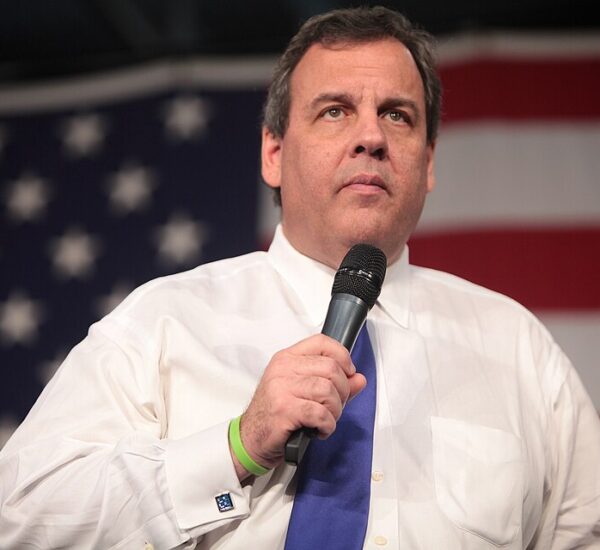
The announcement came during Trump’s appearance on Long Island, where the president was campaigning alongside Republican candidates ahead of the upcoming elections.
Trump said Iran was being badly defeated and predicted that the strategically important Strait of Hormuz could soon become American territory.
The declaration represents another dramatic escalation in Trump’s battle with Tehran over control of one of the world’s most important shipping routes.
Trump Eyes Control of the Strait of Hormuz
The Strait of Hormuz connects the Persian Gulf to the Gulf of Oman and serves as a critical passage for global oil and natural gas shipments.
That makes control of the waterway about much more than geography.
What happens in the strait can directly affect oil markets, gasoline prices and household budgets in the United States.
Trump has repeatedly argued that America currently holds the upper hand in the region because of U.S. military power and the naval blockade surrounding Iran.
However, the president did not explain Friday exactly how the United States would establish sovereignty over the Strait of Hormuz or whether his statement represents a formal policy proposal.
Any attempt to formally claim the international waterway would likely raise major diplomatic and legal questions.
Trump Defends Higher Gas Prices
Trump also confronted an issue hitting Americans much closer to home: gasoline prices.
The president acknowledged that motorists are paying more at the pump as the Iran conflict disrupts energy markets, but he argued that preventing Tehran from obtaining a nuclear weapon is worth the financial sacrifice.
Trump pointed to gasoline costing around $4 per gallon and said he would not apologize for his decisions.
For millions of Americans — especially retirees and households living on fixed incomes — even relatively small increases in gasoline prices can quickly add up.
But Trump framed the issue as a national security tradeoff, arguing that temporary economic pain is preferable to allowing Iran to become a nuclear-armed power.
Iran Conflict Puts Global Oil Supply in Spotlight
The dispute over the Strait of Hormuz has enormous implications for the global economy.
Before the war, roughly one-fifth of the world’s oil supply traveled through the waterway, making it one of the most important energy chokepoints on Earth.
Shipping traffic has since fallen dramatically as the conflict between the United States and Iran has intensified.
That disruption matters to Americans because uncertainty surrounding Middle Eastern oil supplies can put upward pressure on crude oil and gasoline prices.
The stakes therefore extend far beyond Washington and Tehran.
Consumers, investors, energy companies and governments around the world are closely watching what happens next.
Trump’s Iran Peace Deal Fell Apart
The latest confrontation follows the collapse of an earlier effort to bring the fighting to an end.
Trump reached a preliminary agreement with Iran in June, but the arrangement later unraveled as tensions over the Strait of Hormuz intensified.
Iran sought greater control over shipping through the waterway while the Trump administration maintained that commercial vessels must be allowed to travel safely through the region.
The renewed confrontation has turned control of the strait into one of the central issues of the Iran war.
Trump has gone even further in recent months.
Earlier this year, he floated the possibility of giving the waterway a new name, including the “Strait of America.”
Now he is publicly talking about making it American territory.
Trump Blasts NATO Allies
Trump also revived one of his longest-running complaints about America’s allies.
The president accused NATO countries of failing to provide enough assistance when the United States needed help securing the strategically important waterway.
“NATO wasn’t there for us,” Trump told the crowd.
Trump argued that American taxpayers have spent enormous amounts of money supporting the alliance over many decades, yet some allies were reluctant to assist Washington during the confrontation with Iran.
The criticism fits Trump’s broader “America First” approach to foreign policy.
Throughout his political career, Trump has pushed NATO members to spend more on their own defense and questioned why the United States should carry such a large share of the financial and military burden.
For many conservative voters, the dispute raises a familiar question: Should American taxpayers continue paying heavily for alliances when other countries are unwilling to shoulder comparable responsibilities?
Trump Turns Up Economic Pressure on Iran
Military force isn’t the administration’s only weapon against Tehran.
Trump also argued that Iran is facing devastating economic pressure.
The president pointed to extreme inflation and the declining value of Iran’s currency as evidence that Tehran’s leaders are becoming increasingly vulnerable.
The administration appears prepared to intensify that pressure even further.
Treasury Secretary Scott Bessent has indicated that additional measures against Iran are coming as Washington attempts to tighten the country’s economic isolation.
The strategy appears designed to combine military pressure with economic sanctions in hopes of forcing Iran’s leadership into accepting terms favorable to the United States.
Why the Strait of Hormuz Matters to Americans
It would be easy to dismiss a narrow waterway thousands of miles from the United States as another distant foreign-policy dispute.
But the Strait of Hormuz can have a direct impact on American wallets.
Disruptions to oil shipments can influence crude prices, which can eventually affect gasoline, transportation and other costs throughout the economy.
Higher transportation expenses can also work their way into the prices Americans pay for groceries and other everyday products.
That makes the struggle over the strait both a national security issue and a pocketbook issue.
For older Americans and retirees on fixed incomes, those economic consequences can be particularly important.
Can Trump Actually Make the Strait U.S. Territory?
That remains the biggest unanswered question.
Trump made his intention clear, but he offered few details about how the United States could formally claim the Strait of Hormuz.
Iran continues to dispute Washington’s claims of control, meaning any attempt to establish American sovereignty would almost certainly trigger fierce opposition from Tehran and potentially other governments.
There would also be serious questions involving international maritime law, territorial boundaries and diplomatic recognition.
Trump’s statement could ultimately prove to be a negotiating tactic designed to increase pressure on Iran rather than a literal blueprint for American territorial expansion.
Until the White House releases a formal proposal, that distinction remains important.
What Happens Next Could Affect Every American
Trump’s declaration adds another unpredictable element to an already volatile conflict.
The president is simultaneously attempting to weaken Iran militarily, squeeze Tehran economically, protect international shipping and pressure America’s allies to contribute more.
Now he has added another possibility: American control over the Strait of Hormuz itself.
Whether that ultimately becomes official U.S. policy remains unclear.
What is clear is that the fight over this narrow stretch of water could have consequences reaching all the way from the Middle East to American gas stations, retirement budgets and household expenses.
For taxpayers already concerned about the cost of living, the next chapter of Trump’s showdown with Iran could be one worth watching closely.