Trump has finally spoken.
President Donald Trump has finally offered a direct response to one of the most persistent questions surrounding his political future: Could he seek a third term in the White House in 2028?
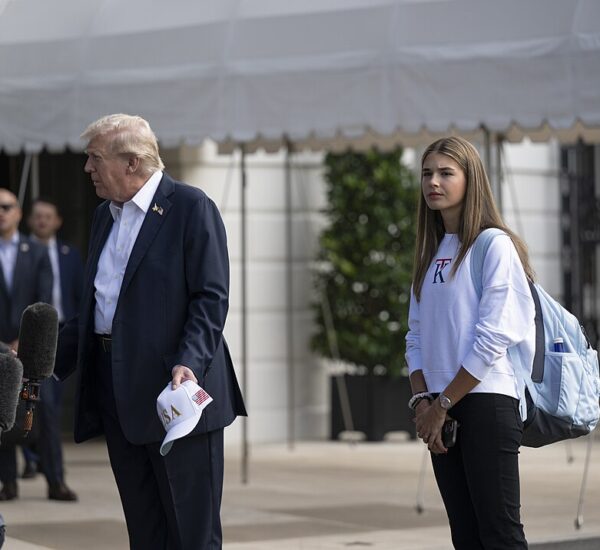
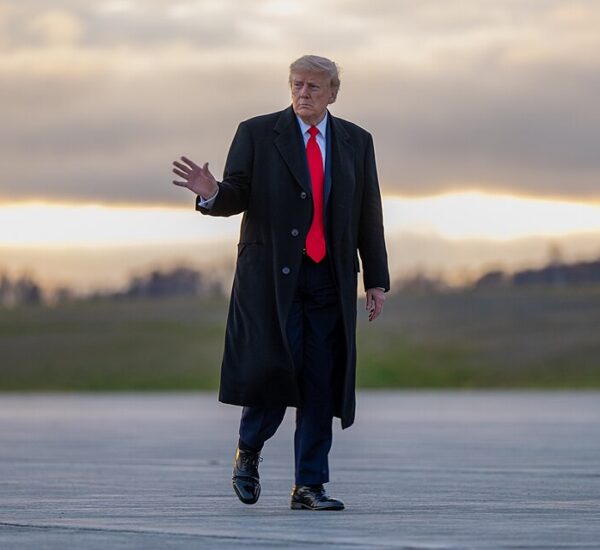
Trump addressed the growing speculation Tuesday night while speaking with reporters at Joint Base Andrews in Maryland. His answer immediately attracted attention because the president acknowledged both his interest in another campaign and the constitutional barrier standing in his way.
Trump said he is constantly asked about running again after his current term ends. While making clear that another presidential campaign would appeal to him, he repeatedly emphasized that America’s existing constitutional rules are firmly established.
The comments represent one of Trump’s clearest acknowledgments yet that the Constitution presents an enormous obstacle to a third presidential term.
Trump also pointed to the enthusiasm he continues to encounter from supporters.
According to the president, people were shouting “2028” during the Patriot Games, which he attended earlier in the day. Similar calls for another Trump campaign have followed the president as speculation grows about what will happen to the Republican Party and the America First movement after his current term.
But regardless of what supporters may want, the biggest obstacle is written into the Constitution.
The 22nd Amendment Is at the Center of the Debate
Any discussion about a Trump third term begins with the 22nd Amendment to the U.S. Constitution.
The amendment establishes that a person cannot be elected to the presidency more than twice.
Trump won the 2016 presidential election and returned to the White House after winning again in 2024. Under the conventional interpretation of the 22nd Amendment, he therefore cannot simply run for president and be elected to the office for a third time in 2028.
The presidential term limit has been part of the Constitution for more than seven decades.
The states ratified the 22nd Amendment in 1951 following the extraordinary presidency of Franklin D. Roosevelt.
Roosevelt shattered the traditional two-term precedent when voters elected him president four times — in 1932, 1936, 1940 and 1944. He died in office in April 1945, only months after beginning his fourth term.
Until Roosevelt, America’s presidents had generally respected the two-term tradition established by George Washington.
Washington voluntarily stepped away from power after two terms rather than seeking another four years as president. His decision helped establish an important political tradition that survived for generations.
Following Roosevelt’s unprecedented four election victories, the country eventually turned that tradition into a constitutional limitation.
Why Trump Keeps Getting Asked About 2028
Questions surrounding Trump’s future did not appear out of nowhere.
Throughout his second presidency, Trump has repeatedly made comments about serving beyond his current term. Some have clearly been delivered as jokes, while others have generated serious debate about his intentions.
That mixture has helped keep speculation alive.
During the White House Correspondents’ Dinner on July 24, Trump joked that his second presidency was better than his first and suggested a third could be even better before saying he was kidding.
For supporters, remarks like these often generate laughter and excitement.
For Trump’s political opponents, they have produced warnings about presidential power and constitutional limits.
But Trump has not always treated the possibility purely as a joke.
Trump Previously Said He Wasn’t Joking
One of the most significant moments in the third-term debate came during Trump’s March 2025 interview with NBC News journalist Kristen Welker.
During that interview, Trump was asked directly whether talk about seeking another term was simply a joke.
Trump indicated that it was not.
He also suggested there could potentially be methods of pursuing another term, comments that immediately triggered a nationwide discussion among constitutional scholars, political analysts and Trump supporters.
One scenario received particularly intense attention.
It involved Vice President JD Vance.
Could JD Vance Provide a Path Back to the White House?
One hypothetical scenario raised during the discussion involved Vance running for president with Trump as his vice-presidential candidate.
Under the theory, Vance could win the presidency and later resign, potentially allowing Trump to succeed him.
At first glance, supporters of the theory have pointed to the precise wording of the 22nd Amendment. It prohibits someone from being elected president more than twice.
That has led to arguments over whether a former two-term president could return to the presidency through succession rather than another direct presidential election.
There is, however, another major constitutional hurdle.
The 12th Amendment Creates Another Problem
The 12th Amendment includes language concerning eligibility for the vice presidency.
Its final provision states that someone constitutionally ineligible for the presidency cannot be eligible to serve as vice president.
Many constitutional scholars therefore argue that a president who has already reached the two-election limit could not use the vice presidency as a workaround.
Princeton University law professor Deborah Pearlstein previously argued that the 12th Amendment blocks such a route.
Still, the interaction between presidential term limits, eligibility and succession has generated legal debate because the country has never faced this exact situation.
Any serious effort by a twice-elected president to return to power through such an unconventional route would almost certainly trigger an enormous constitutional fight.
Ultimately, the Supreme Court could potentially become involved if an actual candidacy or succession strategy produced litigation.
Could the 22nd Amendment Simply Be Repealed?
There is another possibility that would avoid attempting to find a constitutional loophole: changing the Constitution itself.
That would be extraordinarily difficult.
The Constitution intentionally makes amendments challenging to adopt.
One method requires an amendment to receive approval from two-thirds of both the House of Representatives and Senate before being sent to the states.
Another constitutional route allows two-thirds of state legislatures to call for a convention to propose amendments.
Either way, a proposed amendment would then need ratification from three-fourths of the states.
That means eliminating presidential term limits would require overwhelming political support across America.
Even a president with a highly enthusiastic political base would face a massive challenge reaching that threshold.
Trump’s Latest Answer Could Change the Conversation
That is what makes Trump’s latest remarks particularly significant.
Instead of concentrating on hypothetical methods of remaining in office, Trump repeatedly acknowledged the strength of the existing law.
He still made his personal preference clear: another campaign would appeal to him.
But wanting to run and being constitutionally permitted to run are two very different questions.
For Republicans, that distinction could eventually become enormously important.
Trump remains the dominant figure in the Republican Party, and his America First movement has reshaped conservative politics. If the Constitution prevents another Trump presidential campaign, Republicans will eventually have to decide who should carry that movement into the future.
Is JD Vance the Republican Party’s Next Standard-Bearer?
Vice President JD Vance is naturally one of the names attracting attention in discussions about the Republican Party after Trump.
His position as vice president gives him a national platform and close association with the Trump administration.
But 2028 remains more than two years away, and American politics can change dramatically in that amount of time.
Other Republican leaders could emerge as presidential contenders, while unexpected political or economic developments could completely reshape the field.
There is also no guarantee Trump will remain neutral when Republicans eventually begin competing to succeed him.
An endorsement from Trump could become one of the most valuable assets available in a future Republican presidential primary.
Why This Matters Beyond Trump
The third-term discussion is about more than one politician.
It touches on a fundamental question Americans have debated since the earliest years of the republic: How long should one person be allowed to hold presidential power?
George Washington’s decision to leave office voluntarily helped establish the principle of peaceful transitions of power.
Roosevelt’s four victories demonstrated that the two-term tradition was not legally binding.
The 22nd Amendment ultimately settled the issue by placing presidential election limits directly into the Constitution.
Trump’s popularity among Republican voters has reopened public discussion about those limits, but changing them would require far more than political enthusiasm.
It would require a historic constitutional effort.
What Happens to Trump in 2028?
For now, Trump’s comments appear to recognize the political and legal reality he faces.
He may enjoy hearing supporters call for another campaign. He may even personally prefer the opportunity to run again.
But the 22nd Amendment remains the central obstacle.
Unless America’s constitutional rules are changed or a dramatically different interpretation prevails through the courts, the country’s current presidential term limits stand firmly in the way of Trump being elected president for a third time.
That could eventually make another question far more important than whether Trump himself runs in 2028.
Who will inherit the political movement he built?
For conservative voters, that question could help define the next chapter of Republican politics.
Trump’s influence is unlikely to disappear simply because his current presidency eventually ends. His endorsements, policy priorities and political coalition could remain powerful forces within the Republican Party for years.
The battle over America’s post-Trump political future may therefore begin long before the 2028 presidential campaign officially gets underway.
And if Trump’s latest comments are any indication, even the president recognizes that America’s constitutional term limits will play a decisive role in determining what comes next.