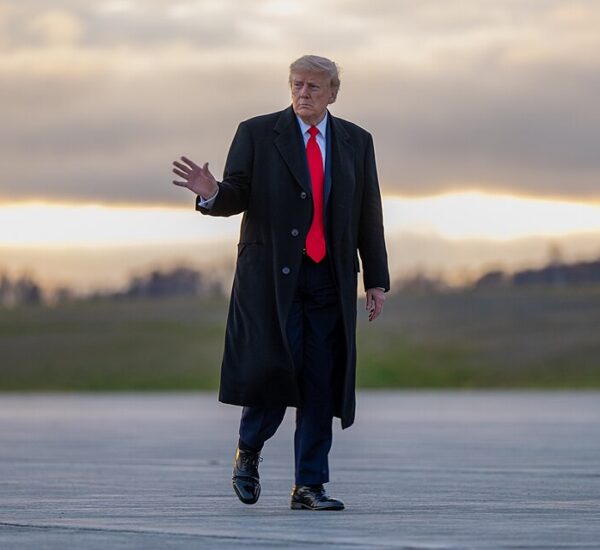
New details have emerged.
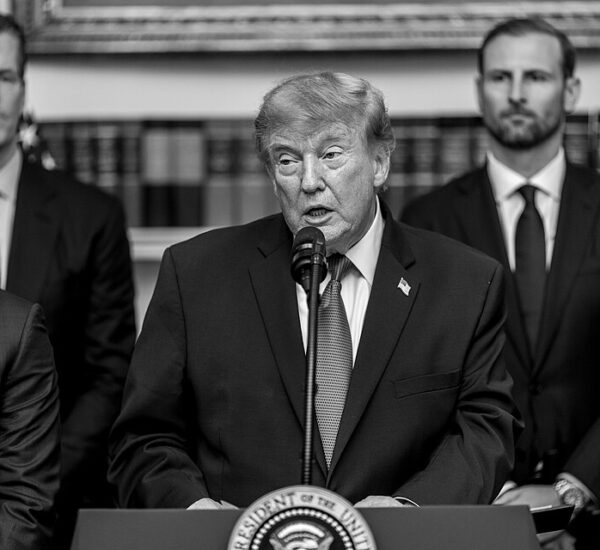
New details are emerging about the extraordinary security precautions taken to protect President Donald Trump during a recent overseas trip — and they reveal that the operation was even more extensive than initially known.
The aircraft that continued toward the United Kingdom after Trump was secretly moved to another plane was reportedly protected by U.S. fighter jets, according to a senior Trump administration official.
The previously undisclosed detail provides new insight into how seriously American security officials treated the situation and may answer questions about the protection provided to senior administration officials, White House employees and journalists who remained aboard the original aircraft.
Fighter Jets Reportedly Protected Trump’s Decoy Plane
The unusual security operation unfolded after Trump’s trip to Ankara, Turkey, last month.
Rather than having the president continue aboard the aircraft normally associated with his overseas travel, security officials arranged for Trump to leave aboard another plane.
The original aircraft continued toward the United Kingdom without him.
But it apparently wasn’t flying alone.
According to the administration official, U.S. fighter jets provided protection during the flight.
Secretary of State Marco Rubio and Treasury Secretary Scott Bessent were among the senior administration officials who remained aboard the original aircraft. Members of Trump’s traveling staff and White House press corps were also on the plane.
Those aboard reportedly knew Trump was no longer traveling with them.
However, another unusual instruction prevented passengers from seeing what was happening outside.
Secret Service Gave Reporters An Unusual Order
Members of the traveling press were instructed to keep the aircraft’s window shades closed throughout the flight.
That order takes on new significance following the disclosure that American fighter jets were accompanying the plane.
According to a press pool report, there were relatively few outward signs at the airport that Trump’s normal travel arrangements had been dramatically changed.
Press vehicles were positioned farther back in the presidential motorcade than usual. Photographers also did not get their customary view of Trump boarding the aircraft.
Reporters and White House staff nevertheless boarded the original plane as they normally would.
Inside, even some of the familiar details of presidential travel remained in place, including bags of snack mix featuring the presidential seal.
Then came the instruction to close the shades.
Photographer Quickly Told To Shut Window Shade
The press corps was told that the aircraft’s window shades needed to remain down.
A Secret Service agent later entered the press cabin and reinforced that instruction.
At one point, a photographer reportedly opened a shade briefly and was quickly directed to close it again.
Reporters were initially given little explanation for the unusual request. A White House staff member responsible for coordinating with the press said only that the Secret Service had requested the shades remain closed.
The reported fighter escort now provides additional context surrounding that decision.
Keeping the shades closed would have prevented passengers from observing the military aircraft accompanying them and potentially revealing details about the security operation while it was underway.
Trump Explains Why He Changed Planes
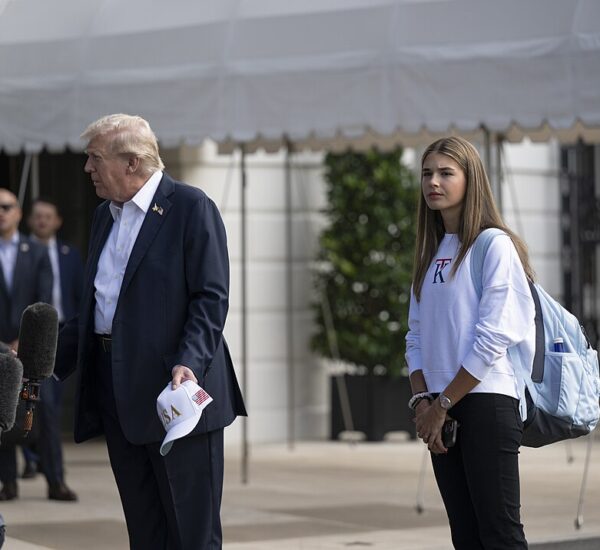
Trump addressed the incident Tuesday night following a trip to Geneva, Ohio, for the Freedom 250 Patriot Games.
According to the president, the decision wasn’t his.
Trump said he followed instructions from the Secret Service and military, making clear that he defers to the professionals responsible for presidential security when they determine additional precautions are necessary.
The president explained that security officials wanted him traveling aboard another aircraft and that he complied with their recommendation.
For Trump, the decision appeared straightforward: his security team made the call, and he followed it.
The State Department declined to discuss the reported fighter-jet protection.
Why Would A President Use A Decoy Aircraft?
The episode illustrates one of the unique challenges involved in protecting an American president overseas.
Air Force One is among the world’s most recognizable aircraft. While that makes it a powerful symbol of the American presidency, its visibility can also present obvious security considerations.
Presidential protection involves far more than the agents Americans see surrounding the commander in chief.
The Secret Service works alongside the U.S. military and other government agencies to protect presidential transportation, secure locations and prepare for potential threats.
Changing aircraft can introduce uncertainty about the president’s actual location.
In this case, the plane normally associated with Trump’s travel continued along its expected route while Trump departed aboard another aircraft.
The reported fighter escort suggests security officials were simultaneously taking steps to protect the people who remained aboard the original plane.
Senior Trump Officials Remained Aboard
That point is particularly important because the original aircraft was still carrying high-ranking members of the U.S. government.
Rubio serves as America’s top diplomat, while Bessent leads the Treasury Department. Numerous White House personnel and journalists were reportedly aboard as well.
Questions emerged after the aircraft switch became public about whether those passengers had been unnecessarily exposed to danger.
The disclosure that U.S. fighter aircraft were providing protection adds important information to that debate.
It indicates that security officials had not simply moved Trump and abandoned the original aircraft to continue its journey without additional precautions.
Instead, the operation appears to have involved multiple layers of security.
Trump Says His New Plane May Have Faced More Risk
Trump also raised an interesting point after the operation became public.
The president suggested the aircraft he ultimately boarded could actually have faced greater danger.
His reasoning was that if a hostile actor discovered which aircraft was really carrying the president, that plane would immediately become the more important potential target.
The observation highlights the difficult decisions facing presidential security teams.
Moving a president can make his location harder to determine, but changing established travel procedures can create an entirely new set of security calculations.
Those decisions often have to be made quickly and with information that cannot immediately be shared with the public.
Extraordinary Security Measures Come Into Focus
Presidential security procedures are intentionally secretive. Publicly revealing exactly how the Secret Service responds to specific threats could make future protection more difficult.
That means Americans frequently learn only portions of what occurred after an incident has passed.
In this case, the public initially learned that Trump had changed aircraft.
Now there is another significant piece of the puzzle: the plane continuing without him was reportedly accompanied by American fighter jets.
That detail paints a much broader picture of the precautions being taken.
Rather than a simple last-minute change of aircraft, the episode appears to have been a carefully coordinated operation involving the Secret Service, U.S. military, presidential transportation and senior administration officials.
What The New Details Mean
For Americans concerned about presidential security, the incident demonstrates the enormous operation working behind the scenes whenever the commander in chief travels abroad.
It also reinforces Trump’s explanation that he was following the recommendations of his security professionals rather than personally designing the elaborate maneuver.
There are still unanswered questions, particularly about the specific intelligence that caused officials to believe such extraordinary precautions were warranted.
Some operational details may never become public for legitimate security reasons.
But the disclosure of a fighter escort changes the picture significantly.
The aircraft carrying Rubio, Bessent, White House personnel and members of the press reportedly remained under American military protection even after Trump was moved elsewhere.
And while the public saw a presidential aircraft continuing on its expected journey, an extensive security operation was apparently unfolding largely out of sight.
For Trump, the episode also serves as a reminder of a reality faced by every commander in chief: when the Secret Service and military determine a threat requires immediate action, even the president’s carefully planned travel schedule can change without warning.