Here’s what Trump’s team discovered.
The Trump administration’s widening crackdown on government fraud is putting a renewed spotlight on allegations that taxpayer-funded programs have been exploited on a massive scale.
Vice President JD Vance says federal investigators have uncovered patterns involving individuals within certain migrant communities who allegedly learned how to take advantage of weaknesses in government benefit programs and then shared that information with others.
The allegations come as President Donald Trump makes combating waste, fraud and abuse a major priority of his administration.
And according to Vance, the amount of money involved is staggering.
Federal investigators have identified an estimated $230 billion in suspected fraud since Trump returned to office, according to the vice president, while authorities have also blocked about $55 billion in payments believed to be connected to fraudulent activity.
For American taxpayers, those numbers raise an obvious question: How was so much potentially fraudulent activity able to get through the system in the first place?
Vance Sounds Alarm Over Government Benefit Fraud
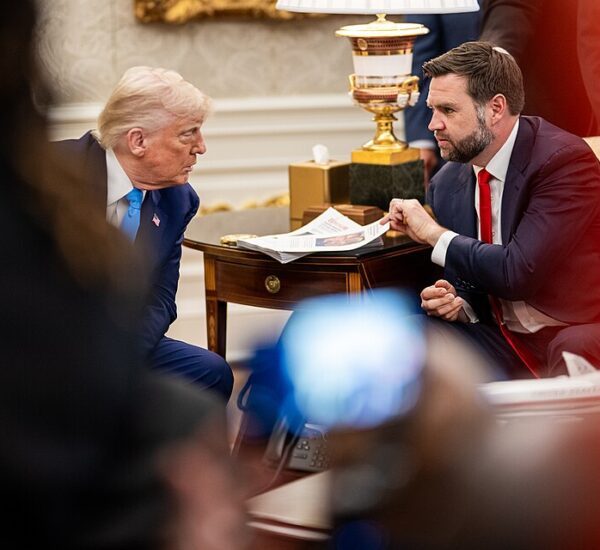
Vance discussed the administration’s findings while explaining his work leading Trump’s anti-fraud initiative.
According to the vice president, investigators have discovered cases in which people allegedly exploited weaknesses in taxpayer-funded programs.
Vance said one problem occurs when someone discovers that a government program has inadequate verification procedures.
Once that weakness becomes known, he said, information about how to exploit it can spread rapidly through personal networks.
Vance pointed specifically to alleged situations in which applicants claimed to have children in order to obtain government money despite allegedly not having children who qualified for the programs.
He also discussed patterns investigators have encountered within parts of the Somali community.
Those allegations involve specific individuals and organizations and should not be interpreted as evidence that immigrants or Somali Americans generally are involved in fraud.
But administration officials say the cases illustrate a much larger problem: federal programs can become attractive targets when safeguards fail to prevent fraudulent claims.
American Taxpayers Are the First Victims
For Vance, the most obvious victims are the millions of Americans who pay taxes every year and expect Washington to spend their money responsibly.
“The first and the most obvious victim is the American taxpayer,” Vance told Fox News Digital.
That argument could resonate with Americans who have watched federal spending climb while household budgets remain under pressure.
Whether taxpayers support or oppose a particular government program, Vance argues they should at least be able to expect that the money reaches people who legitimately qualify.
Fraud undermines that basic expectation.
Every dollar obtained through a fraudulent claim is money that cannot be used for its intended purpose — or returned to taxpayers.
Families Who Need Help Can Also Lose
The damage doesn’t necessarily end with taxpayers.
Fraud can potentially drain resources from Americans who legitimately need government assistance.
Vance pointed to mothers with newborn babies and families raising children with autism as examples.
If criminals siphon money from programs designed to help vulnerable families, legitimate recipients could ultimately face fewer available resources or greater difficulty receiving services.
That is one reason the administration is framing its anti-fraud campaign as more than a battle over federal spending.
Officials say it is also about protecting Americans who follow the rules.
Vance Says $230 Billion in Fraud Has Been Uncovered
The size of the alleged problem is one of the most striking elements of the administration’s campaign.
Vance says approximately $230 billion in fraud has been uncovered since Trump returned to the White House.
He also says officials have prevented approximately $55 billion in federal payments to suspected fraudsters.
Those are figures attributed to Vance and the administration, and the ultimate amount of proven fraud may depend on audits, investigations, prosecutions and other enforcement proceedings.
Nevertheless, the numbers help explain why Trump has elevated the issue inside the White House.
Rather than concentrating solely on recovering money after fraud occurs, officials are attempting to identify suspicious payments before taxpayer dollars leave government accounts.
Why Recovering the Money Is So Difficult
Stopping fraud before a payment is made is considerably easier than recovering money afterward.
“Getting money back is very hard,” Vance said.
Once money has been transferred and spent, federal investigators can face a lengthy process involving criminal investigations, asset tracing, court proceedings and attempts to recover remaining funds.
That means prevention could save taxpayers considerably more than attempting to recover money after it disappears.
“What we’ve done most effectively is actually just stop the money from going out the door in the first place,” Vance said.
That approach is becoming a central component of the administration’s strategy.
Medicare and Medicaid Fraud Under Investigation
Healthcare programs are also receiving increased scrutiny.
Vance is working with Centers for Medicare & Medicaid Services Administrator Dr. Mehmet Oz and other federal agencies as the administration examines suspected fraud involving healthcare providers.
Hundreds of hospice and home-health agencies suspected of fraud in Minnesota and California have reportedly had federal payments suspended in recent months.
Other states are also receiving scrutiny.
The Department of Justice recently announced charges against 19 defendants accused of participating in schemes involving more than $4 million in claims submitted to Medicare and Medicaid.
Separately, Pennsylvania Attorney General Dave Sunday announced a plea agreement involving the final defendant in an earlier 21-defendant case connected to more than $1.7 million in claims.
Criminal charges are allegations, and defendants are presumed innocent unless proven guilty.
But the cases underscore the enormous amount of taxpayer money flowing through America’s healthcare system — and the opportunities criminals may see when oversight fails.
Minnesota Fraud Allegations Drew National Attention
Minnesota has become one of the most visible battlegrounds in the national debate over government fraud.
Independent journalist Nick Shirley generated widespread attention with reporting about daycare centers suspected of improperly collecting taxpayer money.
One location attracting particular attention was the “Quality Learing Center,” whose misspelled name became widely discussed online.
Some businesses highlighted in the reporting were operated by Somali immigrants, bringing increased scrutiny to alleged fraud within portions of Minnesota’s Somali community.
The reporting helped turn what had largely been a state-level controversy into a national political issue.
The Trump administration subsequently intensified federal activity in Minnesota as officials examined alleged fraud and pursued immigration enforcement.
The situation also produced heated demonstrations and confrontations surrounding federal enforcement activity.
While allegations involving particular defendants should never be applied to an entire ethnic or immigrant population, Trump officials argue that authorities cannot ignore suspected fraud because of the background of those involved.
Their position is that the law should apply equally to everyone.
Trump Puts JD Vance in Charge
President Trump has given Vance a significant role in the administration’s effort to uncover government fraud.
Vance was selected to lead the White House anti-fraud task force in May, a position that has led to him being described as Trump’s “Fraud Czar.”
The assignment adds to an already substantial portfolio for the vice president.
Vance has also taken a major role in foreign policy and negotiations involving Iran, making him one of the most prominent members of Trump’s second administration.
But the fraud investigation could have particularly significant consequences at home.
Americans have heard politicians promise to eliminate government waste for decades.
The Trump administration now faces the challenge of demonstrating that it can actually stop questionable payments and produce measurable savings for taxpayers.
Trump’s Fraud Crackdown Could Save Billions
For conservatives who have long demanded smaller and more accountable government, the anti-fraud campaign touches on a fundamental concern.
The issue isn’t necessarily whether every federal assistance program should exist.
The more immediate question is whether Washington can guarantee that taxpayer money actually reaches the people Congress intended to help.
If someone lies on an application, creates fictitious beneficiaries, submits fraudulent healthcare claims or otherwise manipulates a federal program, taxpayers ultimately pay the price.
Trump and Vance are betting that tougher verification, closer oversight and faster intervention can stop billions of dollars from disappearing.
The administration’s reported decision to halt approximately $55 billion in questionable payments suggests prevention will remain a central focus.
What Happens to the Suspected Fraudsters?
Stopping a payment is only part of the process.
When investigators believe criminal fraud occurred, cases can potentially lead to federal charges, prosecution, financial penalties and efforts to recover taxpayer money.
Immigration consequences may also arise separately for noncitizens who violate U.S. law, depending on their individual circumstances and applicable immigration law.
The administration has made both immigration enforcement and government accountability major priorities.
That combination means cases involving noncitizens accused of defrauding government programs could receive especially close attention.
Still, each case must be judged on its individual facts rather than someone’s nationality or ethnicity.
The Bigger Question for Washington
The controversy ultimately extends far beyond immigration.
If federal programs can be manipulated because basic information isn’t adequately verified, then the problem is also one of government oversight.
That raises difficult questions for Washington.
How many federal programs contain similar vulnerabilities?
How much taxpayer money has already disappeared?
How much can realistically be recovered?
And most importantly, what is being done to prevent it from happening again?
Those questions could become increasingly important as the Trump administration continues investigating suspected fraud across the country.
Bottom Line
President Trump’s anti-fraud campaign is rapidly becoming a major test of his administration’s promise to protect American taxpayers and bring greater accountability to Washington.
Vance says investigators have uncovered approximately $230 billion in fraud and prevented another $55 billion in payments to suspected fraudsters.
Investigations involving Medicare, Medicaid, daycare programs, hospice providers and home-health agencies suggest the administration’s crackdown could continue expanding.
Cases involving members of migrant communities have received significant attention, but the larger issue is not where someone comes from.
It’s whether taxpayer-funded programs are being exploited — and whether Washington is capable of stopping it.
For Americans who work, pay taxes and expect the government to safeguard their money, that is the question that matters most.