Speaker Johnson Cancels House Vote
House Speaker Mike Johnson (R-La.) was forced to pull a major veterans benefits package from the House floor Thursday after several Republicans joined Democrats in opposing the legislation. The unexpected setback exposed growing divisions within the GOP over whether expanding benefits for some veterans should be financed by reducing certain disability payments for others.
The bill, known as the Take Care of America’s Veterans Act, combines more than 60 separate veterans-related measures into one legislative package. While many of its provisions have earned broad bipartisan support, several funding changes sparked opposition from Republican lawmakers and major veterans organizations.
At the center of the debate is the Major Richard Star Act, a long-sought proposal that would allow medically retired combat veterans to receive both their full military retirement pay and Department of Veterans Affairs disability compensation at the same time. Many veterans groups have argued for years that injured service members deserve both benefits without offsetting one against the other.
Mike Johnson Faces Republican Revolt
House Republican leaders attempted to advance the legislation, but resistance within their own conference quickly became apparent during a key procedural vote.
Three Republicans — Reps. Anna Paulina Luna (R-Fla.), Max Miller (R-Ohio), and Jeff Van Drew (R-N.J.) — joined Democrats in supporting a motion that would have sent the bill back to committee for revisions. Although the motion narrowly failed by a 211-210 vote, it demonstrated that GOP leadership likely lacked enough support to pass the bill.
Had the procedural vote succeeded, Democrats planned to offer amendments eliminating several cost-saving provisions involving VA home loan program fees and disability benefits related to tinnitus and sleep apnea.
Recognizing the legislation was in trouble, Johnson held an emergency meeting with a group of moderate Republicans just outside the House chamber in a final effort to secure the votes needed to move forward.
Despite the last-minute negotiations, leadership was unable to build enough support, forcing Johnson to shelve the vote.
Heated Meeting Highlights GOP Divide
According to multiple reports, the closed-door meeting became increasingly tense as lawmakers debated the proposal.
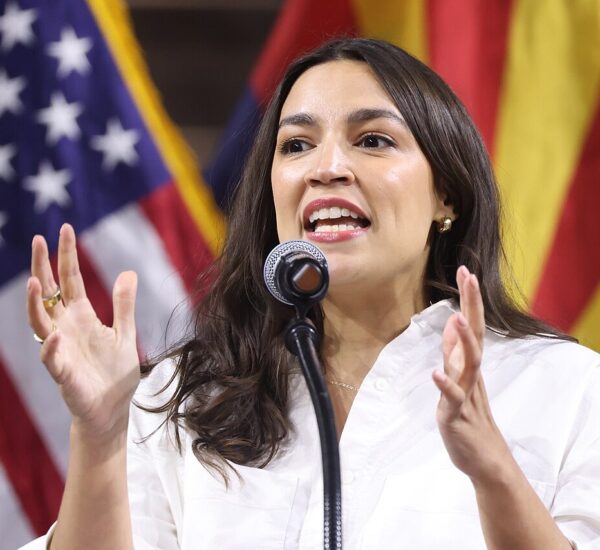
Rep. Anna Paulina Luna later defended her decision to oppose the legislation, arguing that veterans should never lose existing benefits in order to finance new programs.
Luna wrote on X that, as both a military veteran and the representative of a district with a large veteran population, she would not support legislation that reduces veterans’ benefits or limits the ability of current service members to file future claims.
She also claimed she was told to “stop talking” during the discussion after raising concerns about the proposed changes to veterans’ benefits.
Rep. Jeff Van Drew echoed many of those concerns, saying the legislation included worthwhile reforms but relied on the wrong funding mechanism.
Van Drew said the bill contains several positive reforms, but argued that expanding benefits should not come at the expense of lowering disability compensation for veterans with service-connected medical conditions. He added that Congress should pursue a better solution by passing the Major Richard Star Act first.
What Is the Major Richard Star Act?
The Major Richard Star Act has remained one of the highest priorities for many veterans organizations.
Under current law, thousands of medically retired combat veterans are prohibited from receiving both full military retirement pay and VA disability compensation. Supporters argue that veterans who suffered life-changing injuries while serving the nation should receive the full benefits they earned without one payment reducing the other.
The proposal has attracted bipartisan support for years, but lawmakers have repeatedly disagreed over how to cover its cost.
Why Veterans Groups Oppose the Bill
Although many veterans organizations strongly support expanding benefits through the Major Richard Star Act, several objected to using reductions in other veterans’ benefits as a way to pay for those improvements.
Disabled American Veterans (DAV) said Congress should not reduce benefits for one group of veterans in order to provide additional benefits to another.
The Veterans of Foreign Wars (VFW) has also argued that disability compensation should never be treated as a budget offset.
Both organizations have campaigned against portions of the legislation since it was introduced earlier this year. The VFW has intensified its opposition in recent weeks, urging lawmakers to honor commitments already made to disabled veterans while pursuing additional reforms through separate legislation if necessary.
What’s Next for the Veterans Benefits Bill?
With the legislation now on hold, House Republican leaders are expected to continue negotiating changes that could attract broader support within the conference.
Many lawmakers on both sides of the aisle continue to back the Major Richard Star Act and agree that combat-injured veterans deserve expanded retirement benefits. However, disagreements over how to finance those improvements remain the biggest obstacle to moving the broader package through Congress.
Until lawmakers reach a compromise, the future of the Take Care of America’s Veterans Act remains uncertain, leaving thousands of veterans waiting to see whether Congress can deliver the benefits many have sought for years.