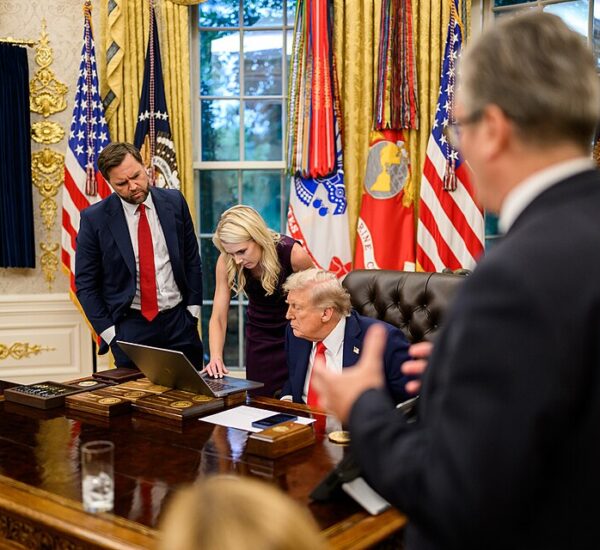
Former national security adviser Susan Rice is criticizing President Trump’s memorandum of understanding (MOU) with Iran, calling the 14-point agreement “flimsy” and arguing that too many concessions were granted before a comprehensive deal was reached. Rice said the agreement may have ended the conflict but contended that it leaves the United States in a weaker position than before.
BACKGROUND
During an appearance on ABC News’ “This Week,” Rice argued that the conflict itself was unnecessary, describing it as a war that previous presidents had avoided. She also raised concerns about the administration’s handling of the Strait of Hormuz, a key global shipping route through which roughly a quarter of the world’s oil supply travels.
In a separate interview, Chris Wright defended the administration’s approach, saying President Trump used pressure on Iran and disruptions to normal shipping flows as leverage to bring Iranian leaders to the negotiating table. According to Wright, restoring normal conditions without cooperation from Iran would have reduced that leverage. Rice, however, maintained that while the MOU may have ended the war, the agreement ultimately leaves the United States in a worse strategic position.
Congress Set To Pass Key Bill
Congress is moving closer to passing one of the most significant housing reform packages in decades, giving lawmakers from both parties a rare opportunity to claim a major legislative victory.
After months of back-and-forth discussions between lawmakers from both parties in the House and Senate, the legislation known as the 21st Century ROAD to Housing Act is now approaching final votes that could take place within days.
Supporters say the bill takes aim at several factors that have made homeownership increasingly difficult for American families, including excessive regulations, limited housing supply, rising construction costs, and growing competition from large corporate investors.
For millions of Americans struggling with high home prices and rising rents, lawmakers argue the package represents a meaningful step toward increasing housing availability and improving affordability.
A Response To America’s Housing Shortage
Housing affordability has become a growing concern across the country. Home prices remain elevated in many communities, rents continue climbing, and the average age of first-time homebuyers has reached record highs.
The legislation is being championed by an unusual bipartisan coalition, including Sen. Elizabeth Warren (D-MA), Sen. Tim Scott (R-SC), Rep. French Hill (R-AR), and Rep. Maxine Waters (D-CA).
Supporters argue that Washington has spent years talking about housing problems without addressing the underlying causes. They believe this package could help remove barriers that have slowed new construction and limited the supply of available homes.
If approved and signed into law by President Donald Trump, backers say it would mark the largest federal housing reform effort in roughly 30 years.
What The Housing Bill Would Do
The legislation contains more than 45 separate provisions designed to encourage new housing development and improve existing neighborhoods.
Among its major components:
- Encourages communities to identify and develop new housing sites.
- Provides grants and loans to renovate aging homes.
- Supports converting vacant and abandoned properties into housing.
- Expands opportunities for manufactured housing construction.
- Creates incentives for local governments that approve additional housing development.
- Simplifies certain environmental review requirements that can delay projects for years.
- Seeks to increase the overall supply of homes available to American families.
One provision receiving significant attention would discourage large investment firms from purchasing newly built single-family homes, an issue many lawmakers say has contributed to rising prices and reduced opportunities for individual buyers.
Republican Sen. Steve Daines of Montana praised the measure, arguing that corporate investors have increasingly competed against families trying to purchase homes.
Supporters believe limiting institutional purchases could help keep more homes available for American buyers rather than large investment funds.
Housing Advocates See Progress
Groups focused on housing supply have welcomed the legislation as a shift away from temporary affordability programs and toward addressing the root causes of high housing costs.
Housing advocates argue that simply providing assistance does little if there are not enough homes being built. Increasing supply, they say, remains one of the most effective long-term solutions.
Many supporters view the package as an acknowledgment that restrictive regulations and limited construction have contributed to affordability challenges nationwide.
What The Bill Does Not Include
Despite broad support, the legislation stops short of creating large new federal housing spending programs.
Some Democrats had pushed for direct federal funding to expand affordable housing initiatives, but those proposals were left out of the final package.
Sen. Chris Murphy (D-CT) described the bill as an important first step but cautioned that it will not solve every housing challenge facing states and local communities.
Critics note that many zoning restrictions, permitting hurdles, and local development policies remain outside federal control and will still need to be addressed by state and local governments.
Why Some Republicans Oppose The Measure
While the legislation received strong bipartisan support, several Republican senators voted against advancing the bill.
Some conservatives argued that the proposal does not go far enough in reforming federal permitting rules.
Others questioned whether Washington should play a larger role in housing policy at all.
Sen. Rick Scott (R-FL) said housing affordability is primarily a local issue and argued that lowering interest rates and improving fiscal discipline would have a greater impact on housing costs than federal intervention.
According to Scott, reducing inflationary pressures and balancing the federal budget would do more to help prospective homeowners than additional housing programs.
Final Votes Coming Soon
The Senate is expected to hold a final vote on the housing package Monday evening, with the House scheduled to consider the legislation later in the week.
If approved by both chambers and signed into law, the measure would represent one of the most significant bipartisan housing reforms in a generation and could influence how communities across America address housing shortages for years to come.