
Here’s what was said.
A federal court battle is raising serious questions about presidential authority, government spending, and who ultimately controls some of America’s most historic properties.
At the center of the controversy is a massive White House construction project backed by the Trump administration. Critics argue the project moved forward without the approval of Congress, while administration officials insist the work is necessary to strengthen security and modernize facilities used by the president.
The legal fight reached a dramatic moment during a federal appeals court hearing when judges pressed government lawyers on whether courts would have any real power to stop a president from moving forward with a major demolition project once construction crews were already at work.
For many Americans, the case has become about far more than a new White House ballroom.
It is now shaping into a broader debate over constitutional checks and balances, taxpayer dollars, national security, and the limits of executive power.
Judge Raises Statue Of Liberty Hypothetical
One of the most striking moments during the hearing came when Judge Patricia Millett challenged the administration’s legal position with a hypothetical scenario involving one of America’s most recognizable landmarks.
Millett questioned whether courts would be powerless to intervene if a president ordered the demolition of a national monument before opponents had time to file a lawsuit and obtain an injunction.
Using the Statue of Liberty as an example, the judge asked whether anything could be done once demolition had already begun.
The question was designed to test the administration’s argument that legal challenges become extremely difficult once construction or demolition work is underway.
According to court reports, Justice Department attorney Yaakov Roth indicated that under the government’s legal theory, there may be little courts could do after the fact if a project had already moved forward.
The exchange underscored the central issue before the court: whether a president can effectively avoid judicial intervention simply by acting quickly before legal challenges are resolved.
Supporters of the administration argue the comparison is far-fetched and unrelated to the White House project itself. Critics, however, say the judge’s question highlighted broader concerns about executive authority and judicial oversight.
Why Critics Are Concerned
Opponents of the project argue that Congress—not the White House—has the authority to approve major construction projects involving historic federal property.
A federal judge previously suggested that existing law does not appear to grant any president unlimited authority to undertake such construction without congressional approval.
That ruling fueled concerns among preservation groups and constitutional scholars who believe allowing the project to continue without congressional authorization could set an important precedent for future administrations.
Critics say the case is not simply about a ballroom.
They argue it is about preserving the constitutional role of Congress and ensuring that major government decisions remain subject to oversight and accountability.
The lawsuit was filed by the National Trust for Historic Preservation, which maintains that significant alterations to White House grounds should require congressional approval before construction begins.
Administration Says Security Is The Priority
The Trump administration strongly disputes those arguments.
According to court filings, officials say the project is intended to improve security around the White House and provide infrastructure necessary to protect the president and senior government officials.
While public attention has focused on plans for a new ballroom, court documents indicate the broader project includes extensive security-related construction beneath the site.
Government filings describe reinforced structural systems, specialized protective glass, advanced ventilation systems, emergency medical facilities, secure shelters, and other security features designed to address modern threats.
Administration lawyers argue these improvements are essential to ensuring the president can safely carry out constitutional responsibilities in an increasingly dangerous security environment.
The Justice Department has also complained that details about the project’s security features became public during the legal battle, arguing that much of the information would normally remain confidential for national security reasons.
Funding Questions Continue To Grow
Questions surrounding the project’s financing have also become a major point of controversy.
Administration officials have stated that patriotic private donors have pledged substantial financial support for the effort.
However, watchdog organizations have raised concerns about whether some donors later benefited from expanded federal contracts after contributing to the project.
Reports examining publicly identified donors found that several companies associated with the project received significant government business after construction began.
While supporters argue there is no evidence of wrongdoing, critics say the relationships deserve closer scrutiny.
The administration also sought additional taxpayer funding for security upgrades associated with the project.
Those funding requests faced resistance in Congress, where lawmakers questioned both the overall cost and the scope of the proposal.
Several requested funding provisions were ultimately excluded from broader spending legislation after encountering procedural and political obstacles on Capitol Hill.
What Happens Next?
The appeals court must now decide whether construction can continue while the lawsuit moves forward.
That decision could have consequences far beyond the White House project itself.
If the court sides with the administration, it could strengthen presidential authority over certain federal construction projects and limit the ability of opponents to stop work once it begins.
If the court rules against the administration, it could reinforce Congress’s role in approving major changes to historic federal property and clarify the limits of executive power.
Either way, the outcome is expected to become an important legal test involving presidential authority, government accountability, and constitutional oversight.
For many Americans, the core question remains straightforward: Who should have the final say when major changes are made to historic government property—the president or Congress?
The courts may soon provide an answer, but the debate over executive power and constitutional limits is likely to continue long after this case is decided.
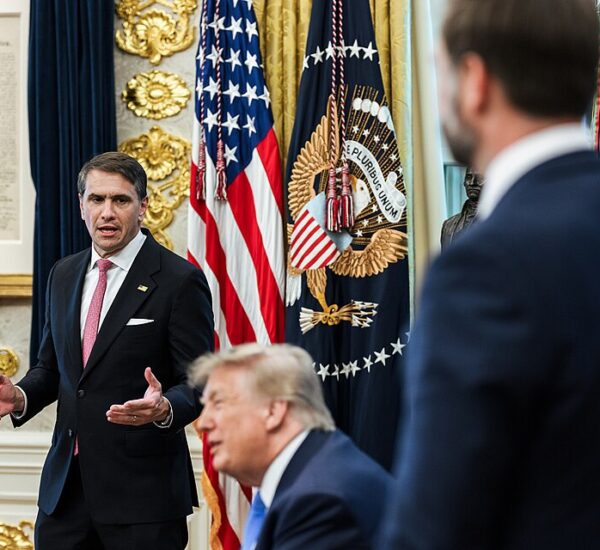



So apparently we are supposed to ‘believe’ that none of the naysayers had a clue that the renovation was going to happen until the demo crews showed up?
As to that ‘judge’ with her hypothetical scenario that is as classical applies to oranges issue as any that anyone could possibly come up with.
Now democrats are concerned about national monuments when they had control the were tearing them down and chopping heads off some of them or pulling them over. Democrats are the biggest pieces of sh-t ever they always forget what they have done and got away with. Now that Trump wants to do something their hemorrhoids get inflamed stick your fingers into it a message them. Then switch with your stupid mouth. democrats is like a one way street of assholes.