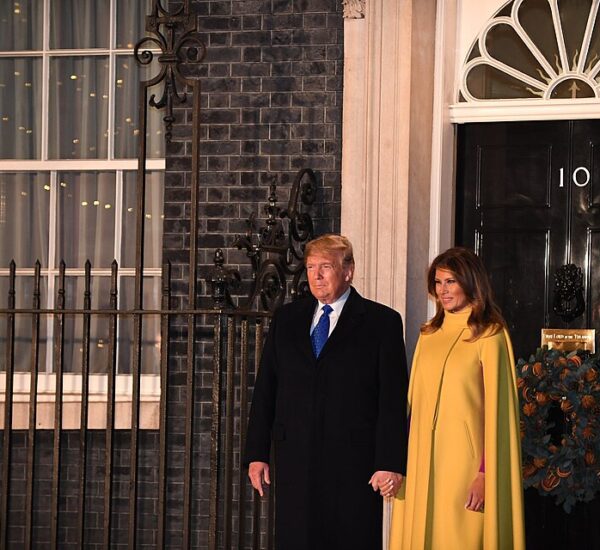
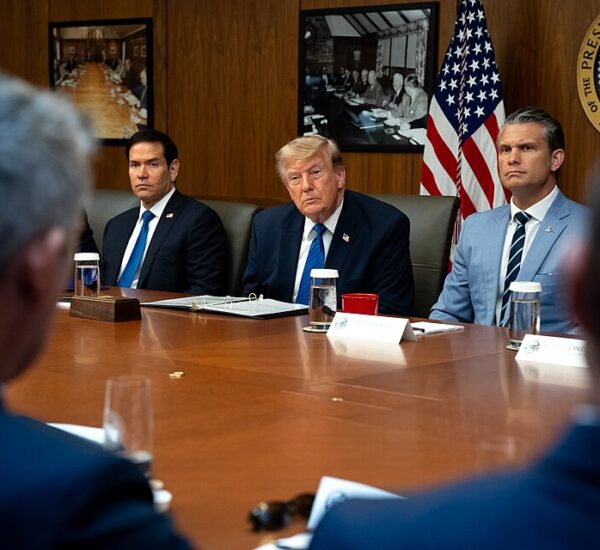
President Donald Trump is once again grabbing national attention—this time with a surprising admission about one of his boldest and most talked-about decisions since returning to the White House.
During an interview on Sunday Morning Futures, Trump revealed he briefly considered naming the Gulf of America after himself—but ultimately decided against it.
“I thought about calling it the ‘Gulf of Trump,’” he said. “But I figured that probably wouldn’t play too well. I’m kidding… mostly.”
Why Trump Changed the Name in the First Place
Trump has long questioned why the Gulf of Mexico carries its current name—especially given America’s major presence along its coastline.
“Why is it the Gulf of Mexico when America controls so much of it?” Trump asked.
His administration officially moved to rename it the “Gulf of America” early in his current term, framing the decision as part of a broader push to restore American pride, identity, and ownership.
Supporters praised the move as long overdue. Critics, as expected, pushed back.
According to the United States Geological Survey, the U.S. controls less than half of the Gulf’s shoreline—but for many Americans, the issue goes beyond percentages. It’s about leadership and influence.
Energy Dominance Is the Real Story
While the media fixates on names, Trump is focused on something far bigger: American energy dominance.
In a recent post on Truth Social, Trump announced a massive surge in U.S. oil exports, highlighting America’s position as a global energy powerhouse.
“We have more oil than anyone—and it’s better quality,” Trump said. “The world needs it, and we’re ready.”
Massive oil tankers are already heading toward U.S. ports, preparing to ship out American energy to allies dealing with growing instability overseas.
Showdown in the Strait of Hormuz
That instability is centered around the Strait of Hormuz—one of the most critical oil routes on the planet.
Roughly 20% of the world’s oil supply flows through this narrow passage.
Now, with Iran creating new threats—including lost naval mines and attempts to charge passage fees—Trump is taking decisive action.
The president has announced a full-scale blockade strategy, signaling a return to strong, no-nonsense foreign policy that prioritizes American interests and global stability.
Trump’s Signature Style: Bold, Unapologetic Leadership
Trump’s willingness to rename major landmarks—and even joke about naming them after himself—reflects something deeper about his leadership style.
He’s not afraid to challenge tradition, question long-standing norms, or put America front and center.
We’ve seen it before.
The United States Institute of Peace was renamed in his honor, and discussions once swirled around rebranding the John F. Kennedy Center for the Performing Arts.
Love him or hate him, Trump consistently does what few politicians are willing to do—shake things up.
The Bottom Line
Trump may joke about calling it the “Gulf of Trump,” but the bigger picture is clear.
This isn’t just about names—it’s about American strength, energy independence, and leadership on the world stage.
And as global tensions rise, one thing is certain:
Under Donald Trump, America isn’t taking a back seat to anyone.