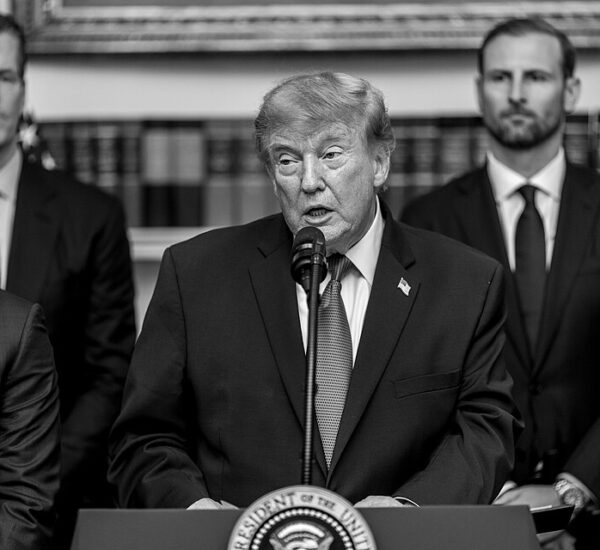
Trump Thanks His GOP Critic
President Donald Trump delivered rare public praise for Sen. Rand Paul (R-KY) on Thursday after a key vote helped advance plans for a major White House ballroom project—a long-discussed upgrade aimed at restoring elegance and prestige to America’s most iconic residence.
The National Capital Planning Commission (NCPC) approved the proposal in a decisive 8-1 vote, clearing an important hurdle for the ambitious expansion.
Posting on Truth Social, Trump didn’t hold back his enthusiasm.
“I want to thank the hardworking members of the National Capital Planning Commission for their overwhelming support of the magnificent White House Ballroom,” Trump wrote. “Even Senator Rand Paul—known as a very tough vote—voted a strong YES.”
Rare Trump–Rand Paul Alignment Signals GOP Unity
The moment caught many in Washington off guard.
Trump and Paul have had a complicated relationship over the years, with Paul frequently challenging Republican spending priorities and voicing concerns about economic policy, including tariffs. Trump has previously criticized Paul for opposing key initiatives.
But this vote signals something different: a moment of Republican alignment behind a project tied to American tradition, national pride, and global leadership.
For many conservatives, that unity is a welcome shift.
Inside the $400 Million White House Ballroom Plan
At the center of the debate is a 90,000-square-foot ballroom designed to accommodate up to 1,000 guests—a dramatic upgrade from the temporary tents currently used for large state functions.
Supporters argue the current setup falls short of what the United States should offer when hosting world leaders.
The proposed ballroom would:
- Provide a permanent, weather-proof venue for state dinners
- Enhance America’s image on the global stage
- Reflect the historic dignity of the presidency
Even more appealing to fiscal conservatives, the estimated $400 million project will be largely funded by private donors, limiting taxpayer exposure.
Critics Push Back Over Size and Long-Term Impact
Despite overwhelming approval, opposition remains.
Phil Mendelson, chairman of the D.C. Council, cast the lone dissenting vote, arguing the ballroom’s scale could clash with the historic White House complex.
He expressed concern that the structure may be too large and suggested a more compact design could achieve the same goals without altering the visual balance of the grounds.
Mendelson also warned against approving changes in isolation, urging officials to consider a broader, long-term plan for White House renovations.
Federal Judge Halts Construction, Setting Up Legal Fight
Just as momentum builds, the project has hit a significant legal obstacle.
A federal judge recently ruled that the Trump administration may lack the authority to proceed without congressional approval, temporarily halting construction.
The ruling introduces new uncertainty and could trigger a high-profile legal battle over executive authority, federal oversight, and the future of the White House grounds.
A Bigger Vision: Restoring American Greatness and Prestige
For President Trump and his supporters, this project is about more than construction—it’s about restoring a sense of American greatness.
A permanent, world-class ballroom would allow the United States to host foreign dignitaries with the level of excellence expected from a global superpower.
Backers say it’s a long-overdue upgrade that aligns with Trump’s broader vision of strengthening America’s image both at home and abroad.
What Happens Next?
While the NCPC vote marks a major step forward, the project’s future now depends on how the legal challenges unfold.
If approved, the ballroom could be completed by 2028, transforming how official White House events are held for generations to come.
For now, the debate continues—pitting tradition, modernization, and executive authority against legal and political resistance.