This was historic and unprecedented.
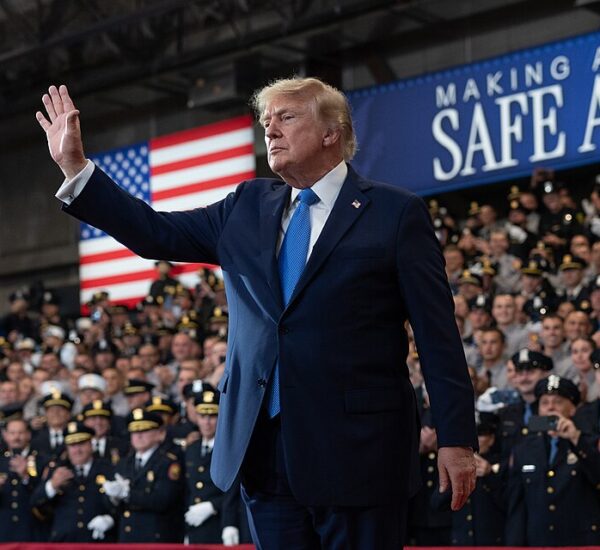
In a moment that stunned court watchers and everyday Americans alike, President Donald Trump made history Wednesday by personally attending arguments at the U.S. Supreme Court — something no sitting president has ever done before.
The unprecedented move immediately drew attention nationwide, as the case itself could reshape the future of American citizenship.
A Rare Presidential Move Inside the Supreme Court
Dressed in a dark suit and signature red tie, President Trump entered the courtroom just minutes before proceedings began. He remained silent, as required by court rules, but his presence alone sent a powerful message.
Seated alongside top officials including Commerce Secretary Howard Lutnick and Attorney General Pam Bondi, Trump closely followed the arguments presented by his legal team.
Observers noted that while the president briefly rested his eyes at times, he remained focused throughout much of the hearing — a clear sign of how seriously this issue is being taken at the highest level.
After more than an hour, Trump exited quietly without speaking to reporters.
Shortly afterward, he posted on Truth Social:
“We are the only Country in the World STUPID enough to allow ‘Birthright’ Citizenship!”
That message quickly spread across social media, reigniting debate across the country.
Why This Case Matters to Every American
At the center of the case is President Trump’s executive order targeting birthright citizenship — a policy many conservatives argue has been widely abused for decades.
The order aims to limit automatic citizenship for children born in the U.S. to parents who are in the country illegally or temporarily.
Supporters say it’s about restoring common sense and protecting American sovereignty.
Critics argue it challenges long-standing interpretations of the Constitution.
Supreme Court Justices Push Back
During the hearing, several justices raised tough questions about the administration’s legal arguments.
Chief Justice John Roberts expressed doubts about whether the Constitution supports such a broad change.
He pointed out that existing exceptions to birthright citizenship — such as children of foreign diplomats — are extremely narrow.
Justice Ketanji Brown Jackson also questioned how the policy would work in real life, asking how hospitals or government officials would determine a newborn’s citizenship status.
Her concerns highlighted potential logistical challenges that could arise if the policy is enforced.
Signs of Support From Conservative Justices
Not all members of the court appeared skeptical.
Justices Clarence Thomas and Samuel Alito signaled they may be open to reconsidering how the 14th Amendment has been interpreted.
Justice Thomas raised a key point: the amendment was originally designed to guarantee citizenship for freed slaves after the Civil War — not necessarily to address modern immigration issues.
That argument could play a major role in how the court ultimately rules.
A Decision That Could Change America
So far, lower courts have ruled against the Trump administration’s policy.
But the Supreme Court now has the final say — and the outcome could have sweeping consequences.
A ruling against the president could slow momentum on stricter immigration enforcement.
A ruling in his favor could fundamentally redefine who qualifies as an American citizen.
The Bigger Picture
For many Americans — especially those concerned about border security and the rule of law — this case represents far more than a legal dispute.
It’s about identity.
It’s about fairness.
And it’s about the future direction of the United States.
With a decision expected later this year, one thing is certain:
The stakes could not be higher.