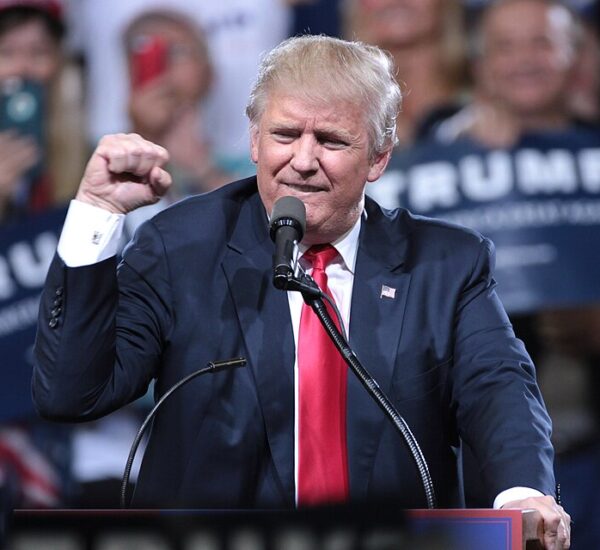
President Trump gave him the benefit of the doubt and he’s already messing up and it’s putting Americans at risk.
New York City homeowners are facing a new financial storm — and many are asking whether campaign promises about affordability are already being abandoned.
Mayor Zohran Mamdani is under growing criticism after suggesting a potential 9.5% property tax increase to help close New York City’s widening budget gap. For millions of working and middle-class homeowners, that proposal feels like a direct hit to household stability.
From “Affordable Housing” to Higher Property Taxes?
During a recent appearance at an event honoring the late Rev. Jesse Jackson, hosted by Al Sharpton’s National Action Network, Mamdani spoke about building a New York “where every family can afford a home.”
He also criticized federal immigration enforcement policies, calling for a nation that rejects what he described as “ICE’s cruelty and violence.”
But outside activist circles, the conversation quickly shifted to something more immediate: taxes.
Because just days later, Mamdani warned that if New York Governor Kathy Hochul and state lawmakers refuse to raise income taxes on the “ultra-wealthy” and large corporations, the city may be forced into “painful decisions of last resort.”
One of those decisions? Raising property taxes by nearly 10%.
3 Million Homes Could Be Impacted
A 9.5% property tax hike would affect approximately 3 million homes across New York City.
That’s not just luxury real estate.
That’s:
- Retirees living on fixed incomes
- Middle-class families trying to hold onto their homes
- Small business owners operating out of mixed-use properties
- Working homeowners already squeezed by inflation
For many Americans over 50, property taxes are not just another bill — they are a make-or-break factor in retirement planning.
Higher property taxes can:
- Increase monthly mortgage payments
- Drive up rents as landlords pass costs along
- Reduce home equity growth
- Force seniors to downsize or relocate
In a city already struggling with affordability, critics argue this move could push more residents out.
Middle-Class Families “Caught in the Middle”
During a press conference, Mamdani acknowledged that working and middle-class New Yorkers would bear the brunt of the proposal, noting a median income of around $122,000.
But in New York City, that income level often doesn’t stretch as far as it sounds — especially with rising insurance premiums, grocery prices, utility costs, and healthcare expenses.
Some Queens residents have publicly pushed back, saying they feel used as leverage in a political standoff between city and state leaders.
The frustration is clear: many homeowners believe they were promised affordability — not higher annual tax bills.
A Familiar Pattern?
For fiscal conservatives, this situation reinforces a broader concern seen in cities across America: efforts to tax “the wealthy” often end with middle-class homeowners absorbing the cost.
When city budgets tighten, property taxes become one of the fastest ways to generate revenue. But they also hit the most stable taxpayers — longtime homeowners who have invested decades into their communities.
For voters who prioritize:
- Lower taxes
- Responsible government spending
- Border enforcement
- Economic stability
this debate may signal a deeper political shift.
What Happens Next?
The final decision now depends on Albany. If state lawmakers approve income tax increases on high earners and corporations, the property tax proposal may not move forward.
If they don’t, New York City homeowners could see one of the largest property tax increases in recent memory.
For Americans watching from across the country — especially those nearing retirement — the story serves as a warning:
When local budgets spiral, homeowners often pay the price.
And with inflation still straining household budgets nationwide, many voters are asking whether higher property taxes are the solution — or simply another burden on families already stretched thin.