
Trump does it again!
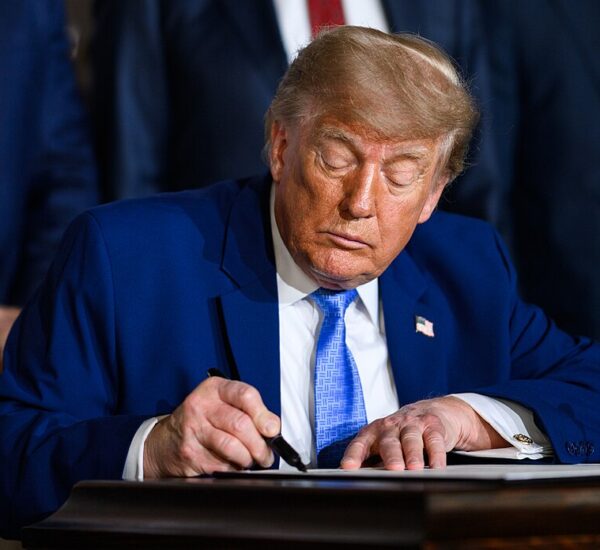
President Donald Trump made headlines Thursday after announcing that the United States will commit $10 billion to the newly created Board of Peace — a strategic initiative designed to rebuild Gaza and potentially address other global conflicts.
The announcement came during the Board’s first official meeting in Washington, D.C., signaling what could become a defining pillar of Trump’s second-term foreign policy strategy.
$10 Billion for Peace: “Cheaper Than War”
Trump framed the investment in practical terms that resonate with American taxpayers.
“When you compare it to the cost of war, that’s about two weeks of fighting,” the president said. “It sounds like a lot of money, but in reality, it’s a very small price to pay for peace.”
For Americans who have watched trillions spent overseas over the last two decades, the comparison is striking. Military operations in the Middle East have historically cost billions per month — not including long-term veteran care, equipment replacement, and national debt expansion.
Supporters argue that strategic reconstruction funding is fiscally responsible if it prevents prolonged military engagement.
What Is the Board of Peace?
The Board of Peace was authorized by the United Nations Security Council as part of its approval of the Trump administration’s 20-point Gaza stabilization framework.
However, Trump made it clear he envisions something larger than a single-region effort.
His proposal invites dozens of countries to become founding members by pledging $1 billion for lifetime participation — creating a long-term international coalition focused on:
- Conflict prevention
- Reconstruction efforts
- Regional economic stability
- Reducing reliance on military intervention
For many conservative voters over 50, this approach reflects a core principle: peace through strength — but without endless war.
Billions Already Raised From Foreign Nations
Trump also revealed that $7 billion has already been secured for Gaza relief from foreign partners including:
- Kazakhstan
- Azerbaijan
- United Arab Emirates
- Morocco
- Bahrain
- Qatar
- Saudi Arabia
- Uzbekistan
- Kuwait
That funding will be placed into a dedicated account at the World Bank known as the Gaza Reconstruction and Development Fund.
World Bank President Ajay Banga confirmed that the infrastructure is already operational.
“This fund is ready to receive the donations that he spoke about,” Banga said.
Oversight, Transparency, and Accountability
One major concern among American voters is oversight — especially when billions in taxpayer funds are involved.
According to Banga, the World Bank has assigned a financial controller to work directly with the Board of Peace to ensure:
- Legal compliance
- Financial safeguards
- Transparent distribution of funds
The Board itself is chaired by President Trump, who holds final authority over funding decisions.
Supporters argue that this centralized structure ensures accountability, while critics question how broad the board’s mission may become.
Where Is the $10 Billion Coming From?
The White House has not yet detailed the exact funding source for the U.S. commitment. That question will likely become central in upcoming congressional discussions.
For fiscal conservatives, clarity on whether the funds come from existing foreign aid allocations, defense budget restructuring, or new appropriations will matter greatly.
A Strategic Pivot in U.S. Foreign Policy?
If successful, the Board of Peace could signal a significant evolution in American foreign policy:
- Investing in reconstruction rather than prolonged occupation
- Leveraging international financial commitments
- Reducing long-term military expenditures
- Maintaining U.S. leadership in global stability
For many Americans who have lived through Vietnam, Iraq, Afghanistan, and decades of global interventions, the idea of preventing war rather than funding it indefinitely is a powerful message.
Whether the initiative remains focused on Gaza or expands to other regions, one thing is clear: President Trump is positioning the United States at the center of a new international peace framework.
And in a world where instability can quickly become expensive, the debate now turns to one simple question:
Is $10 billion a bold investment in stability — or a risk American taxpayers should scrutinize carefully?
As more details emerge, this story will continue to shape the national conversation around foreign policy, fiscal responsibility, and America’s role in the world.
Pursuing peace is too flimsy and is one thing. Taking care of domestic issues is another thing and is more important as far as getting the peoples vote. International peace is also determined by leaders of other countries, especially European countries where one cannot drop bombs at will. As far as I can tell America was built to break given the force of the Left.