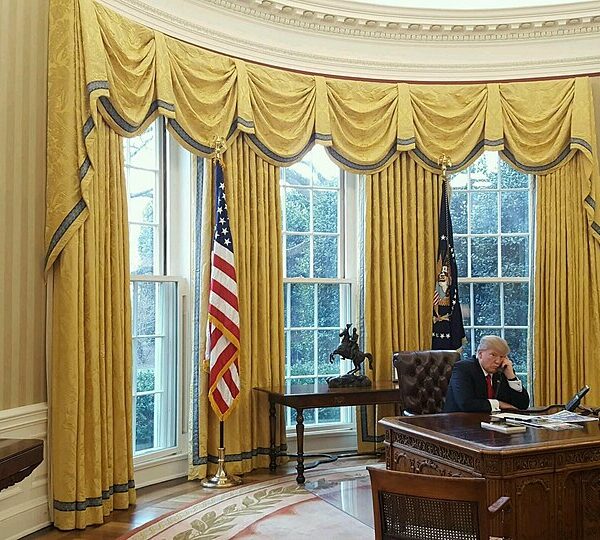
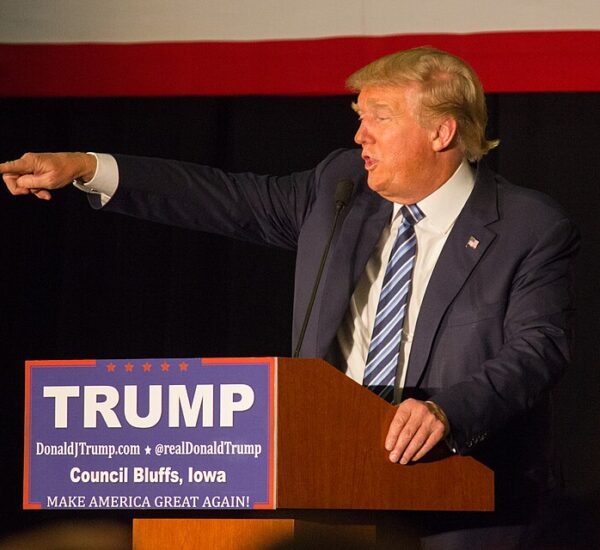
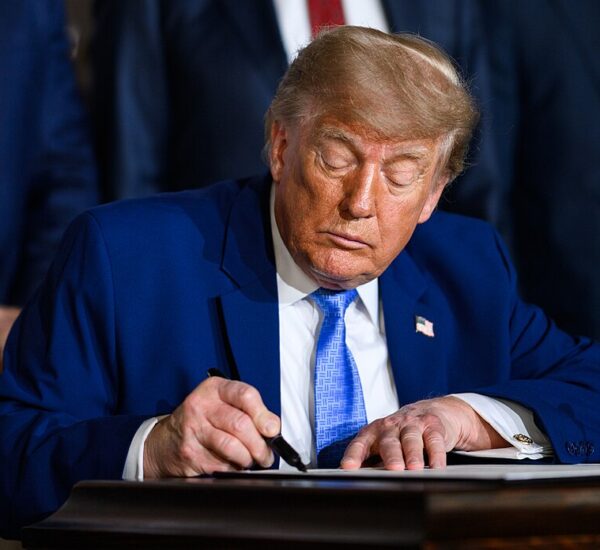
Trump just made things very clear.
President Donald Trump has issued a decisive 10-day warning to Iran — signaling that a major foreign policy decision could reshape the Middle East.
After deploying a second U.S. aircraft carrier strike group to the region, Trump confirmed he is weighing further military action against Tehran while leaving the door open for negotiations.
“We may have to take it a step further, or we may not,” Trump said during remarks in Washington. “Maybe we’re going to make a deal. You’re going to be finding out over the next, probably, 10 days.”
For supporters who believe in a strong America-first foreign policy, the message was clear: the United States will not tolerate nuclear escalation or regional destabilization.
U.S. Military Strength on Display
In recent weeks, the Pentagon has positioned significant naval and air assets near Iran.
- The USS Abraham Lincoln carrier has moved into the Arabian Sea.
- The USS Gerald R. Ford is en route to the Middle East.
- The USS George H.W. Bush has reportedly been placed on deployment readiness.
- U.S. warplanes have been repositioned across Europe and the Middle East.
This level of military coordination suggests preparation for multiple contingencies — from deterrence to direct strikes.
For many Americans over 50 who remember decades of instability in the region, the contrast is notable: Trump is signaling strength first, negotiations second.
Trump: Prior Strikes “Removed the Black Cloud”
The president referenced U.S. airstrikes carried out in June targeting three Iranian nuclear facilities.
According to Trump, those strikes significantly degraded Iran’s nuclear capabilities and temporarily stabilized the region.
“It totally decimated the nuclear potential,” Trump said. “There was a black cloud hanging over the Middle East. If that wasn’t done, that cloud would still be there.”
While some Arab nations have reportedly expressed concerns about escalation, Trump maintains that decisive action prevents prolonged conflict.
This approach aligns with his long-standing “peace through strength” doctrine — using credible military power to deter larger wars.
Diplomacy Still on the Table
Despite the military buildup, Trump emphasized that negotiations remain possible.
“Now is the time for Iran to join us on a path that will complete what we’re doing,” he said. “If they join us, that’ll be great. If they don’t… it’ll be a very different path.”
Recent discussions involving Trump officials Steve Witkoff and Jared Kushner have centered on Iran’s nuclear program and regional security concerns.
The administration’s position is straightforward:
- Iran cannot continue nuclear expansion.
- Iran cannot threaten regional stability.
- Iran must choose negotiation or consequences.
Netanyahu Meeting and Strategic Coordination
Trump recently met with Israeli Prime Minister Benjamin Netanyahu at the White House to discuss regional defense strategy.
According to reports, Netanyahu urged targeting Iran’s long-range ballistic missile capabilities if further action becomes necessary.
The meeting signals close coordination between Washington and Jerusalem — a cornerstone of Trump’s Middle East policy.
Regime Change Question Remains Unanswered
The president has expressed openness to leadership change in Tehran, though he has not publicly endorsed a specific successor.
He has dismissed exiled crown prince Reza Pahlavi as a viable alternative.
Critics point out that Trump previously opposed prolonged Middle East interventions under past administrations. However, supporters argue this strategy is different — targeted, time-bound, and focused on deterrence rather than nation-building.
Why the Next 10 Days Matter
The arrival of the second carrier group is expected before the end of February — aligning with Trump’s decision window.
That timing suggests one of three possible outcomes:
- A negotiated nuclear agreement
- Limited precision strikes
- Continued military pressure without escalation
For investors, military families, oil markets, and U.S. allies, the stakes are high.
Energy prices, regional security, and global stability could all be impacted.
Final Thoughts
President Trump has once again placed Iran on notice.
The message is firm but calculated: America is prepared to act, but diplomacy remains possible.
For many Americans who favor strong national defense and clear red lines, the next 10 days will reveal whether Iran chooses compromise — or confrontation.
One thing is certain: the world is watching.