Trump Administration Halts Enforcement of Biden-Era Education Rules in Major Policy Shift
In a significant development for federal education policy, the Trump administration has announced that the U.S. Department of Education will no longer enforce certain Biden-era provisions tied to a federal doctoral grant program.
The decision affects the Ronald E. McNair Post-Baccalaureate Achievement Program, a $60 million federal initiative designed to help students pursue advanced degrees.
Supporters say the move restores merit-based opportunity and ensures equal treatment under the law. Critics argue it could reshape how diversity initiatives operate in higher education.
Either way, the policy shift marks another major step in President Trump’s broader effort to review race-based federal programs.
What Is the McNair Scholars Program?
The McNair program is named after Ronald E. McNair, NASA’s second Black astronaut in space, who tragically lost his life in the 1986 Space Shuttle Challenger disaster.
The program provides grants to colleges and universities to help:
- Low-income students
- First-generation college students
- Students considered “underrepresented” in doctoral programs
Roughly two-thirds of the funding is reserved for low-income and first-generation students. The remaining funds have historically been directed toward groups categorized as underrepresented in graduate education.
Why the Policy Was Challenged
The conservative legal organization Wisconsin Institute for Law and Liberty (WILL) filed a lawsuit arguing that aspects of the Biden administration’s interpretation of the program relied on race-based criteria.
WILL contended that the term “underrepresented” was being applied in a way that excluded certain racial groups, potentially violating constitutional equal protection principles.
The case had advanced to the U.S. Court of Appeals for the Eighth Circuit before being withdrawn after the Trump administration reached a written agreement with the plaintiffs.
According to the U.S. Department of Education, the agency will not enforce what it described as racially discriminatory aspects of the program and plans to revise regulations accordingly.
Part of a Larger Trump Education Policy Shift
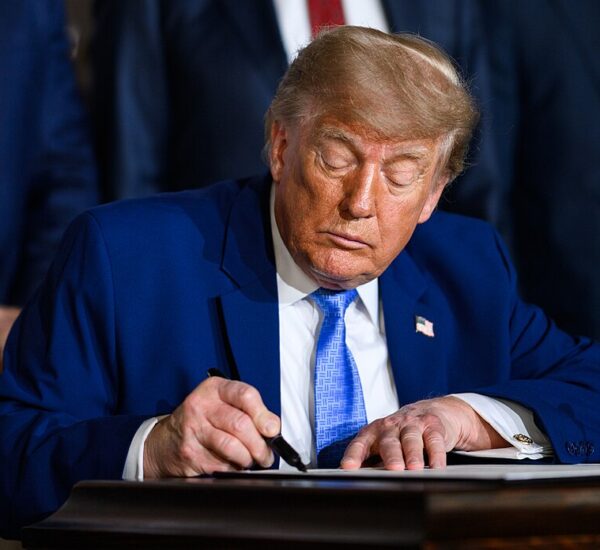
Since being sworn in as the 47th President of the United States, President Trump has prioritized reviewing federal programs that consider race as a determining factor.
On January 21, 2025, he signed an executive order focused on restoring merit-based opportunity across federal agencies. The directive called for reviewing policies that may conflict with equal protection standards.
In recent months, both the Department of Education and the Department of Justice have examined higher education programs for potential race-selective practices.
Supporters of the administration say these moves reinforce fairness and constitutional principles. Critics argue they could reduce targeted outreach efforts.
Why This Matters for Taxpayers and Families
For many Americans — especially those who have followed decades of debate over affirmative action and federal education funding — this development represents a significant turning point.
Key questions moving forward include:
- Will more federal programs face similar reviews?
- How will colleges adapt their diversity initiatives?
- What impact will regulatory revisions have on future funding?
With regulatory changes expected in the coming months, the McNair decision may signal broader reform ahead.