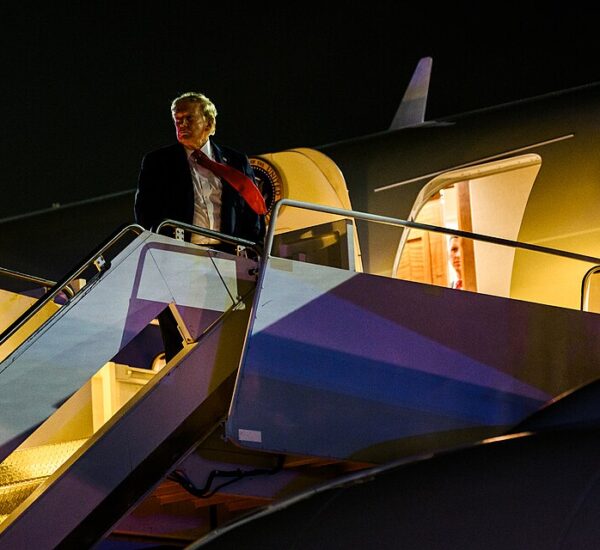
Danish PM Says Trump Refusing To Give Up
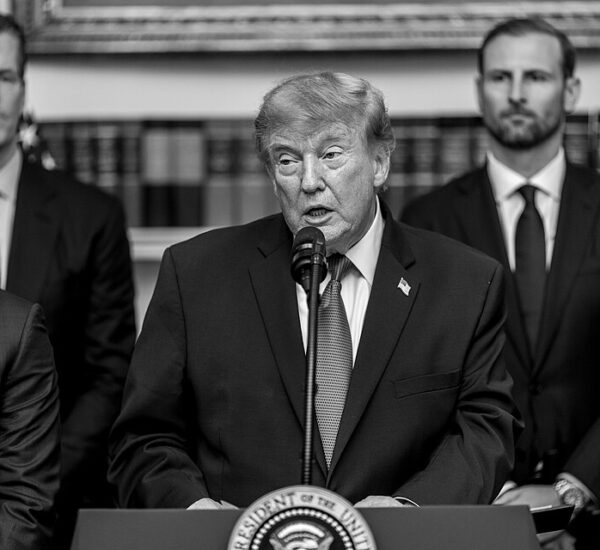
Denmark’s prime minister is making it clear: President Donald Trump’s interest in Greenland may not be fading anytime soon.
Speaking at a major international security conference in Munich, Danish Prime Minister Mette Frederiksen suggested that despite softened rhetoric, President Trump’s strategic focus on Greenland remains unchanged.
When asked directly whether she believes Trump still wants the United States to acquire the Arctic territory, Frederiksen responded candidly that she believes the desire remains.
Her remarks highlight an issue that continues to simmer beneath the surface of U.S.–Europe relations — and one that carries serious implications for national security, energy independence, and America’s global influence.
Why Greenland Is Suddenly So Important to Global Security
For decades, Greenland was largely viewed as a remote Arctic outpost. Today, it sits at the center of rising geopolitical competition.
As Arctic ice melts, new shipping routes are opening. Untapped reserves of rare earth minerals, oil, and natural gas are becoming more accessible. Military positioning in the region is gaining importance as Russia expands Arctic operations and China increases its strategic footprint.
President Trump has consistently argued that Greenland’s geographic location and mineral wealth are vital for protecting U.S. and NATO interests in the Arctic.
For many Americans — especially those who prioritize strong borders, energy independence, and national defense — the issue is not about expansionism. It’s about preventing foreign adversaries from gaining a long-term strategic advantage.
Trump Steps Back From Force — But Not From Strategy
Earlier this year, President Trump eased tensions after backing away from previous remarks suggesting potential forceful action regarding Greenland. That shift followed what he described as a “framework” understanding with NATO Secretary-General Mark Rutte.
While the diplomatic temperature cooled, European leaders appear unconvinced that the broader issue has been resolved.
Frederiksen indicated that many European officials privately question whether the matter is truly over. Her response suggested Denmark believes it is not.
That distinction is important. Diplomatic language may change — but long-term strategic priorities often do not.
Denmark Draws “Red Lines” While Talks Continue
Frederiksen and Greenland’s prime minister, Jens-Frederik Nielsen, both acknowledged that pressure surrounding the island has intensified.
However, they also confirmed that discussions remain ongoing.
A formal U.S.–Denmark–Greenland working group has been established to address Arctic security concerns. While details remain confidential, officials say the group aims to find cooperative solutions without compromising sovereignty.
Frederiksen emphasized that Denmark has clear boundaries that will not be crossed.
“There are red lines,” she said, signaling that while diplomacy is open, territorial control is not negotiable.
Rubio Meeting Signals Continued Engagement
On the sidelines of the Munich conference, Frederiksen and Nielsen met briefly with U.S. Secretary of State Marco Rubio. Danish officials later described the 15-minute discussion as “constructive.”
That description suggests that while tensions remain, communication channels are active.
For American voters watching global developments closely, this signals something critical: the Arctic is becoming a serious geopolitical arena — and U.S. leadership is not ignoring it.
The Bigger Strategic Picture for the United States
Greenland is not just an Arctic island. It is a strategic crossroads.
• Control of emerging Arctic shipping lanes
• Access to rare earth minerals critical for defense technology
• Expanded military positioning in a region where Russia is rapidly increasing activity
• Long-term leverage against China’s expanding global influence
President Trump’s broader argument has been consistent: America cannot afford to ignore strategic territory in an era of global competition.
For voters over 50 who remember the Cold War and understand how quickly global power balances can shift, the Arctic represents more than diplomacy. It represents preparedness.
Whether Greenland ultimately remains strictly under Danish authority or becomes a deeper U.S. partner, one thing is clear:
The Arctic is no longer frozen in time.
It is now a frontline in 21st-century geopolitics — and according to Denmark’s own leadership, President Trump has not taken his eye off that reality.