AOC wants to be president so bad but is folding under pressure to hard questions.
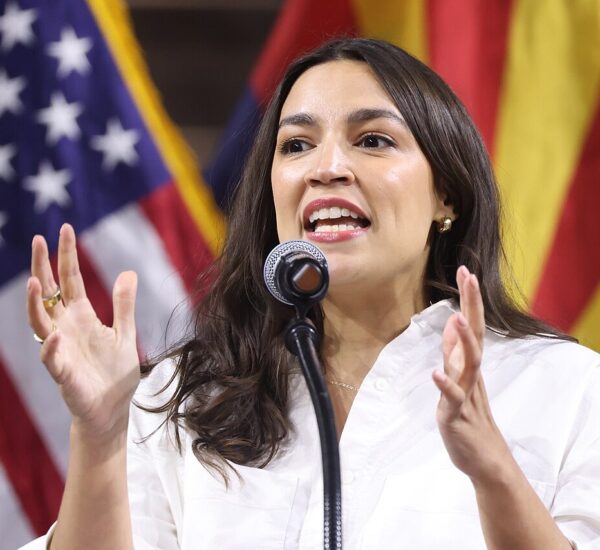
Rep. Alexandria Ocasio-Cortez, D-N.Y., is drawing widespread attention following a foreign policy exchange at the Munich Security Conference that quickly went viral online.
During a public town hall discussion, the congresswoman was asked a direct national security question:
Would the United States commit American troops to defend Taiwan in the event of a Chinese invasion?
Given rising tensions between the United States and China, the issue of Taiwan has become one of the most significant flashpoints in global geopolitics. Any potential military commitment would carry enormous strategic, economic, and human consequences.
WATCH:
🚨 HOLY SMOKES. Rep. AOC just SELF-DESTRUCTED while trying to represent America in Germany
— Eric Daugherty (@EricLDaugh) February 13, 2026
"Should the US commit troops to defend Taiwan?"
AOC: "Um, you know, I think that, uhh, eh, this is such a, uh, you know, I th-I think that this is a, umm, this is of course a, uh, a very… pic.twitter.com/VfT98vKhZY
The Taiwan Defense Question
In response, Ocasio-Cortez referenced longstanding U.S. policy and emphasized the importance of preventing escalation through diplomacy and economic strategy. She indicated that the goal should be to avoid reaching a point where troop deployment becomes necessary.
Clips of the exchange circulated rapidly across social media platforms, prompting commentary from political analysts, journalists, and elected officials from across the ideological spectrum.
Some critics argued that the moment highlighted the difficulty of answering complex military questions in a live setting. Others suggested that voters expect clearer positioning on issues involving U.S. military commitments and international defense alliances.
Why Taiwan Matters to U.S. Foreign Policy
Taiwan remains central to U.S.–China relations. The United States has historically followed a policy of “strategic ambiguity,” supporting Taiwan’s ability to defend itself without formally guaranteeing military intervention.
However, increased Chinese military activity in the region has intensified debate in Washington over whether the U.S. should adopt a more explicit defense posture.
National security experts widely agree that any conflict involving Taiwan would impact:
- Global supply chains
- Semiconductor manufacturing
- Indo-Pacific stability
- U.S. alliances in Asia
Because of these high stakes, foreign policy clarity is often seen as a key leadership test.
Israel Comments Also Draw Attention
In addition to the Taiwan exchange, Ocasio-Cortez addressed U.S. aid to Israel during the same event.
She referenced the Leahy Laws — legislation introduced by Patrick Leahy — which restrict U.S. funding for foreign security units when there is credible evidence of gross human rights violations.
The congresswoman argued that U.S. assistance should be conditioned under certain circumstances and criticized aspects of Israel’s military campaign against Hamas in Gaza.
Her comments generated strong reactions from both supporters and critics. Some foreign policy observers defended her emphasis on human rights accountability. Others argued that her characterization of Israel’s actions went too far and risked complicating long-standing U.S.–Israel relations.
Leadership and Foreign Policy Readiness
High-profile moments like this often become part of broader discussions about political leadership and presidential preparedness.
Foreign policy remains one of the most challenging areas for elected officials. Questions involving military intervention, global alliances, and geopolitical escalation demand clarity and confidence, particularly during times of rising international tension.
While one exchange rarely defines a political career, public reactions suggest that voters continue to weigh how leaders respond to unscripted questions on matters of war, peace, and diplomacy.
As tensions persist in both the Indo-Pacific and Middle East regions, foreign policy experience and messaging are likely to remain central issues in upcoming election cycles.
Why This Story Matters
- U.S.–China tensions are rising
- Taiwan remains a major geopolitical flashpoint
- Middle East policy continues to divide lawmakers
- Voters increasingly prioritize national security clarity