
Canada Attacks Trump
Canadian Prime Minister Mark Carney responded Thursday after President Donald Trump publicly stated that Canada “exists because of the United States,” prompting a new round of political and trade-related debate between the two longtime allies.
Speaking after returning from the World Economic Forum in Davos, Switzerland, Carney said Canada’s success is rooted in its own national values rather than reliance on American support.
The remarks followed a speech Carney delivered at Davos that drew international attention and quiet criticism from U.S. officials. While Carney did not mention President Trump by name during the forum, he criticized what he described as pressure from powerful nations on smaller countries — comments widely interpreted as a reference to current U.S. foreign policy.
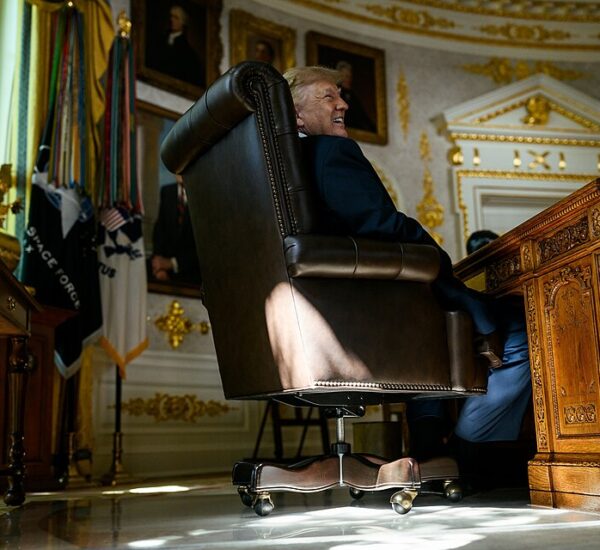
President Trump later addressed the issue directly.
“Canada lives because of the United States,” Trump said. “Remember that the next time statements like that are made.”
Upon returning to Canada, Carney responded publicly, saying the country’s prosperity comes from its own institutions and identity.
“Canada doesn’t survive because of the United States,” Carney said. “Canada thrives because it is Canadian.”
Carney acknowledged the long-standing partnership between the two nations, including cooperation on trade, national security, and cultural exchange. However, he emphasized that Canada remains in control of its own future.
Shortly after the exchange, President Trump announced that Carney’s invitation to join his newly proposed “Board of Peace” had been withdrawn. Trump has promoted the board as a major international leadership initiative.
In a public statement, Trump described the board as “the most prestigious group of leaders ever assembled,” adding that Canada would no longer be included.
Carney had already left Davos before the board’s formal launch, returning home to focus on diplomatic efforts related to the ongoing conflict between Israel and Hamas.
The dispute comes amid broader tensions. President Trump has repeatedly suggested that Canada could one day become the 51st U.S. state and recently shared a modified map depicting Canada and other regions as part of expanded U.S. territory.
Trump has also argued that Canada benefits heavily from its relationship with the United States, citing trade advantages and defense cooperation. He said Canada receives significant economic benefits and should show greater appreciation.
Another point of contention involves Trump’s proposed “Golden Dome” missile defense system, a multibillion-dollar project he says will be operational before the end of his term in 2029. Trump has stated that Canada is interested in participating in the initiative.
Speaking later at a cabinet retreat in Quebec City, Carney defended his position, saying that protecting Canadian values is essential to maintaining sovereignty in a changing global landscape.
He described Canada as a model for democratic governance and social stability at a time of growing international uncertainty, adding that diversity and economic inclusion strengthen national resilience.
Meanwhile, U.S. Commerce Secretary Howard Lutnick dismissed Carney’s Davos remarks during a televised interview, criticizing what he described as unnecessary complaints despite favorable trade conditions.
Canada has largely avoided the impact of U.S. tariffs due to protections under the U.S.–Mexico–Canada Agreement (USMCA), though the agreement is scheduled for a mandatory review later this year — a process expected to carry significant economic implications for both countries.
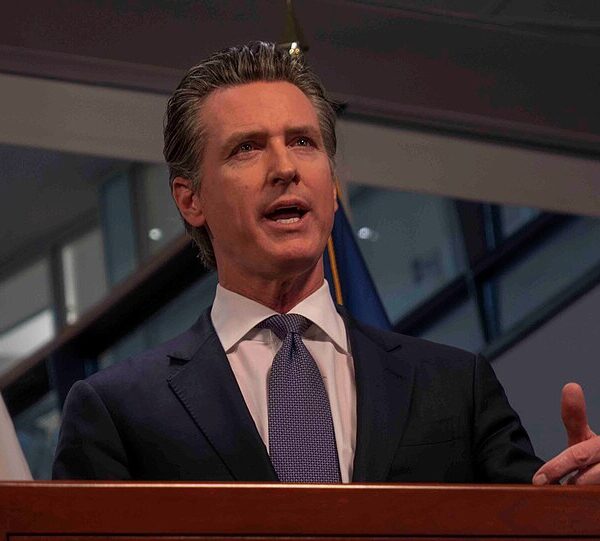
The situation also drew comments from California Governor Gavin Newsom, who praised Carney’s speech and warned that long-standing alliances could be weakened by shifting trade and foreign policy decisions.
Newsom pointed to Canada’s recent agreement with China to import lower-cost electric vehicles as an example of changing global economic strategies, arguing that such moves reflect deeper policy disagreements.
As trade negotiations, defense cooperation, and diplomatic messaging continue, the public exchange underscores ongoing differences between President Trump’s America-first agenda and global leaders advocating alternative approaches to international relations.
The kid is not being detained by ICE. His father is being detained and since the mother won’t take him the father has elected to keep him with him. Get your facts straight before you start jumping to conclusions.