This is a huge risk.
President Donald Trump suggested Sunday that he would personally intervene in the Ukraine conflict—even traveling into dangerous territory if necessary—to help bring the war to an end. Following talks with Ukrainian President Volodymyr Zelensky, Trump said peace is now closer than at any point since fighting began.
The two leaders met over lunch at Trump’s Mar-a-Lago estate, holding wide-ranging discussions on how to resolve the conflict, which Trump described as the most devastating war in Europe since World War II.
When asked whether he would consider going to Ukraine himself to advance negotiations, Trump made it clear that nothing is off the table if it means saving lives.
“I wouldn’t have a problem doing it,” Trump said. “I’d rather get the deal done without having to go, but I’ve offered to speak directly to their parliament if that helps move things forward.”
A Push for Realistic Peace Talks
Trump acknowledged that the most difficult issue remains disputed territory in eastern Ukraine, particularly the Donbas region. Portions of that area have been under Russian control since the early stages of the war.
“We’re about 95 percent aligned on the framework,” Trump said, referring to Ukraine’s revised 20-point peace proposal. “But there are one or two very tough issues. Land is one of them. Some of it has already been taken, and more could be lost if this war drags on.”
Trump emphasized that prolonged fighting only increases destruction and human suffering, arguing that realistic negotiations now could prevent far worse outcomes later.
“You’re often better off making a deal sooner rather than watching more land and lives disappear,” he said.
Ukraine’s Position on Territory
Zelensky reiterated that he cannot unilaterally surrender Ukrainian territory, explaining that any such decision would require approval from parliament or possibly a national referendum.
“This land belongs to the Ukrainian people,” Zelensky said. “Not to one leader, but to our nation across generations.”
Russian President Vladimir Putin has continued to demand full control of the Donbas region, despite Russia’s inability to seize it outright through military means. Moscow has also insisted that Ukraine reduce its military strength and avoid formal alliances with Western nations.
Security Guarantees and a Path Forward
Ukraine’s updated peace plan focuses heavily on long-term security guarantees from the United States, NATO, and European allies. Zelensky described these guarantees as essential to preventing future aggression.
Trump said the U.S. and Ukraine are largely aligned on military cooperation and security assurances, with European guarantees nearing agreement.
“There’s a lot of progress,” Trump said. “This is moving in the right direction.”
Trump: Ending the War Is the Priority
Trump made clear that stopping the conflict remains his top focus.
“There’s nothing more important than peace,” he said. “I’ve helped resolve multiple international conflicts, and this one is the most complex. But if it continues, countless more lives will be lost—and nobody wants that.”
While optimistic, Trump declined to provide a specific timeline, noting that successful negotiations require careful diplomacy.
Ahead of the meeting, Zelensky said Ukraine is willing to take difficult steps to end the war, even as the country continues to face heavy attacks.
Trump also confirmed that he spoke with Putin prior to meeting Zelensky, calling the conversation “productive,” though he declined to share details. He said further discussions with Russia are expected as talks continue.
Global Leaders Loop In
Following the meeting, Trump and Zelensky spoke with several European leaders, including officials from France, Germany, Italy, Poland, Finland, Norway, and the United Kingdom, as well as NATO leadership and the European Commission. Trump said another round of talks is expected next month to maintain momentum.
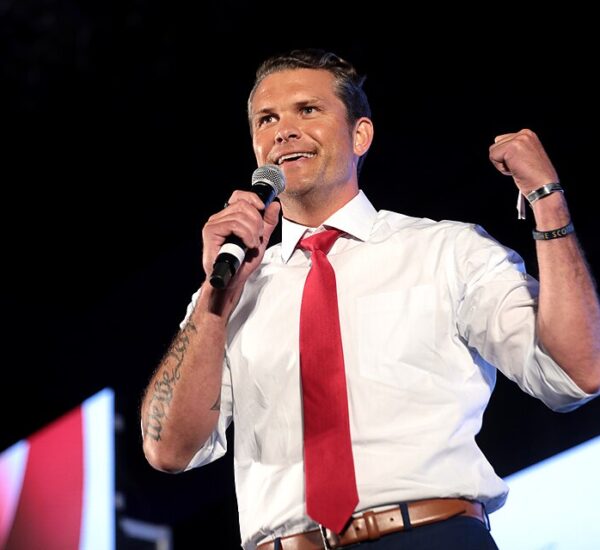
Senior U.S. officials were present at the Mar-a-Lago meeting, including Secretary of State Marco Rubio, Defense Secretary Pete Hegseth, Chief of Staff Susie Wiles, and Joint Chiefs Chairman Gen. Dan Caine, along with other top advisers.
As Trump made clear, the stakes are enormous—and he appears willing to personally step forward if it means bringing an end to a costly and destructive war.