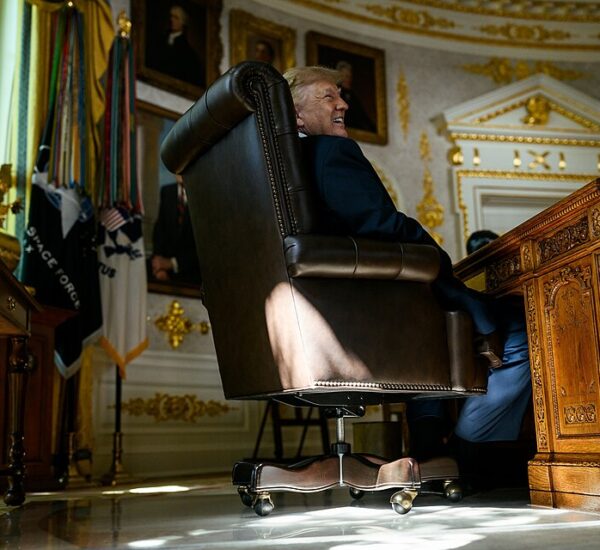
Trump Speaks With Israel
President Donald Trump is preparing to reassert American leadership in the Middle East as he meets Monday with Israeli Prime Minister Benjamin Netanyahu, with a renewed focus on stabilizing Gaza and countering growing regional threats.
According to Israeli officials, the talks will center on advancing the next phase of the Gaza ceasefire while addressing ongoing security concerns involving Hezbollah in Lebanon and renewed military activity by Iran.
Netanyahu confirmed earlier this month that President Trump extended the invitation as Washington pushes forward with a long-term plan aimed at preventing terrorist groups from regaining control of Gaza. The proposal includes a temporary civilian administration and an international security presence to maintain order once combat operations fully conclude. The White House has not issued a public statement on the meeting.
The Israeli leader is expected to travel to Trump’s Mar-a-Lago residence in Florida, where discussions will also address Israel’s northern border and Iran’s expanding missile capabilities.
The Trump administration previously brokered ceasefires across multiple fronts, but Israeli officials have warned that extremist groups may attempt to regroup if pressure is relaxed too quickly.
Under the ceasefire framework finalized last fall, Israel agreed to begin a phased withdrawal from Gaza, while Hamas was expected to disarm and relinquish any governing role. While the agreement was formally accepted, implementation has proven difficult.
Secretary of State Marco Rubio said recently that Washington is working to establish a transitional governing body made up of Palestinian technocrats. This administration would operate ahead of an international security force authorized by a November United Nations Security Council resolution.
Progress, however, has stalled. Israeli and Hamas officials have accused one another of violating the ceasefire terms, and key requirements for the next phase remain unresolved. Hamas has refused to disarm and continues to exert influence in areas where Israeli troops remain positioned.
Israeli leaders have stated that if disarmament does not occur through diplomatic means, military options remain on the table.
While the level of fighting has decreased since the ceasefire took effect, sporadic violence has continued, underscoring the fragile nature of the agreement.
In nearby Lebanon, a U.S.-supported ceasefire finalized toward the end of 2024 brought an end to more than a year of fighting between Israel and Hezbollah. The agreement required Hezbollah to begin pulling back and surrendering weapons along Israel’s northern border. Lebanese authorities say steps have been taken, though Israeli officials argue implementation has been inconsistent, leading to continued security actions.
Iran has also drawn renewed attention after conducting multiple missile exercises in recent weeks. Netanyahu has said Israel is not seeking escalation but remains vigilant, noting that Tehran’s actions will be discussed directly with President Trump.
Earlier this year, U.S. forces destroyed key Iranian nuclear facilities, significantly degrading Tehran’s capabilities. Since then, President Trump has signaled openness to diplomatic engagement—while emphasizing that American strength and deterrence will remain central to U.S. foreign policy.