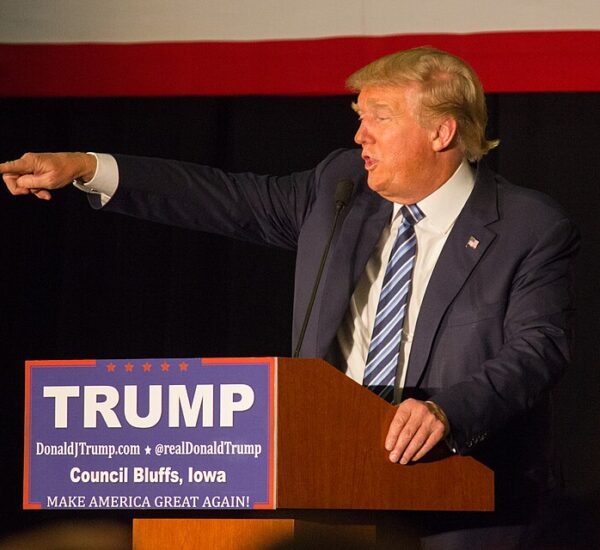
Trump Prepares For The Worst
The U.S. Department of Defense has moved specialized military aircraft into the Caribbean region, signaling an intensified show of force as tensions continue to rise with Venezuela’s socialist government.
The aircraft deployments involve platforms commonly used to transport elite U.S. troops, equipment, and logistical support, underscoring the Trump administration’s commitment to protecting American interests and maintaining stability in the Western Hemisphere.
While Pentagon officials have declined to comment publicly on the movements, President Donald Trump confirmed Monday that a significant U.S. naval and air presence is now operating in the region.
“We have a massive armada formed,” the president said, noting that additional measures could be implemented if necessary.
Elite U.S. Units Positioned for Rapid Response
According to reporting from The Wall Street Journal, at least ten CV-22 Osprey tilt-rotor aircraft were recently transferred from Cannon Air Force Base in New Mexico to the Caribbean theater. These aircraft are primarily used by U.S. special operations forces due to their long range and ability to land in difficult terrain.
In addition, large C-17 cargo planes carrying personnel and equipment reportedly arrived in Puerto Rico from major Army installations, including Fort Stewart in Georgia and Fort Campbell, which spans Kentucky and Tennessee.
These bases are home to some of the military’s most capable rapid-deployment forces, including airborne and ranger units trained to respond quickly to emerging threats.
Pentagon Cites Operational Security
Officials at the Pentagon and U.S. Southern Command have declined to provide details, citing standard security protocols.
“Due to operational security concerns, we do not disclose details on the movement of defense personnel and assets,” said a spokesperson for U.S. Southern Command.
The Defense Department has emphasized that routine force positioning is a key component of deterrence and regional readiness.
Administration Signals Firm Stance on Maduro Regime
The buildup comes as the Trump administration continues to confront Venezuelan President Nicolás Maduro, whose regime has been widely criticized for corruption, human rights abuses, and economic collapse.
Last week, Defense Secretary Pete Hegseth and Secretary of State Marco Rubio briefed U.S. senators on ongoing operations near Venezuela, assuring lawmakers that the administration is focused on pressure and deterrence rather than prolonged conflict.
President Trump, however, warned that continued provocation by the Maduro government would carry serious consequences.
“If he plays tough,” Trump said, “there will be consequences.”
White House Chief of Staff Susie Wiles has also indicated that sustained diplomatic and strategic pressure remains central to the administration’s approach.
A Message of Strength and Deterrence
By keeping specific plans undisclosed while visibly reinforcing U.S. military presence, the administration appears to be following a strategy of strategic ambiguity — a hallmark of Trump’s national security approach.
For American allies and adversaries alike, the message is clear: the United States is prepared, positioned, and unwilling to tolerate threats to regional stability.