Here are all the facts.
President Donald Trump issued a firm warning Saturday after a deadly terrorist ambush in Syria left two U.S. Army soldiers and a civilian interpreter dead, raising renewed concerns about the dangers facing American troops deployed overseas.
According to U.S. military officials, the attack was carried out by a lone Islamic State (ISIS) gunman in a region of Syria that remains unstable and outside full government control.
Pentagon spokesperson Sean Parnell confirmed the incident occurred near the ancient city of Palmyra in central Syria. Three additional U.S. service members were wounded during the ambush and later evacuated for medical treatment. U.S. Central Command described the attack as a targeted ISIS operation against American personnel.
Trump Responds With Warning of Retaliation
In a statement posted to Truth Social, President Trump honored the fallen service members and made clear that the United States would respond decisively.
Trump said the nation is grieving the deaths of three Americans in Syria — two U.S. troops and a civilian interpreter — and added that prayers are with the wounded soldiers, who he said are recovering well. He described the incident as an ISIS attack in a highly dangerous region of the country.
Trump added that Syrian President Ahmed al-Sharaa expressed anger over the attack and emphasized that consequences would follow.
“There will be very serious retaliation,” the president stated.
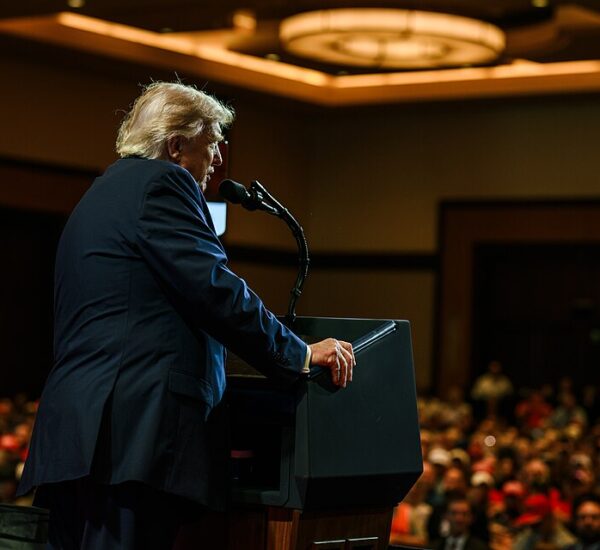
Speaking later to reporters outside the White House, Trump reiterated that the ambush was an act of terrorism aimed at both U.S. forces and regional stability efforts.
U.S. Mission and Military Response
Parnell explained that the troops were engaged in a key leader meeting connected to ongoing counter-ISIS and counterterrorism operations. The Defense Department is withholding the names of the fallen pending family notifications.
Secretary of War Pete Hegseth confirmed that the attacker was later neutralized by partner forces working alongside the United States.
In a statement posted online, Hegseth reaffirmed America’s long-standing policy toward those who target U.S. personnel abroad.
“Anyone who attacks Americans will face consequences,” he wrote, underscoring the U.S. commitment to protecting its forces.
Investigation Ongoing as Families Mourn
The Pentagon has launched an investigation into the circumstances surrounding the attack. A senior defense official told Fox News Digital that the incident occurred in an area beyond the Syrian government’s effective control, highlighting ongoing security challenges.
Army Secretary Daniel Driscoll offered condolences to the families of the fallen and praised the service of those deployed.
“The men and women who serve our nation represent the very best of America,” Driscoll said. “We honor their sacrifice and their commitment to defending freedom.”
The wounded troops were transported by helicopter to the al-Tanf garrison near the borders of Iraq and Jordan, according to reports citing regional sources.
Why U.S. Troops Remain in Syria
The United States currently maintains approximately 900 troops in Syria as part of a mission that began in 2014 to prevent ISIS from re-establishing a terrorist caliphate. At its peak, the U.S. operated eight military installations in the country, though several have since been closed or transferred to allied forces.
The attack comes during a period of major political change in Syria. In recent days, large crowds gathered in Damascus to mark one year since the collapse of the Assad regime, following the departure of longtime dictator Bashar al-Assad after a rapid rebel offensive.
Renewed Debate Over U.S. Presence Abroad
As Americans once again mourn fallen service members, the incident has reignited debate over the risks faced by U.S. troops stationed in volatile regions — and the responsibilities of leadership when sending soldiers into harm’s way.
For many Americans, particularly those who have lived through decades of conflict in the Middle East, the question remains whether the mission in Syria is worth the cost — and how best to protect those who serve.