Newsom’s Fight With DOJ Escalates
A political firestorm erupted Thursday after the U.S. Supreme Court delivered a major victory to Texas, allowing the state to move forward with its mid-decade redrawn congressional map—one that could significantly boost Republicans in the 2026 midterms.
Bondi Praises Ruling: “Federal Courts Have No Right to Interfere”
Attorney General Pam Bondi celebrated the ruling on X, emphasizing that states—not federal judges—have final authority over political map-drawing.
“Federal courts have no right to interfere with a state’s decision to redraw legislative maps for partisan reasons,” Bondi wrote.
She added that a lower court had overstepped its authority, praising Texas and her legal team for defending the rule of law.
Newsom Fires Back — DOJ Responds Instantly
California Gov. Gavin Newsom’s press office attempted a jab, asking Bondi on X whether she would now drop the federal lawsuit against California’s new redistricting plan.
The Department of Justice immediately shut that down.
“Not a chance, Gavin — we will stop your DEI districts for 2026,” DOJ replied.
Assistant Attorney General Harmeet Dhillon piled on, responding simply:
“Lol no bro.”
DOJ Lawsuit Targets California’s New Map
The DOJ’s lawsuit, filed Nov. 13, argues that California’s Proposition 50 forces racially gerrymandered districts, violating the 14th Amendment.
The case positions California as a national test of how far Democrat-led states can push race-based districting under the banner of “equity.”
Supreme Court Majority: The Issue Is Politics, Not Race
The Supreme Court’s order blocking the lower court’s ruling was backed by Justices Samuel Alito, Clarence Thomas, and Neil Gorsuch.
Alito wrote that the driving factor behind Texas’ map—and even California’s—was “partisan advantage, pure and simple.”
This acknowledgment undercuts the left’s ongoing claim that these maps were designed with discriminatory intent.
Trump’s Mid-Decade Map Push Gains Serious Momentum
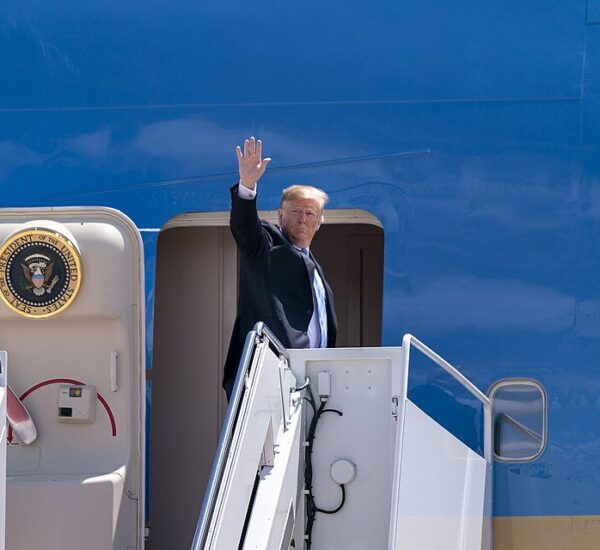
President Donald Trump has urged Republican-led states to redraw congressional lines mid-decade to protect and expand the GOP’s narrow House majority in 2026.
States responding to Trump’s call include:
- Texas
- Missouri
- North Carolina
- Ohio
- Utah
Together, these new maps could add up to nine additional Republican seats.
Florida and Indiana are also advancing redistricting discussions, with Indiana already passing a new map that could give Republicans two more House seats.
Democrats Race to Counter Republican Gains
Democrat-controlled states are scrambling to offset potential GOP advantages.
California’s newly approved amendment suspends its “independent” redistricting commission and installs a map projected to make five seats safely Democratic.
Democrats in Maryland and Virginia are also exploring ways to reshape or override existing commissions to secure new partisan advantages, though these efforts face:
- Strong internal pushback
- Significant legal risks
- Public skepticism over political manipulation