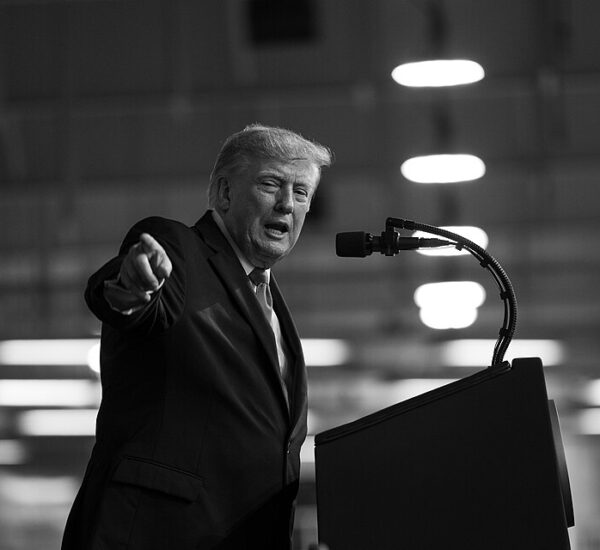
Trump Speaks On Clean-Energy Plan
The Trump administration is facing new legal scrutiny after court filings revealed additional details about its decision to cancel roughly $7.6 billion in federal clean energy grants.
According to recently filed court documents, hundreds of canceled projects were located in 16 states that voted for Democrat Kamala Harris in the 2024 presidential election. The filing has sparked criticism from Democratic lawmakers, while administration officials continue to defend the funding cuts as responsible stewardship of taxpayer dollars.
The Department of Energy announced last October that it had terminated 321 federal funding awards covering 223 projects after reviewing whether they aligned with the administration’s energy priorities and represented a sound investment for taxpayers.
Officials said the projects either failed to advance America’s long-term energy needs or were not considered economically viable.
Court Filing Draws New Attention
The latest court filing has fueled debate over whether politics played a role in selecting which grants were canceled.
Government attorneys acknowledged that grant decisions were influenced in part by whether recipients were located in states that traditionally elect Democratic candidates. The filing has become a central issue in ongoing legal challenges against the administration.
The case, Thakur v. Trump, also states that reviewers searched projects using terms related to diversity initiatives, gender, COVID-19 policies, and vaccine-related issues when evaluating whether programs aligned with the administration’s priorities.
Democrats Demand Investigation
Democratic lawmakers argue the filing raises serious concerns about how federal funding decisions were made.
Rep. Marcy Kaptur of Ohio and Sen. Patty Murray of Washington said the administration unfairly targeted projects based on the political leanings of the states where they were located.
They called on Congress to examine whether taxpayer-funded programs were canceled for political reasons rather than financial ones.
More than two dozen Democratic members of Congress have also requested a formal investigation by the Department of Energy’s inspector general, which has already opened a review into the matter.
White House Defends the Decision
Despite the legal dispute, the Trump administration continues to maintain that the grant cancellations were based on fiscal responsibility—not politics.
Energy Secretary Chris Wright has repeatedly described the funding reductions as “business decisions,” saying each project was evaluated to determine whether it delivered sufficient value for taxpayers.
White House Budget Director Russell Vought also defended the cuts, arguing the administration is ending spending tied to climate programs created under previous administrations while redirecting resources toward what it considers more reliable domestic energy priorities.
Supporters of the administration have argued that reducing federal spending on projects with uncertain returns is consistent with President Trump’s broader agenda of cutting waste and prioritizing American energy independence.
Hundreds of Projects Were Affected
The canceled grants supported a wide variety of energy initiatives, including:
- Battery manufacturing facilities
- Hydrogen technology development
- Electric grid modernization
- Carbon capture projects
The affected projects were located in:
- California
- Colorado
- Connecticut
- Delaware
- Hawaii
- Illinois
- Maryland
- Massachusetts
- Minnesota
- New Hampshire
- New Jersey
- New Mexico
- New York
- Oregon
- Vermont
- Washington
All 16 states voted for Kamala Harris in the 2024 election.
Legal Challenges Continue
The court filings are expected to play an important role as lawsuits over the grant cancellations move forward.
Environmental organizations argue the funding cuts could delay energy infrastructure projects and eliminate jobs, while the administration maintains that the decisions were made to ensure federal dollars are spent on projects that best serve the nation’s energy and economic interests.
For now, the dispute remains before the courts, where judges will ultimately determine whether the administration acted within its legal authority when terminating the grants.