Democrats Trying To Audit Trump
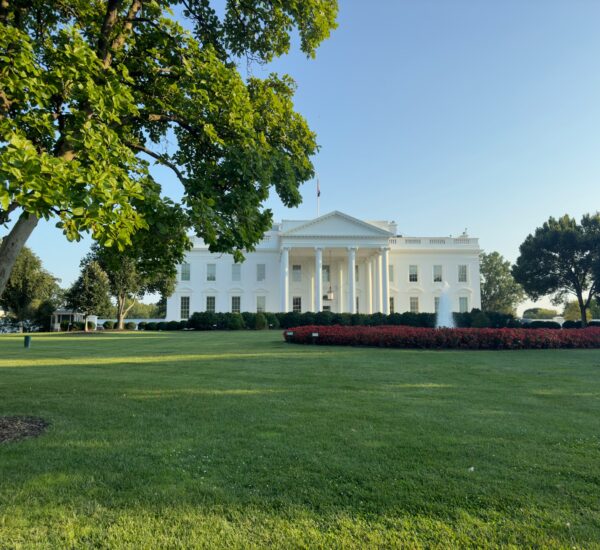
Eight Senate Democrats, including Senate Minority Leader Chuck Schumer, are demanding a federal audit of President Donald Trump’s massive White House ballroom project, raising questions about its reported $900 million price tag, government contracts and the potential use of taxpayer money.
The Democratic senators sent a letter Thursday asking the Government Accountability Office (GAO) to investigate what the Trump administration has called the “East Wing Modernization Project.”
Their request opens another battle between congressional Democrats and the Trump White House, this time involving federal spending, presidential authority and major renovations to one of America’s most recognizable government buildings.
Democrats Target Trump White House Renovation
The senators want the GAO, Congress’ nonpartisan investigative agency, to conduct a wide-ranging examination of the project.
Among other issues, they are seeking information about the planning process, sources of funding, government contracts, security considerations and opportunities for public input.
Democrats also want investigators to determine whether potential conflicts of interest existed between private donations and federal contracting decisions.
The lawmakers say the entire East Wing modernization effort is now projected to cost at least $900 million, with approximately $600 million associated with construction of the new White House ballroom.
Those figures are among several claims Democrats want federal investigators to scrutinize.
Senators Raise Questions About Taxpayer Money
A major point of contention involves how the project has been financed.
According to the Democratic senators, more than $300 million connected to Secret Service funding was redirected toward the modernization effort. They also allege that roughly $500 million in contracts were awarded without competitive bidding.
The administration initially said the ballroom itself would be financed through private donations, according to the senators. Democrats now allege that federal money was subsequently used without receiving specific authorization from Congress.
That claim could become one of the most consequential parts of any potential GAO investigation.
Congress holds the constitutional power of the purse, giving lawmakers authority over federal appropriations. The dispute therefore extends beyond the ballroom itself and into a broader question about how much freedom a president has to undertake major White House construction projects without additional congressional approval.
Schumer and Democrats Challenge Trump
In their letter, the senators argued that Congress did not specifically authorize or appropriate funding for the East Wing Modernization Project.
They further maintained that a president should not be able to undertake a reconstruction of this magnitude at the White House without congressional involvement.
The Trump administration could face additional scrutiny if the GAO decides to accept the Democrats’ request.
However, the request for an audit does not establish that the administration violated federal law. The senators are asking investigators to determine what happened and whether federal spending and contracting requirements were properly followed.
Private Donations and Federal Contracts Under Scrutiny
The Democratic lawmakers also raised questions about companies and individuals that contributed money to the White House project.
According to their letter, donors connected to the modernization effort subsequently received more than $50 billion in federal contracts.
The senators did not establish that those donations caused or influenced the contract awards.
That distinction is significant. A company receiving federal business after making a donation does not, by itself, prove improper conduct. An investigation would need to examine the circumstances surrounding individual contracts and determine whether normal federal procurement rules were followed.
Still, Democrats want the GAO to examine whether any conflicts of interest or inappropriate relationships existed.
White House Response Awaited
The White House had not immediately responded Thursday to the senators’ letter or a request for comment.
The GAO also had not announced whether it would conduct the requested investigation.
The agency serves as an independent watchdog for Congress and routinely examines federal programs, taxpayer spending and government contracting practices.
If the GAO accepts the request, investigators could provide lawmakers with a more detailed accounting of where the project’s money originated, how contracts were awarded and whether existing federal requirements were followed.
East Wing Demolition Sparked Earlier Controversy
The dispute comes after the historic White House East Wing was demolished earlier this year as part of the modernization project.
That decision generated criticism from Democratic lawmakers and historic preservation advocates concerned about the loss of the century-old structure.
The ballroom project has since become another flashpoint in the continuing struggle between the Trump administration and congressional Democrats.
Republicans and Trump supporters may see the latest demand as another attempt by Democrats to intensify oversight of the administration, while Democrats argue that Congress has a responsibility to scrutinize major government projects involving federal resources.
What Happens Next?
The immediate question is whether the Government Accountability Office will agree to conduct the audit requested by Schumer and the seven other Democratic senators.
If investigators move forward, the review could examine several politically sensitive issues, including White House renovation costs, Secret Service funding, federal contracts, private donations and congressional spending authority.
Until such a review is completed, the allegations made by Senate Democrats remain claims requiring further examination.
With a reported price tag approaching $1 billion, however, the White House ballroom controversy is unlikely to disappear quickly. The fight could develop into a larger showdown over taxpayer accountability, presidential authority and Congress’ role in overseeing major changes to the White House.