Trump Celebrates Supreme Court Ruling
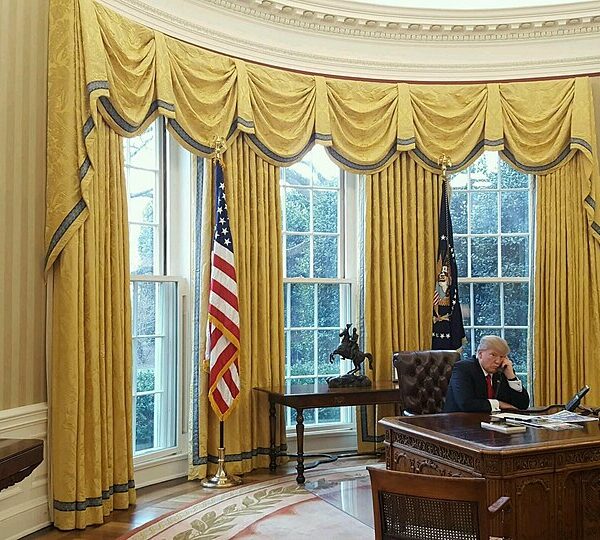
President Donald Trump celebrated Friday after Chief Justice John Roberts temporarily allowed construction on the White House ballroom to continue, giving the administration an important reprieve in its legal battle over the $400 million project.
The Supreme Court development came just hours before lower-court restrictions were scheduled to stop above-ground construction.
Roberts’ order does not decide the underlying case or guarantee that Trump will ultimately prevail. Instead, it temporarily keeps construction moving while the Supreme Court considers the administration’s emergency request.
For Trump, however, the order prevents an immediate shutdown of a major White House project that his administration says is connected to national security.
Trump Celebrates Supreme Court Decision
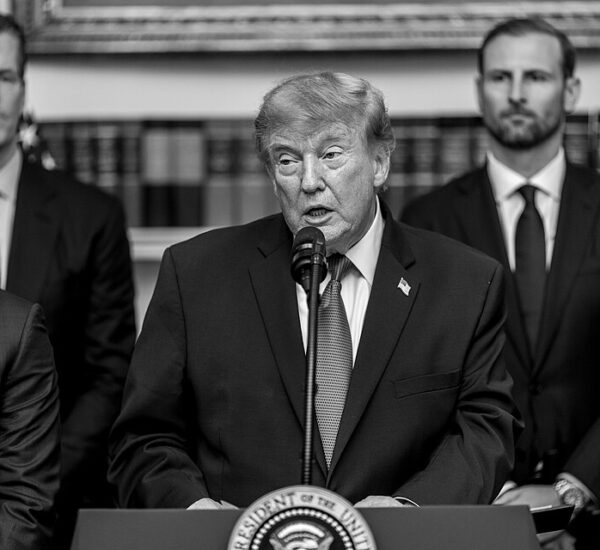
Trump quickly welcomed the news on Truth Social, expressing gratitude to the Supreme Court and predicting that the new military and ballroom complex will become an extraordinary addition to the White House grounds.
The president said American leaders have wanted such a facility for generations and maintained that the military has also sought the project for decades.
Trump additionally said construction is running ahead of schedule and below budget.
The planned ballroom has become the center of a much larger legal fight over presidential power, congressional authority and the future of the White House complex.
Why the White House Ballroom Is in Court
Lower federal courts had blocked above-ground construction after concluding that a project of this scale required approval from Congress.
The Trump administration disputes that conclusion.
Administration attorneys argue that the president possesses broad authority to oversee renovations and improvements to the White House and other federal property.
The administration has also placed significant emphasis on national security, arguing that completing the project serves important government and military needs.
The National Trust for Historic Preservation sees the matter differently.
The preservation organization contends that Trump does not have unilateral authority to carry out the project, which included demolition of the East Wing.
Its attorneys have also accused the administration of accelerating construction in an effort to make substantial progress before the courts could stop the work.
Project Is Already 65% Complete
The Trump administration says approximately 65% of the work has already been completed on the planned 90,000-square-foot ballroom.
That figure raises the stakes considerably.
A lengthy construction shutdown could create additional complications for a project that is already well underway, while the administration argues that delaying work would interfere with important government objectives.
The project is expected to cost approximately $400 million and is privately funded, according to the administration.
But the funding source has not ended the legal dispute.
The central question is whether the president can authorize a major change to the White House complex without first receiving congressional approval.
Bush-Appointed Judge Blocked Construction
U.S. District Judge Richard Leon, an appointee of former President George W. Bush, issued a preliminary injunction against the project on March 31.
After an appeals court asked Leon to clarify his decision, the judge modified the injunction on April 16.
The revised order blocked above-ground ballroom construction while permitting underground work involving national security facilities to continue.
A divided federal appeals court panel later upheld the restriction.
Two judges appointed by Democratic presidents concluded that the decision belonged to Congress rather than the executive branch acting on its own.
A Trump-appointed judge reached a different conclusion, finding that the preservation organization challenging the project lacked legal standing to bring the lawsuit.
That division underscores the broader constitutional questions surrounding the case.
Trump Administration Appeals to Supreme Court
Solicitor General D. John Sauer took the dispute to the Supreme Court, asking the justices to intervene.
Sauer argued that the injunction improperly restricted presidential authority and maintained that completing the project is important for national security.
Roberts’ temporary order now prevents the lower-court injunction from immediately stopping above-ground construction.
Because Roberts handles emergency matters arising from federal cases in Washington, D.C., the chief justice acted on the administration’s request.
The full Supreme Court could still take additional action.
What Happens Next?
The legal fight is far from finished.
Roberts’ order is temporary, meaning it should not be interpreted as a final Supreme Court ruling on whether Trump has the legal authority to complete the ballroom without congressional approval.
But it does give the administration something important: time.
Construction can continue while the Supreme Court evaluates the emergency dispute, preventing the immediate work stoppage that lower courts had ordered.
The case could ultimately help clarify the limits of presidential authority over major changes to one of America’s most historically significant federal properties.
Bigger Battle Over Presidential Authority
The controversy extends beyond the ballroom itself.
At stake is a broader disagreement over the balance of power between the White House and Congress.
Trump’s attorneys maintain that the president needs substantial authority to manage, renovate and secure the White House complex. Opponents argue that a project of this size cannot proceed without congressional involvement.
That question could become increasingly important if the Supreme Court decides to address the underlying legal dispute.
For the moment, Trump has avoided an immediate construction shutdown and publicly welcomed the Supreme Court intervention.
The next move belongs to the courts, and the eventual outcome could determine not only the future of Trump’s White House ballroom but also how much freedom future presidents have to reshape and modernize the executive residence.