Newsom Breaks Silence On Michigan Crisis
California Governor Gavin Newsom is speaking out after a surprising political development in Michigan sent shockwaves through the Democratic Party just days before the November 3 midterm elections.
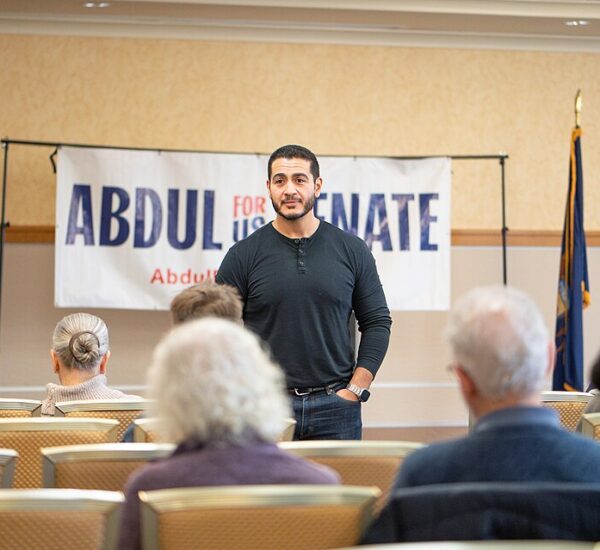
The controversy began when Democratic Representative Haley Stevens announced she was endorsing Republican Senate candidate Mike Rogers instead of her own party’s nominee, Abdul El-Sayed.
The unexpected decision has sparked frustration among Democratic leaders and raised new questions about the party’s ability to remain united in one of the nation’s most closely watched Senate contests.
Newsom, a prominent Democrat who has frequently criticized President Donald Trump and Republican policies, made it clear that he was unhappy with Stevens’ decision.
During an appearance on the “Decision Desk ’26 Midterm Preview,” Newsom described the endorsement as “sub-optimal” and acknowledged that it could create additional difficulties for Democrats heading into Election Day.
The California governor also recognized that Stevens had the right to support whichever candidate she believed was best suited for the job.
However, he emphasized that he disagreed with her decision to back Rogers.
Newsom appeared particularly concerned about how quickly Stevens changed her position, noting that she had previously supported El-Sayed following their competitive Democratic primary.
For Democrats attempting to maintain control of the Michigan Senate seat, the timing could hardly be more challenging.
Democratic Divisions Reach A Breaking Point
Stevens’ endorsement follows months of disagreements within Michigan’s Democratic Party.
Earlier this year, Stevens competed against El-Sayed for the Democratic Senate nomination. Although El-Sayed narrowly secured the nomination in August, the primary exposed significant differences between the candidates.
One of the most contentious issues involved American support for Israel and the ongoing conflict in Gaza.
Stevens has been a strong supporter of Israel, while El-Sayed has taken a more critical position regarding Israeli government policies.
Their disagreements continued after the primary, despite initial indications that Stevens would support the Democratic nominee in the general election.
Tensions escalated further following controversy surrounding a political advertisement from an outside group that connected American support for Israel with rising costs facing Michigan families.
Stevens criticized the advertisement and demanded that El-Sayed more forcefully reject its message.
El-Sayed maintained that his campaign had no involvement with the advertisement and publicly disagreed with its contents.
The dispute eventually overshadowed efforts to bring the two Democrats together for a public appearance intended to demonstrate party unity.
Instead, Stevens appeared alongside Rogers at a Detroit church service before formally announcing her support for the Republican candidate.
Republicans Welcome The Unexpected Support
For Republicans, the endorsement represents an unusual opportunity in a competitive Senate race.
Rogers, a former congressman who has received President Trump’s endorsement, is seeking the seat being vacated by retiring Democratic Senator Gary Peters.
Republicans hope to capture the seat as they fight to maintain control of the Senate.
Stevens’ decision gives Rogers support from a prominent Democrat who has represented Michigan in Congress and developed relationships with voters across the state.
President Trump quickly welcomed the announcement, praising Stevens for putting her judgment ahead of party loyalty.
Republican officials have also argued that her endorsement demonstrates Rogers’ ability to attract support beyond traditional Republican voters.
Whether that support translates into additional votes remains uncertain, particularly because many Michigan residents have already participated in early voting.
Nevertheless, the endorsement has given Republicans a significant political talking point during the final stretch of the campaign.
Democratic Leaders Respond With Anger
The reaction from Democratic leadership has been swift.
Senate Minority Leader Chuck Schumer strongly condemned Stevens’ decision, describing it as a betrayal of the party’s efforts to elect El-Sayed.
Michigan Democratic Party Chairman Curtis Hertel also criticized the congresswoman and indicated that she would no longer have a place within the state party.
The controversy has reportedly contributed to resignations among members of Stevens’ staff, further highlighting the intensity of the backlash.
Newsom, however, took a somewhat different approach.
Although he disagreed with Stevens’ endorsement, he avoided outright condemning her for exercising her political judgment.
He also suggested that the attention surrounding the controversy was distracting Democrats from their broader election priorities.
His remarks reflect the difficult position facing party leaders who want to criticize the endorsement without allowing the dispute to dominate the final days of campaigning.
Michigan Senate Race Carries National Consequences
The political stakes extend far beyond Michigan.
With control of the United States Senate hanging in the balance, both parties are closely watching competitive races across the country.
A Republican victory in Michigan would represent an important gain for the GOP in a state where Democrats currently hold the Senate seat.
For Rogers, the challenge is convincing enough independents, moderate Democrats, and undecided voters that he offers the stronger choice for Michigan’s future.
For El-Sayed, the immediate challenge involves overcoming the highly publicized disagreement with Stevens while keeping voters focused on his campaign.
Michigan residents are also weighing broader concerns, including inflation, grocery prices, energy costs, economic opportunities, and the direction of the federal government.
These issues could ultimately prove more influential than the controversy surrounding a single endorsement.
However, in a closely contested election, even relatively small shifts in voter support can make a substantial difference.
All Eyes Turn Toward Election Day
Newsom’s response illustrates the growing pressure on Democrats as they attempt to move beyond the Michigan dispute.
What was supposed to be a final demonstration of party unity has instead become a national political controversy, with one Democratic congresswoman publicly supporting a Republican Senate candidate.
Republicans see the development as an opportunity to broaden their coalition, while Democrats are working to prevent internal disagreements from weakening their election prospects.
For Michigan voters, the choice will ultimately come down to Rogers and El-Sayed, along with their competing visions for the state’s future.
With Election Day approaching on November 3, the question is whether Stevens’ endorsement will help Republicans capture a crucial Senate seat or whether Democrats can overcome the division and retain control.
Either way, the unexpected political drama has placed Michigan at the center of the national midterm conversation.