RNC Chief Sounds Midterm Alarm
Republican National Committee Chairman Joe Gruters is raising concerns about voter turnout as Republicans enter the final days before the November 3 midterm elections, warning that the party’s chances of maintaining control of Congress could depend on whether conservative voters show up at the polls.
With Democrats demonstrating strong enthusiasm and early voting numbers generating concern among Republican leaders, Gruters acknowledged Sunday that the GOP faces a significant challenge heading into Election Day.
During an appearance on NewsNation’s The Hill Sunday, Gruters was directly asked whether Republicans were experiencing a turnout problem.
His answer was yes, although he emphasized that Republicans and Democrats traditionally have different voting habits.
Gruters explained that Democratic voters often cast their ballots early, while Republicans have historically been more likely to vote in person on Election Day. He expressed confidence that Republican voters remain motivated and could deliver a strong showing Tuesday.
However, the RNC chairman made clear that enthusiasm alone would not be enough to secure victory.
Republicans Face Growing Pressure
The warning comes as Republicans fight to protect their congressional majorities amid polling that suggests Democrats could make significant gains.
Recent national surveys from Emerson College Polling and CNN/SSRS have shown Democrats holding a 10-point advantage over Republicans in congressional voting preferences.
Meanwhile, election forecasts from Decision Desk HQ have estimated an 83% probability that Democrats will capture the House of Representatives and a 62% probability that they will win control of the Senate.
Although these projections are not guarantees, they illustrate the difficult political environment Republicans face.
Gruters stressed that the party’s path to victory remains open, provided Republican supporters participate in sufficient numbers.
His concerns echo those of Texas Republican Sen. Ted Cruz, who recently warned that strong Democratic participation could produce serious losses for the GOP.
Cruz pointed to Democratic enthusiasm and early voting figures as reasons Republicans should not assume their candidates are safely positioned for victory.
Trump Makes Final Push For Republican Candidates
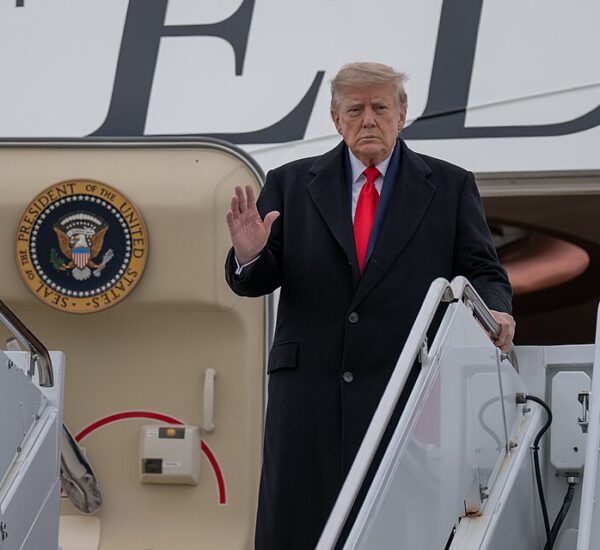
President Donald Trump has been actively campaigning for Republican candidates across the country, attempting to generate enthusiasm and strengthen GOP turnout in competitive races.
The Republican National Committee recently announced plans for Trump to participate in telephone rallies reaching voters in 19 states during the closing stretch of the campaign.
The effort is designed to connect the president with Republican supporters and encourage participation in races that could determine which party controls Washington.
Gruters has praised Trump’s campaign activity and suggested that the president’s involvement could provide an important boost for Republican candidates.
Still, the RNC chairman acknowledged that the ultimate outcome will depend on voters rather than campaign appearances or political predictions.
The stakes are particularly high because control of Congress will shape the legislative agenda during the remaining two years of Trump’s current term.
A Democratic takeover of either chamber could complicate Republican efforts to advance priorities involving federal spending, border security, taxes, and other major domestic policies.
Election Day Could Make The Difference
Despite troubling polling numbers, Republican leaders believe their party may benefit from a substantial wave of Election Day voting.
Early voting totals do not necessarily reveal which candidates are receiving support, and differences in when Republicans and Democrats cast their ballots can make those numbers difficult to interpret.
Nevertheless, the increased participation among Democratic voters has intensified concerns within the GOP.
For Republicans, the challenge is converting support for Trump and the party’s candidates into actual votes.
Gruters remains optimistic that conservative voters will respond when Election Day arrives, but his public acknowledgment of the turnout problem underscores the seriousness of the situation.
With congressional control hanging in the balance, the Republican Party is approaching Tuesday’s election knowing that even strong support in traditionally conservative areas may not be enough unless its voters participate.
The final results will determine whether Republicans can overcome Democratic enthusiasm and preserve their majorities or whether the 2026 midterms produce a significant shift in political power.
For now, the message from the Republican National Committee’s chairman is clear: The GOP cannot afford to take voter turnout for granted.