Here’s what the GOP is thinking.
A little-known congressional procedure could give Republicans an unexpected opportunity to challenge certain far-left candidates before they officially take their seats in the U.S. House of Representatives.
As President Donald Trump and Republicans prepare for the November 2026 midterm elections, some GOP lawmakers are examining whether incoming members affiliated with socialist organizations could be prevented from taking the congressional oath of office.
The possibility has sparked a new debate in Washington over constitutional loyalty, congressional authority, and the rights of American voters.
Although Trump has not publicly been identified as the architect of the proposal, the strategy could become another point of conflict between Republicans and the Democratic Party’s progressive wing.
And with Election Day approaching, some lawmakers are already considering putting the idea into action.
Republicans Discover Little-Known Way To Challenge Congress Members
Under normal circumstances, candidates who win their congressional elections are sworn into office when the new Congress convenes in January.
Each incoming representative must pledge to support and defend the United States Constitution.
However, some Republicans believe an overlooked congressional procedure could allow them to challenge whether certain elected candidates are genuinely prepared to honor that oath.
The argument is that a member-elect could formally object to another incoming lawmaker’s eligibility to take the oath if evidence suggests that the individual intends to undermine the constitutional system.
Such an objection could potentially trigger debate among House members, followed by a vote.
If the challenge were accepted and successful, it could prevent the targeted candidate from being sworn into office.
But legal experts would likely dispute whether Congress has the constitutional authority to take such action.
The proposal remains a controversial theory rather than a proven method for blocking elected lawmakers.
GOP Congressman Raises Concerns About Socialist Candidates
Rep. Keith Self, a Texas Republican, is among the lawmakers who have expressed interest in the strategy.
His concerns focus largely on members of the Democratic Socialists of America, an organization advocating major changes to the nation’s economic and political systems.
The group’s political platform supports replacing the existing Constitution with a newly drafted governing document.
For some conservatives, that position raises a serious question.
How can an elected official promise to defend the Constitution while supporting a political movement that wants to replace it?
Self believes the congressional oath should be treated as a binding commitment rather than a routine ceremony.
Speaking to Fox News Digital, the Republican lawmaker questioned whether candidates seeking to dismantle the current constitutional system should be permitted to take an oath defending it.
His argument centers on the responsibility of Congress to ensure that elected representatives accept their constitutional obligations.
Supporters of democratic socialism, meanwhile, argue that advocating constitutional changes through lawful political processes does not amount to rejecting the rule of law.
That distinction could become central to any legal challenge.
Conservative Group Outlines Possible Strategy
The Center for Renewing America, a conservative policy organization, has examined how House members might challenge an incoming representative’s ability to take the oath.
Under its proposed approach, a lawmaker would present evidence questioning whether a member-elect intends to uphold the Constitution.
The House speaker could then be asked to delay that individual’s swearing-in while the chamber considers the objection.
Lawmakers would debate the evidence before potentially voting on a resolution concerning the candidate’s eligibility.
Supporters believe the procedure could provide Congress with an additional safeguard against individuals they consider hostile to the existing constitutional order.
However, the proposal would require cooperation from congressional leadership and sufficient support among House members.
It would also face major legal hurdles.
The Constitution establishes specific qualifications for serving in Congress, and the Supreme Court has previously limited the House’s ability to add additional restrictions.
Republican Targets Democratic Socialist Candidate
Rep. Tim Burchett, a Tennessee Republican, has also expressed interest in challenging an incoming Democratic socialist.
Burchett has specifically discussed opposing Darializa Avila Chevalier, a progressive candidate who defeated an established Democratic incumbent in a congressional primary.
Chevalier has attracted criticism over a deleted social media post from 2019 involving the American flag.
According to reporting about the controversy, the post described her using an American flag to wipe her hands when she did not have a napkin.
Burchett cited the incident while discussing whether she should be permitted to take the congressional oath.
The dispute has brought renewed attention to questions of patriotism, constitutional responsibility, and the standards Americans should expect from elected officials.
However, a controversial political statement does not automatically make a candidate legally ineligible to serve in Congress.
If Chevalier wins the general election, any effort to prevent her from taking office could provoke an immediate constitutional dispute.
Supreme Court Decision Could Complicate Republican Plans
One of the biggest obstacles facing the proposal is a landmark Supreme Court ruling from 1969.
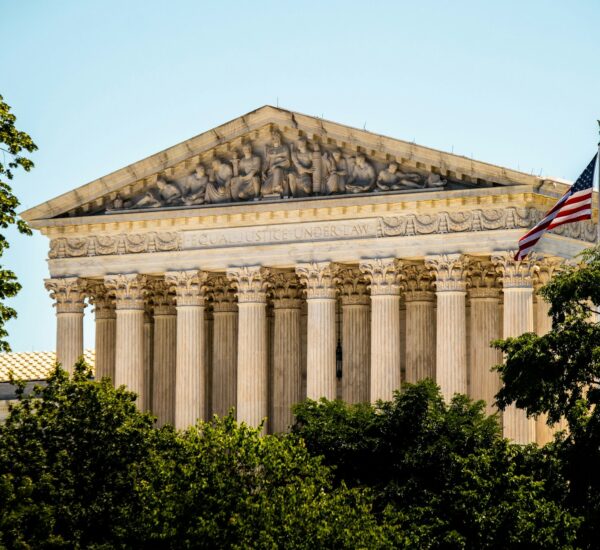
In Powell v. McCormack, the Supreme Court determined that the House of Representatives could not refuse to seat a duly elected member who met the constitutional qualifications for office.
The case involved Democratic Congressman Adam Clayton Powell Jr., who had won reelection despite facing controversy surrounding his conduct.
Congress attempted to exclude him from the House.
The Supreme Court ultimately ruled that lawmakers lacked the authority to impose additional membership requirements beyond those contained in the Constitution.
Those constitutional qualifications include minimum age, citizenship, and residency requirements.
The decision remains an important precedent governing congressional membership.
As a result, an effort to prevent an elected socialist candidate from entering Congress based primarily on political beliefs would likely face an uphill legal battle.
The House has authority to discipline its members, including expulsion with a two-thirds vote, but that power is distinct from excluding a duly elected candidate before taking office.
House Speaker Mike Johnson Addresses the Controversy
House Speaker Mike Johnson has indicated that he does not intend to disregard established law when determining whether newly elected Democrats can take their seats.
During an October appearance in Iowa, Johnson dismissed speculation that he planned to prevent legally elected Democrats from joining the House.
He emphasized that congressional leadership would follow the law.
His comments suggest that Republican leadership may not be prepared to embrace the procedural strategy, even if individual GOP lawmakers attempt to pursue it.
The outcome of the November midterm elections could also influence what happens.
If Republicans maintain control of the House, Johnson or another Republican speaker would oversee the opening proceedings of the next Congress.
If Democrats win the majority, their leadership would hold that responsibility instead.
Either way, the constitutional limitations established by the courts would remain relevant.
What This Means for Trump’s Political Agenda
The debate comes as President Trump continues to criticize socialist policies and the expanding influence of the progressive movement within the Democratic Party.
Throughout his political career, Trump has made opposition to socialism a central part of his broader message about limited government, economic opportunity, and traditional American institutions.
The growing success of democratic socialist candidates in some Democratic primaries has intensified disagreements over the future direction of the country.
Republicans considering the oath challenge argue that protecting the Constitution should remain a fundamental responsibility of every elected official.
Critics of the proposal counter that political disagreements should not be used to deny representation to voters who have lawfully elected their preferred candidates.
The controversy highlights a larger constitutional question: How far can Congress go in examining the beliefs of its incoming members without overriding the choices of American voters?
For many Americans, the answer could have implications well beyond the upcoming election.
Could Republicans Actually Block Candidates From Congress?
Whether Republicans could successfully use the proposed procedure remains uncertain.
The strategy depends on several factors, including congressional leadership, support from other lawmakers, the evidence presented, and the willingness of federal courts to reconsider existing precedent.
It is also important to distinguish between a proposal being discussed by individual Republicans and an official policy endorsed by President Trump or House leadership.
At present, there is no confirmed plan from Trump to personally direct the exclusion of newly elected congressional candidates.
Still, the interest among Republican lawmakers demonstrates how contentious the battle over the next Congress has become.
The November 3 elections will decide which candidates voters choose to send to Washington.
But for some candidates, the political fight may not necessarily end when the ballots are counted.
The Bottom Line
Republicans are exploring an unusual congressional procedure that could potentially challenge the swearing-in of newly elected socialist lawmakers.
Supporters see the idea as an opportunity to reinforce the seriousness of the constitutional oath, while opponents warn that it could interfere with the rights of voters and elected representatives.
A decades-old Supreme Court ruling presents a substantial obstacle to the strategy.
As the midterm elections approach, the controversy raises an important question about the future of Congress: Should elected lawmakers face additional scrutiny over their constitutional commitments, or should meeting the Constitution’s established qualifications settle the matter?
Whatever happens, the debate illustrates how the fight over America’s political direction is extending beyond the campaign trail and into the rules governing Congress itself.