Trump Candidate Falls Behind In Key Race
A closely watched U.S. Senate race in Minnesota is becoming a major test for Republicans as President Donald Trump’s endorsed candidate trails her Democratic opponent with Election Day rapidly approaching.
Republican Michele Tafoya, a former nationally recognized sports broadcaster, is running against Minnesota Lt. Gov. Peggy Flanagan for the Senate seat being vacated by retiring Democratic Sen. Tina Smith.
Although recent polls show Flanagan maintaining a narrow advantage, the contest remains competitive, giving Republicans hope that they could pull off an upset in a state that has favored Democrats in statewide elections for years.
The outcome could have significant implications for control of the U.S. Senate and President Trump’s ability to advance his legislative priorities during the remainder of his term.
Latest Poll Shows Democrat Holding Narrow Lead
A Rasmussen Reports survey conducted October 20-21 found Flanagan receiving 48% support among likely Minnesota voters, compared with 45% for Tafoya.
Another 7% of respondents remained undecided, leaving both campaigns with an opportunity to gain additional support before the November 3 election.
The survey included 1,182 likely voters and carried a margin of sampling error of three percentage points.
The results suggest that while Flanagan has an advantage, the race is far from settled.
The RealClearPolitics polling average also shows a competitive contest, with Flanagan receiving approximately 46.5% support compared with Tafoya’s 43.3%.
For Republicans, those numbers present both a challenge and an opportunity. Tafoya must overcome a consistent Democratic polling advantage, but the relatively small gap leaves the possibility of a late Republican victory.
Trump Endorsement Adds Attention To Race
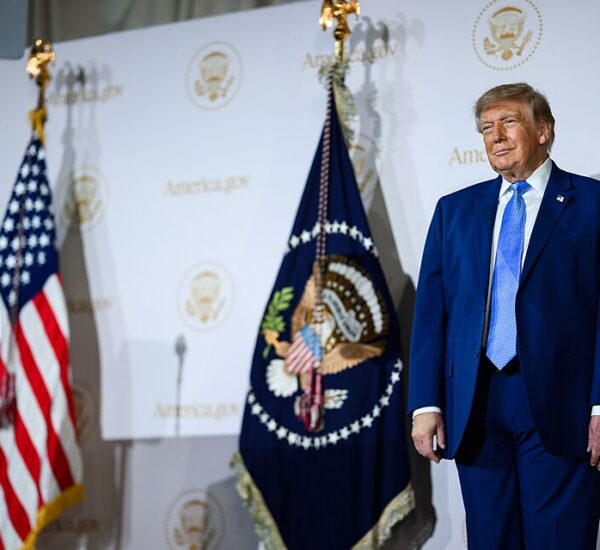
President Trump’s endorsement of Tafoya has brought additional national attention to the Minnesota contest.
However, Tafoya has emphasized that her campaign is focused on the concerns of Minnesota residents rather than national political personalities.
The Republican candidate has sought to establish herself as an independent-minded voice capable of representing voters across the political spectrum.
Her background as a prominent NFL sideline reporter gives her considerable name recognition, although she is seeking elected office for the first time.
Tafoya faces the challenge of appealing to Trump’s Republican supporters while also attracting independent voters and moderates who could determine the outcome.
Minnesota has not elected a Republican to the U.S. Senate since 2002, making the contest especially important for GOP leaders hoping to expand their electoral opportunities.
Government Accountability Becomes Major Campaign Issue
One of the most prominent issues in the race involves allegations of widespread fraud involving Minnesota government-funded social service programs.
Tafoya has criticized the administration of Democratic Gov. Tim Walz and Lt. Gov. Flanagan over its handling of fraud investigations and oversight of public funds.
The Republican has argued that elected officials must be held accountable for ensuring taxpayer money is properly managed and protected against abuse.
For voters concerned about government spending, waste, and financial accountability, the controversy has become a significant campaign issue.
Flanagan, meanwhile, has defended her record and sought to shift attention toward issues including health care, economic security, and the direction of federal policy.
The Democrat has also criticized Tafoya’s political positions and highlighted her association with President Trump.
Both candidates are attempting to convince undecided voters that they offer the stronger leadership Minnesota needs in Washington.
Older And Independent Voters Could Prove Decisive
The Rasmussen survey revealed notable differences in voter preferences across demographic groups.
Tafoya demonstrated strength among voters between the ages of 40 and 64, while Flanagan enjoyed a substantial advantage among younger voters.
The survey also found a significant gender divide.
Women supported Flanagan by a margin of 54% to 40%, while men favored Tafoya 51% to 42%.
Independent voters were more evenly divided, with 46% supporting Tafoya and 43% backing Flanagan.
Importantly, 11% of unaffiliated voters remained undecided.
Those numbers indicate that independent voters could play an important role in determining whether Republicans can overcome the Democratic lead.
With several days remaining before Election Day, both campaigns have an incentive to concentrate on turnout and persuading voters who have yet to make their final decisions.
Minnesota Race Grows More Competitive
Political analysts have also taken notice of the tightening contest.
The Cook Political Report recently shifted its assessment of Minnesota’s Senate race from “Likely Democrat” to “Lean Democrat,” reflecting a more competitive environment than previously anticipated.
The change does not mean Tafoya is favored to win, but it suggests Republicans have made enough progress to put a traditionally Democratic Senate seat into play.
Minnesota supported Democratic presidential nominee Kamala Harris in 2024, and the state has remained a difficult battleground for Republicans seeking federal office.
Still, the narrowing Senate race demonstrates that Democratic candidates cannot necessarily take victory for granted.
For Tafoya, the final stretch will require convincing voters that a change in leadership would bring greater accountability and a fresh perspective to Washington.
For Flanagan, maintaining her advantage will depend on keeping Democratic voters engaged while preventing further Republican gains among independents.
Senate Control Raises The Stakes
The importance of the Minnesota race extends beyond the state’s borders.
Republicans are fighting to protect their Senate majority, while Democrats are looking for opportunities to gain seats in the November midterm elections.
An unexpected Tafoya victory would represent a significant Republican breakthrough and could strengthen the GOP’s position in the next Congress.
A Flanagan victory, on the other hand, would allow Democrats to retain a seat they currently control.
The stakes are particularly high as lawmakers prepare to address federal spending, border security, economic policy, and other major national issues.
With Election Day scheduled for November 3, the race remains one to watch.
Flanagan enters the final days with a measurable polling advantage, but Tafoya continues to have a path to victory if Republican turnout is strong and undecided voters break in her favor.
Ultimately, Minnesota voters will decide whether to maintain Democratic representation in the Senate or deliver a political upset that could have consequences far beyond their state.