Artists need to stick to making music and stay out of politics.
Legendary British singer Phil Collins is attracting attention after criticizing President Donald Trump and revealing a provocative song idea that he said was inspired by the United States.
The 75-year-old musician discussed Trump, American culture and his songwriting process during an appearance on “Piers Morgan Uncensored.”
While Collins has enjoyed enormous popularity in the United States throughout his decades-long career, his latest remarks could prove controversial with some American fans.
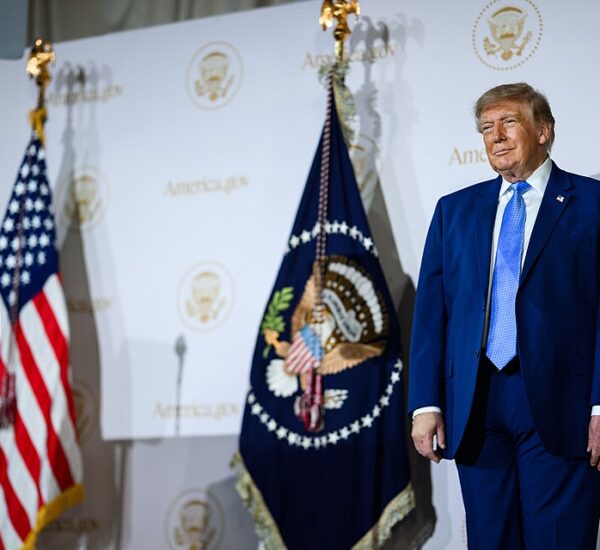
The former Genesis frontman made his feelings about Trump clear when host Piers Morgan asked him directly what he thought about the president.
“Not a lot,” Collins responded before criticizing Trump’s public demeanor.
“His whole manner is unattractive,” Collins said.
Collins suggested that previous American presidents, even those whose policies people disagreed with, traditionally projected a greater sense of dignity.
He argued that political disagreement does not necessarily prevent voters from respecting a president personally. In Trump’s case, however, Collins said he felt differently.
“When someone like Trump is as nasty as he is, you end up feeling dislike for him,” Collins said.
The criticism comes as political comments from entertainers continue to generate debate across the United States.
Phil Collins Reveals Controversial Song Idea About America
Collins’ comments about Trump were only part of the interview.
While discussing how he develops ideas for new music, the singer revealed that he has written down a provocative title for a possible future song.
According to Collins, the unfinished concept is called “Fat People With Guns.”
He said the phrase was inspired by America.
“I’ve got a song that’s waiting to be written called ‘Fat People with Guns,’ which is about America,” Collins told Morgan.
Collins explained that he sometimes writes down phrases so that he can return to them later when developing songs.
There is no indication that the song has been completed, recorded or scheduled for release.
At this point, the title appears to be little more than an idea Collins has saved for possible future use.
Still, the remark could generate stronger reactions than his criticism of Trump because it appeared to characterize the United States more broadly rather than focusing exclusively on one political leader.
Celebrity Criticism of America Can Spark Backlash
Celebrities have spoken publicly about politics for decades, and criticism of presidents from both major political parties is nothing new.
However, public-relations experts have warned that performers can encounter a different reaction when audiences believe their criticism is directed at Americans themselves.
Doug Eldridge, founder of Achilles PR, previously told Fox News Digital that many Americans pay significantly more attention to everyday concerns than political disputes outside major election periods.
According to Eldridge, the reaction can change when celebrity commentary moves beyond disagreement with a particular politician or political party and becomes criticism of America more broadly.
“Artists with any regard for commercial appeal should ‘measure twice, cut once’ when disparaging American culture, character and capability,” Eldridge said.
His comments reflect a longstanding challenge for entertainers who become involved in political debates.
Celebrities have every right to express political opinions, just like other citizens and public figures. At the same time, entertainers whose careers depend on large and politically diverse audiences can face financial and reputational consequences when their remarks offend portions of their fan base.
Americans Often Separate Politics From Patriotism
Political disagreements are common in the United States.
Americans regularly disagree over presidents, elections, taxes, immigration, foreign policy and countless other issues.
Those disagreements do not necessarily mean people have negative feelings toward the country itself.
That distinction can become important when celebrities discuss American politics.
Sarah Schmidt, president of public-relations firm Interdependence, previously said performers could face significant backlash when audiences believe they are insulting ordinary Americans rather than criticizing an individual politician or government policy.
When an artist appears to ridicule American identity or patriotism, Schmidt said, some fans may view the comments much more personally.
That is one reason celebrity political statements frequently become major stories online.
Social media has also dramatically increased the speed at which comments made during interviews, concerts and television appearances spread to millions of people.
A remark that once might have remained part of a lengthy interview can now become a viral clip within hours.
Collins Raises Questions About Trump’s Second Term
Collins also discussed Trump’s political future during the interview.
The musician suggested that he wondered whether Trump could attempt to remain president beyond his current term.
Collins acknowledged that American presidents are constitutionally limited to two elected terms but said it would not surprise him if Trump attempted to challenge that restriction.
The speculation comes despite Collins later saying that he does not consider himself particularly political.
Trump has previously addressed questions about whether he could seek another term after completing his current presidency.
When asked about the issue, Trump acknowledged that the constitutional restriction is substantial.
“I’d love to run, but the law is very strong,” Trump said.
What Does the Constitution Say About a Third Presidential Term?
The U.S. Constitution addresses presidential term limits through the 22nd Amendment.
The amendment states that no individual may be elected president more than twice.
It was ratified in 1951 following Franklin D. Roosevelt’s unprecedented four election victories.
Before Roosevelt, presidents generally followed the two-term tradition established by George Washington, although the Constitution originally contained no formal two-term limit.
The 22nd Amendment changed that by placing an explicit constitutional restriction on how many times an individual can be elected to the presidency.
Changing that restriction would require going through the constitutional amendment process rather than a president simply deciding to seek another term.
That makes Collins’ speculation about Trump remaining in office beyond the established limit a significantly more complicated issue than an ordinary campaign decision.
Phil Collins Has Deep Connections to American Music Fans
The controversy surrounding Collins’ comments is notable because the United States has played a major role in his extraordinary career.
Collins achieved international fame as a member of Genesis before becoming one of the most successful solo performers of the 1980s and 1990s.
His distinctive voice, songwriting and drumming made him a familiar figure to generations of American music fans.
Songs including “In the Air Tonight,” “Against All Odds,” “Another Day in Paradise,” “One More Night” and “Sussudio” became major hits.
Collins also gained attention for his acting, soundtrack work and highly recognizable performances.
His music continues to receive extensive radio play decades after many of his biggest songs were originally released.
That long history with American audiences could make his latest comments particularly noticeable among listeners who grew up with his music.
Politics and Entertainment Continue to Collide
The dispute highlights a much broader cultural debate surrounding entertainers and politics.
Some Americans believe actors, musicians and other celebrities should freely use their platforms to discuss political issues.
Others would prefer entertainers to keep political opinions separate from their performances.
Neither debate is likely to disappear anytime soon.
Social media has made celebrities more accessible than ever before, while political discussions increasingly spread beyond traditional news programs and into sports, entertainment, music and popular culture.
For performers, that visibility can be both an advantage and a risk.
Political commentary can strengthen an artist’s connection with fans who share the same viewpoint while potentially alienating those who do not.
Comments about the country itself can carry even greater consequences because American audiences span an enormous range of political beliefs.
Will Phil Collins Actually Release the Song?
One major question remains unanswered.
Collins has not said whether “Fat People With Guns” will ever become an actual song.
Based on his explanation, the phrase currently appears to be an idea written down for possible future inspiration rather than a finished musical project.
Songwriters frequently save titles, phrases and concepts that never become completed recordings.
Whether Collins eventually turns this particular idea into music remains to be seen.
If he does, however, the title alone could ensure substantial attention.
For now, his comments have reopened a familiar debate involving celebrity politics, freedom of expression, patriotism and the relationship between entertainers and the audiences who have supported their careers.
Collins remains one of the most recognizable musicians of his generation.
But his criticism of Trump — combined with his provocative description of America — is likely to leave some longtime fans debating whether entertainers should use their public platforms to make such statements.