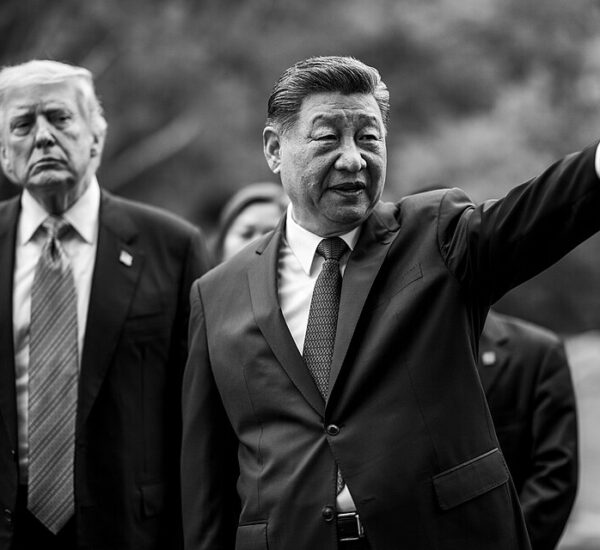
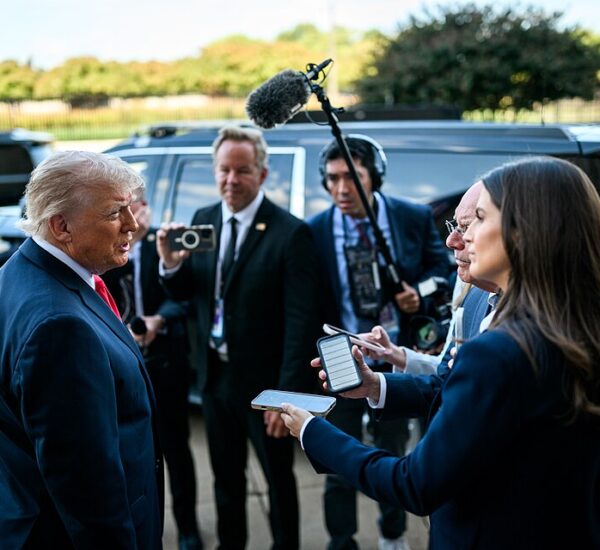
Canada is clearly worried about Trump.
Canadian Prime Minister Mark Carney has revealed that his government considered an extraordinary worst-case scenario as relations with Washington deteriorated: the possibility of U.S. military action against Canada.
Carney said Canadian officials examined what he called an “extreme tail risk” involving the United States, although he made clear that such a scenario was not considered likely or expected.
The disclosure comes as political and economic tensions between the United States and Canada have intensified under President Donald Trump, particularly over tariffs, trade policy and Canada’s increasingly close relationship with Europe.
“I think you have a responsibility in these roles to look at extreme tail risk,” Carney told The New York Times. “That’s just risk management. That’s not a base case.”
Carney said failing to consider even highly unlikely threats would be irresponsible for a national government responsible for protecting its citizens and preparing for emergencies.
His comments do not mean Canada believes a U.S. invasion is imminent. Instead, they reveal just how seriously Ottawa says it is treating the deterioration in relations between two countries that have traditionally been among the world’s closest allies.
Trump’s 51st State Comments Get Canada’s Attention
One major source of friction has been Trump’s repeated references to Canada potentially becoming the 51st U.S. state.
Those comments have generated considerable political attention in Canada and have come alongside increasingly serious disputes over tariffs and cross-border trade.
For decades, the United States and Canada have maintained one of the world’s most important economic relationships. The two countries share enormous trade flows involving automobiles, energy, agriculture, manufacturing and other major industries.
But that relationship has become increasingly strained.
The Trump administration has imposed significant trade restrictions on Canadian products while arguing that Canada has treated American companies and exporters unfairly.
Canada has responded with retaliatory measures of its own.
On September 8, the White House said Trump had taken additional action against Canadian products after Ottawa imposed new retaliatory tariffs on roughly $20 billion worth of American exports. The administration said the measures were intended to counter what it described as discriminatory Canadian trade practices.
Carney Says Canada Relied Too Heavily on America
Carney has also acknowledged that Canada allowed itself to become too dependent on the American economy.
Earlier this month, the prime minister said the previous 40 years had been defined by deeper economic integration with the United States.
According to Carney, that relationship made doing business easier but also left Canada overly reliant on one trading partner.
His government is now pursuing a strategy built around economic development and diversification.
That means expanding Canada’s trade relationships with Europe and other international partners rather than assuming its traditional economic arrangement with the United States will return to what it once was.
For American businesses and consumers, the shift could have significant implications.
The U.S. and Canadian economies are closely linked through supply chains involving vehicles, energy, metals, food, construction materials and countless other goods.
Any prolonged trade dispute could therefore affect companies and consumers on both sides of the border.
Canada Moves Closer to Europe
Canada’s efforts to reduce its dependence on the United States have increasingly focused on Europe.
European Commission President Ursula von der Leyen recently proposed creating a new form of “associate membership” for Canada within the European Union.
The proposal is unusual because the EU does not currently have such a membership category. Any formal arrangement would also face significant political and legal hurdles and would require support from EU member states.
Canada has welcomed closer cooperation with Europe but has said it is not seeking full EU membership.
The discussions are focused on areas such as trade, defense, energy, critical minerals and economic security.
The prospect has nevertheless caught Trump’s attention.
Trump Threatens Heavy Tariffs Over EU-Canada Deal
Trump publicly dismissed the proposed Canada-EU arrangement as “laughable” and warned that he could retaliate if he believed Europe was pursuing the agreement with hostile intentions.
“If it’s a good intention, that’s fine,” Trump said. “If it’s a bad intention, we’ll put very heavy tariffs on Europe.”
Trump also raised the possibility of restricting trade with Europe in certain sectors if the proposed relationship with Canada were viewed as an economic threat to the United States.
The president’s comments reflect his broader approach to international trade.
Trump has frequently argued that tariffs can protect American manufacturing, strengthen U.S. negotiating leverage and encourage companies to produce more goods inside the United States.
Supporters of that approach say tougher trade policies can help American workers and industries compete against foreign producers.
Critics argue that tariffs can also raise costs for businesses and consumers while triggering retaliation from other countries.
A Dramatic Change in U.S.-Canada Relations
The dispute represents a striking change for two countries that have historically enjoyed close economic, military and diplomatic ties.
Canada and the United States have worked together through NATO, NORAD and numerous other security arrangements while maintaining extensive cross-border commerce.
That history is what makes Carney’s admission about contingency planning so notable.
His government is not saying war with the United States is likely.
Instead, Carney says Canada’s leaders considered an extreme scenario because governments are expected to prepare for risks even when the chances of them occurring are very small.
At the same time, Canada is taking more concrete steps to reduce its economic vulnerability to decisions made in Washington.
Ottawa is seeking new markets, strengthening its relationships with European governments and attempting to diversify Canadian trade.
Those moves could prove far more consequential in the near term than Canada’s military contingency planning.
What Happens Next Between Trump and Canada?
The biggest immediate question is not whether American troops will ever cross the Canadian border.
It is whether the escalating tariff dispute will permanently change one of America’s most important trading relationships.
Canada appears determined to become less dependent on the U.S. economy, while Trump has shown a willingness to use tariffs and trade restrictions when he believes American interests are being undermined.
Europe’s effort to develop a new relationship with Canada adds another complication.
For American workers, businesses and retirees watching the economy, the outcome could matter because prolonged trade conflicts can influence manufacturing, energy markets, supply chains and consumer prices.
Carney’s military comments may attract the biggest headlines, but the expanding economic battle between Washington and Ottawa could have the more immediate impact.
And with neither side showing signs of returning to the old status quo, the relationship between the United States and Canada may be entering a very different era.