This was amazing to see.
Slovenian Prime Minister Janez Janša is speaking out about what he considers a troubling double standard at the United Nations — while revealing a new development involving President Trump and First Lady Melania’s native country.
During a visit to New York for the United Nations General Assembly, Janša criticized the international organization for what he described as an uneven approach to the world’s major conflicts.
At the same time, the Slovenian leader revealed that he personally invited President Trump to visit Slovenia.
According to Janša, Trump gave him the answer he was hoping for.
“He promised he’ll come,” Janša said.
Slovenia’s government separately confirmed Janša’s account that he invited Trump during their conversation and that the president promised to visit.
For Slovenia, the possibility of a presidential visit carries added significance because the country is the birthplace of Melania Trump.
Slovenia’s Prime Minister Challenges The United Nations
Janša’s strongest criticism centered on the United Nations and its handling of international crises.
Speaking during the General Assembly gathering in New York, he argued that world leaders and international institutions have devoted enormous attention to Gaza while other serious conflicts receive comparatively less focus.
“We have to get rid of double standards,” Janša said.
The Slovenian prime minister argued that the same diplomatic principles and international tools should be applied consistently when governments respond to wars and humanitarian emergencies.
Janša said he was particularly concerned about the continuing war between Russia and Ukraine.
For Slovenia and other European nations, the conflict is not a distant foreign-policy question. It is a major security issue taking place much closer to home.
Slovenia’s government has said that Ukraine, the Middle East, conflict prevention, human rights and reform of the United Nations are among the major subjects being discussed during the 81st session of the General Assembly.
Janša Says Ukraine Deserves More Attention
Janša argued that the situation in Gaza received an outsized amount of attention compared with Ukraine and other international crises.
His concern reflects Slovenia’s geographic position in Europe and the broader security questions raised by Russia’s invasion of Ukraine.
Janša has warned that Moscow’s actions have consequences beyond Ukraine itself and that European governments must remain focused on the security implications of the war.
His criticism was not that Gaza should be ignored.
Instead, Janša’s stated position was that the international community should apply the same standards to major conflicts regardless of where they occur.
He has also pointed to humanitarian and security problems elsewhere in the world, including violence affecting Christian communities in Nigeria.
For Janša, the larger issue is consistency.
He argues that an international organization created to help prevent conflict should not allow one crisis to consume attention at the expense of others.
Slovenia Is Rebuilding Ties With Israel
Janša’s remarks also come during a noticeable change in Slovenia’s relationship with Israel.
Under Slovenia’s previous government, the country formally recognized a Palestinian state in June 2024 and adopted several policies sharply critical of Israel.
Since returning to office, Janša has pursued closer relations with the Israeli government.
Israeli Foreign Minister Gideon Sa’ar visited Slovenia in September as the two countries worked to expand diplomatic and economic cooperation.
The governments also signed a cooperation program covering areas including education, science, culture, youth and sports.
Israel has additionally established its first resident embassy in Slovenia.
Janša has characterized those developments as a restoration of historically friendly relations rather than a dramatic change in Slovenia’s traditional foreign policy.
Janša Raises Questions About Iran And Russia
The Slovenian prime minister has also urged European leaders to examine what he sees as the broader relationship between Iran, Russia and instability in both Europe and the Middle East.
Janša has supported Iranian opposition movements for years and argues that political change in Tehran would have major implications for long-term stability in the Middle East.
He has also criticized some European governments for policies that, in his view, fail to recognize the strategic connections between Tehran and Moscow.
Those arguments remain Janša’s political assessment and are debated among governments and foreign-policy experts across Europe.
But they illustrate a larger theme behind his message at the United Nations: international standards, he argues, should be applied consistently.
Melania Trump Gives Slovenia A Special Connection To America
Perhaps no person symbolizes the relationship between Slovenia and the United States more clearly than Melania Trump.
The first lady was born in 1970 in what was then Yugoslavia and grew up in Sevnica, a small town in present-day Slovenia.
She eventually moved to the United States, became an American citizen and later became only the second foreign-born first lady in U.S. history.
Her rise to the White House has given Slovenia an extraordinary connection to American political life.
Janša said many Slovenians view Melania positively and specifically praised her initiatives involving children.
He also revealed that his wife met the first lady during the United Nations gathering in New York.
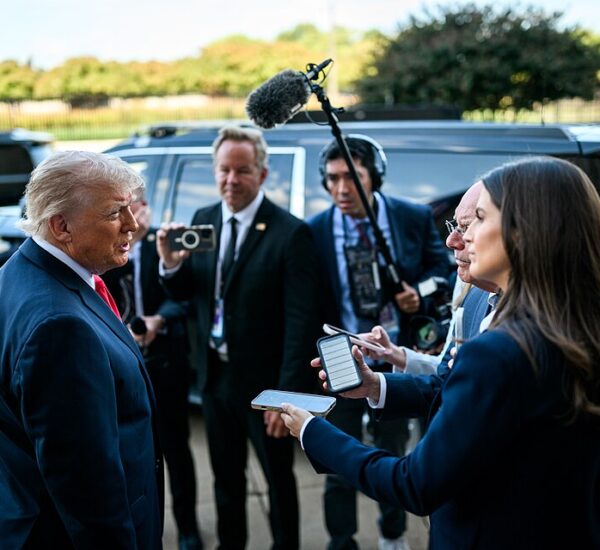
The Slovenian leader then had an opportunity to speak for a short amount of time with President Trump.
That conversation produced one of the biggest revelations of Janša’s visit.
Trump Invited To Melania’s Homeland
Janša said he used his conversation with Trump to extend an invitation to visit Slovenia.
“President Trump, I invited him to visit Slovenia,” Janša explained in remarks publicized by Slovenia’s government.
According to the prime minister, Trump accepted the invitation in principle.
“He promised he’ll come,” Janša said.
No official date for a Trump visit to Slovenia has been announced, meaning the conversation should not yet be interpreted as confirmation of a scheduled presidential trip.
Still, such a visit would carry considerable symbolic importance.
It would give President Trump an opportunity to visit the country where Melania was born and raised while also highlighting the developing relationship between Washington and Ljubljana.
Slovenia Seeks Stronger Relationship With United States
Janša used his New York appearances to emphasize the importance he places on Slovenia’s relationship with the United States.
He described America as essential to the Western alliance and recalled the importance the United States represented to Slovenia during its transition to democracy and independence.
For Slovenia, closer relations with Washington involve security, trade and diplomacy.
But the relationship also has a personal element that few other European nations can claim.
The first lady of the United States was born there.
And now Slovenia’s prime minister says President Trump has planned to visit.
Whether and when that trip takes place remains to be seen.
For the moment, however, Janša is using Slovenia’s voice on the international stage to call for what he describes as consistent standards at the United Nations while pursuing closer relationships with Washington and Israel.
And with Melania Trump serving as a unique bridge between the two countries, Slovenia’s relationship with the United States is likely to remain closely watched.