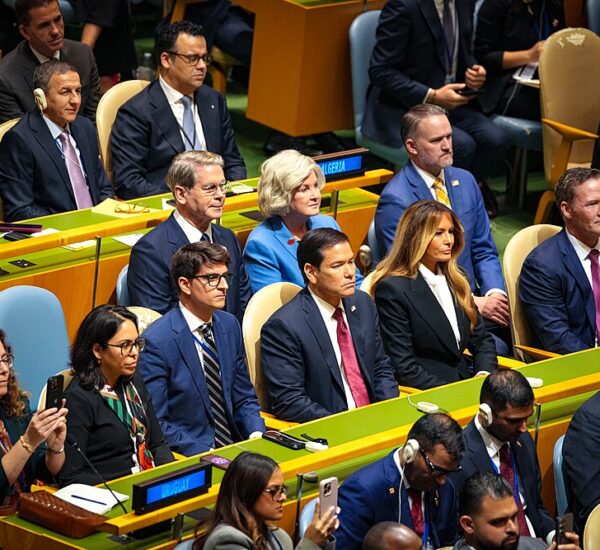
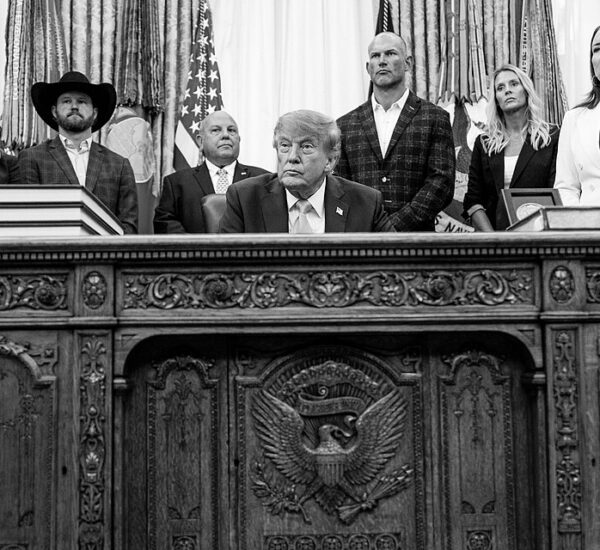
The mainstream media sure didn’t like this!
President Donald Trump’s high-profile visit to the United Nations took an unexpected turn Tuesday when he confronted CNN’s Kaitlan Collins just moments before addressing world leaders.
The tense exchange unfolded as Collins attempted to question Trump about the war with Iran.
Instead of immediately answering her question, Trump turned his attention toward CNN and questioned why the network was covering him at the United Nations.
“I’m surprised that CNN is here covering me,” Trump told Collins.
Collins responded that the United Nations had allowed CNN inside.
Trump then told her: “You should not be here covering me.”
The president also claimed CNN had said it would not cover him—something Collins later disputed on air. CNN’s transcript shows that Collins continued trying to question Trump about Iran after the exchange.
The confrontation immediately drew attention because it came during one of the most important international gatherings of the year and amid a rapidly escalating dispute between Trump and several major American news organizations.
WATCH:
BREAKING: OUTRAGED Trump arrives in New York City for the UN General Assembly and explodes at CNN: “You should not be here covering me. You said you were not going to cover me.” pic.twitter.com/saNhH5fa7G
— Simon Ateba (@simonateba) September 22, 2026
Trump Confronts CNN At The United Nations
Collins was standing with other journalists credentialed by the United Nations when Trump arrived.
Her initial question focused on CNN polling concerning the war with Iran and when the conflict might end.
Trump responded by highlighting CNN’s presence.
After Collins explained that the United Nations had granted the network access, Trump repeated that CNN should not be covering him.
The president eventually moved back to foreign policy, saying his administration was making progress and that the country was doing well.
Collins later emphasized that CNN had never announced plans to stop covering Trump.
The distinction is important because CNN’s reporters had recently lost access to the White House—not because CNN had voluntarily ended its presidential coverage.
White House Bars Three News Organizations
The confrontation followed Trump’s decision to bar CNN, MS NOW and Politico from White House grounds.
Trump announced the move on Friday, accusing the organizations of publishing what he described as “fake news,” “fiction” and “lies.”
Reporters from the three organizations were subsequently denied entry to the White House.
The administration has argued that access to the White House complex is a privilege and that the president has substantial authority over who receives that access.
The three affected news organizations strongly disagree.
CNN, MS NOW and Politico filed a federal lawsuit seeking restoration of their access, arguing that the administration violated their First Amendment and due-process rights.
The lawsuit has transformed the dispute from a political and media controversy into a significant constitutional fight over presidential press access.
Trump Defends Crackdown On Media Access
Trump showed no sign Tuesday that he was backing away from the confrontation.
When asked whether he would restore the organizations’ access if a federal judge ruled against his administration, Trump suggested he probably would comply with the decision.
But he also criticized the judge involved in the dispute and defended his broader position toward the news media.
“I think we have a right to clean out fake news,” Trump said.
The case is being handled by U.S. District Judge Timothy Kelly, whom Trump appointed to the federal bench during his first administration.
Kelly has previously dealt with disputes involving White House press credentials.
The current lawsuit could help determine how much discretion a president has when deciding which established news organizations receive regular White House access.
Other Networks Rally Behind CNN
Trump’s decision also created complications for the traditional television press pool.
CNN had been scheduled to perform television pool duties during Trump’s trip to New York.
The presidential pool allows a limited number of journalists to cover events where there is not enough room for the entire White House press corps. Their reports, photographs and video are then distributed to other news organizations.
After CNN was removed, the other major television networks declined to simply take over its assignment.
That disrupted a system that has long provided Americans with close-up coverage of presidents during official events.
Even without normal U.S. network pool coverage, Trump’s appearance before the United Nations remained widely available through the U.N.’s own broadcast operation and international news coverage.
Court Fight Could Have Broader Consequences
The legal battle now extends beyond Trump’s personal disputes with individual journalists.
CNN, MS NOW and Politico argue that the government cannot punish established news organizations because officials dislike their coverage.
The Trump administration maintains that the president possesses broad authority to control access to White House property.
At a September 23 hearing, Judge Kelly questioned aspects of the administration’s position while considering the news organizations’ request to have their credentials restored.
The dispute remains before the federal court.
Its eventual outcome could affect how future administrations handle press access when relations between presidents and news organizations deteriorate.
Trump And Kaitlan Collins Have Clashed Before
Tuesday’s exchange was also the latest chapter in Trump’s contentious relationship with Collins.
The CNN journalist has questioned Trump repeatedly during White House events and presidential appearances, sometimes producing sharp exchanges between the two.
Trump has frequently criticized CNN during his political career and has repeatedly accused the network of biased or inaccurate coverage.
CNN has defended its journalism and says it will continue covering the president.
After the U.N. encounter, Collins said the network never intended to stop reporting on Trump despite its removal from the White House press pool.
Media Battle Follows Trump Onto World Stage
Trump traveled to the United Nations primarily to address major international issues, including Iran, global security and U.S. foreign policy.
His September 22 address lasted roughly 37 minutes and included discussion of Iran, Russia and Ukraine, international institutions and other foreign-policy priorities.
But before that speech began, his brief confrontation with Collins ensured that another issue followed him into the international spotlight: his intensifying battle with the American media.
What began as a dispute over White House access has now resulted in a federal lawsuit, disruption to the traditional presidential press pool and another highly public exchange between Trump and one of CNN’s best-known journalists.
With the court case still unfolding, the confrontation over who can cover the president—and under what circumstances—is far from settled.