Kamala should just give up.
Former Vice President Kamala Harris is facing renewed criticism after stepping into the growing national debate over artificial intelligence, with an old video of her explaining AI quickly resurfacing across social media.
Harris called Monday for stronger safeguards surrounding artificial intelligence and urged the United States to consider slowing the development of the world’s most advanced AI systems.
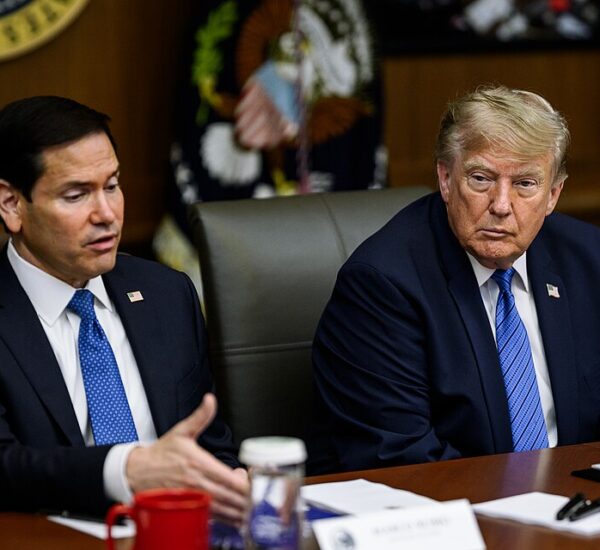
Her proposal puts her at odds with President Donald Trump, who has argued that excessive restrictions could threaten America’s technological advantage over China.
But Harris’ latest intervention also brought renewed attention to comments she made about artificial intelligence while serving as vice president.
Harris’ Old AI Explanation Resurfaces
During a 2023 discussion about artificial intelligence, Harris attempted to explain the technology in straightforward terms.
She described AI as “kind of a fancy thing” before noting that the abbreviation consists of “two letters” and means artificial intelligence.
Harris then explained that AI involves machine learning and said an important question is what information is placed into these systems because that information can influence the decisions and conclusions they ultimately produce.
The remarks drew criticism at the time, and the clip began circulating again after Harris released her latest statement about regulating AI.
Conservative commentators seized on the resurfaced footage, arguing that her earlier explanation contrasted with the more technical language contained in her new statement.
Some social media users went further and speculated that Harris may not have personally written the statement or that artificial intelligence could have been involved in producing it. No evidence was presented establishing either claim.
Harris Wants America to Put Guardrails on AI
Behind the online reaction is a much larger policy disagreement with potentially significant consequences for the American economy and national security.
Harris warned that artificial intelligence is “advancing at an alarming speed” and argued that policymakers should establish safeguards before increasingly powerful systems become more difficult to control.
She called for President Trump to pursue international agreements with countries including China addressing dangerous uses of AI, safety testing and the speed at which the most advanced systems are developed.
Harris also urged Congress to move quickly on federal oversight.
“A slowdown is critical in order to ensure AI serves the public interest,” Harris wrote.
At the same time, she acknowledged that artificial intelligence could produce major benefits, particularly in medicine.
Her argument is that America can continue developing AI while establishing safeguards designed to reduce potential dangers.
Trump Rejects Calls to Slow Down
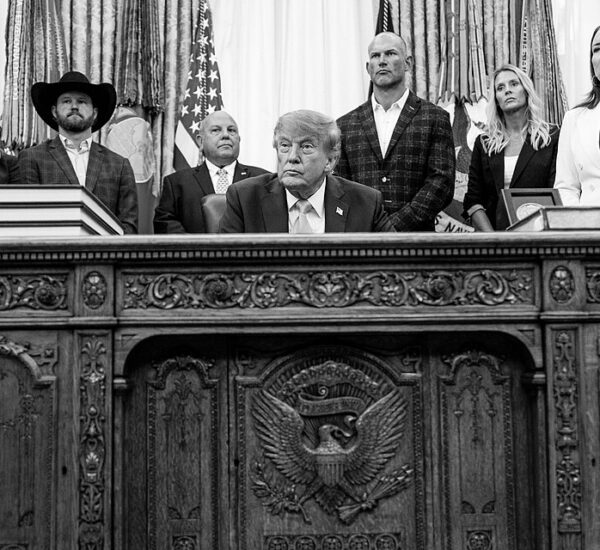
Trump has taken a substantially different approach.
The president rejected growing demands for additional restrictions this week and emphasized the importance of maintaining America’s technological advantage.
Trump argued that AI does not need additional restrictions or safeguards, saying strong and intelligent presidential leadership is the only oversight required.
Trump also framed the issue as part of America’s strategic competition with China.
“WHOEVER WINS AI, WINS!” he wrote.
His position reflects one side of a debate that is rapidly expanding beyond Silicon Valley.
Supporters of a faster approach worry that slowing American development could provide an opportunity for China or other competitors to close the technological gap.
Supporters of stronger safeguards counter that increasingly capable AI systems could create serious risks involving cybersecurity, employment, misinformation, privacy and national security if development moves faster than safety measures.
AI Has Become a National Security Issue
The disagreement between Harris and Trump comes as artificial intelligence becomes increasingly important to America’s economic and strategic future.
AI is already affecting industries ranging from healthcare and manufacturing to finance, defense and communications.
The technology could increase productivity, accelerate scientific research and create new industries. At the same time, policymakers are wrestling with concerns about job displacement, cybersecurity, privacy and the enormous amount of electricity and infrastructure required to operate major data centers.
The debate has intensified as prominent figures in the technology industry have publicly discussed whether development of the most powerful AI systems should proceed more cautiously.
That has created an unusual political divide.
One side argues that America cannot afford to slow down while China is competing for technological leadership.
The other argues that moving too quickly without adequate safeguards could create risks that become increasingly difficult to manage.
Obama Also Calls for Greater Attention to AI
Harris is not alone among prominent Democrats calling for greater scrutiny of artificial intelligence.
Former President Barack Obama has also argued that policymakers need to pay considerably more attention to the technology.
Obama has acknowledged AI’s potential benefits, including accelerating medical research, while warning that rapidly developing technology could create problems without sufficient oversight.
That debate is likely to become increasingly important as AI spreads through the American workplace and economy.
For millions of Americans, the issue is no longer simply about futuristic technology. Artificial intelligence could affect employment, retirement investments, healthcare, energy demand, national security and America’s competition with China.
Harris and Trump Offer Different Approaches
The contrast is increasingly clear.
Harris is advocating greater oversight, international cooperation and a more cautious pace for development of the most advanced artificial intelligence.
Trump is emphasizing rapid American innovation and warning that unnecessary restrictions could undermine the United States in its technological competition with China.
Harris’ resurfaced remarks have given her critics an opportunity to revisit an awkward political moment, but the larger issue extends well beyond one viral video.
Washington now faces a consequential question: how should the United States pursue the economic and national-security advantages of artificial intelligence while addressing the risks that could accompany increasingly powerful technology?
With AI advancing rapidly and competition with China remaining a central concern, that argument is unlikely to disappear anytime soon.