Trump Clears Up New Military Rumor
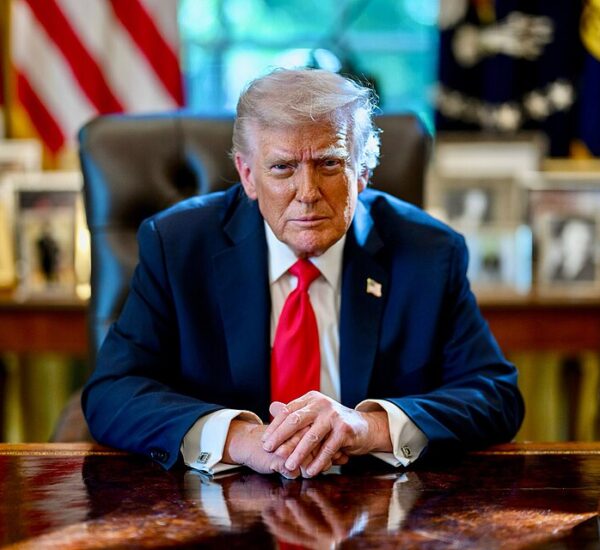
President Donald Trump announced Monday that U.S. defense manufacturers are producing advanced weapons at what he described as a historic pace, with factories operating around the clock as the United States works to strengthen its military stockpiles.
Trump said the increased production includes some of America’s most important missile and air-defense systems, including Patriot interceptors, THAAD systems and Tomahawk cruise missiles.
The announcement comes at a critical time for U.S. national security, with American forces deployed across the Middle East and growing attention focused on whether the country’s defense industry can produce sophisticated weapons fast enough to meet military demands.
Trump Says U.S. Weapons Production Has Reached Historic Levels
In a statement posted Monday on Truth Social, Trump said he had received a report showing that the United States is manufacturing more advanced weapons than at any previous point in the nation’s history.
According to Trump, newly manufactured weapons are being delivered on a daily basis to American forces operating in the Middle East and other regions.
Trump also said U.S. defense factories are operating 24 hours a day while manufacturers simultaneously expand production capacity.
The president said defense companies are constructing several large new manufacturing facilities as part of the broader expansion.
If sustained, the increased production could have significant implications for America’s military readiness and its ability to replenish weapons used during overseas operations.
Patriot, THAAD and Tomahawk Production in Focus
Trump specifically highlighted several major weapons systems receiving increased attention from American manufacturers.
Among them are Patriot air-defense systems, which are designed to intercept incoming threats, and Terminal High Altitude Area Defense systems, commonly known as THAAD.
Trump also pointed to Tomahawk cruise missiles and other missile systems.
The president said the United States already has substantial quantities of these weapons in its existing inventories while additional units continue to be manufactured.
The size and condition of America’s military stockpiles have become an increasingly important national-security issue as Washington balances current military requirements with the need to maintain sufficient weapons for future threats.
U.S. Defense Industry Expands Production
Trump’s announcement also puts a spotlight on America’s defense manufacturing base.
Producing sophisticated missile systems is considerably more complicated than simply increasing assembly-line output. Modern weapons can require specialized components, skilled workers, complex supply chains and extensive testing before they are delivered to the military.
Expanding factory capacity could therefore play an important role in determining how quickly the United States can replenish weapons that are used or transferred.
The issue also carries economic implications because increased defense production can mean additional investment in American manufacturing facilities, suppliers and skilled industrial jobs.
Pentagon Investigates Classified Munitions Information
Trump’s announcement comes shortly after reports of a Pentagon investigation involving highly sensitive information about U.S. weapons stockpiles.
CBS News reported that several dozen senior military officials underwent polygraph examinations as part of an investigation into how classified information concerning sophisticated American munitions reached the media.
The report cited U.S. officials familiar with the investigation.
According to CBS News, the officials questioned included some personnel connected to U.S. Central Command as well as other senior military officials.
Pentagon officials have not publicly disclosed all details of the investigation.
Chief Pentagon spokesman Sean Parnell said the department does not comment on internal personnel or investigative matters but emphasized that unauthorized disclosures of classified national-security information are taken seriously.
The Pentagon has also stressed that protecting classified information is important for both national security and the safety of American troops serving overseas.
Pentagon Steps Up Efforts to Stop Classified Leaks
The investigation is part of a broader effort by Secretary of War Pete Hegseth to identify unauthorized disclosures of sensitive government information.
In July, Hegseth announced that the Pentagon and Justice Department had established a joint task force aimed at investigating and potentially prosecuting individuals suspected of improperly providing sensitive government information to the press.
The Pentagon’s Office of General Counsel was assigned a central role in internal investigations, while Defense Department components were instructed to cooperate with requests for information.
The effort underscores the government’s concern that details about U.S. weapons inventories could provide valuable information to foreign governments or other adversaries.
Why America’s Weapons Stockpiles Matter
The debate surrounding weapons production goes beyond the number of missiles sitting in military warehouses.
The United States must maintain enough equipment to support troops currently deployed overseas while preserving sufficient reserves for unexpected national-security emergencies.
That challenge has increased attention on America’s defense industrial base and how quickly manufacturers can replace sophisticated weapons.
Patriot interceptors, THAAD systems and Tomahawk missiles are particularly significant because they perform specialized military missions and can require substantial time and resources to manufacture.
For policymakers, the central question is whether higher production rates can keep pace with America’s military commitments without weakening preparedness elsewhere.
What This Could Mean for American Taxpayers and National Security
For Americans watching developments overseas, Trump’s announcement raises important questions about defense spending, military readiness and domestic manufacturing.
Expanded weapons production could strengthen U.S. military inventories while generating additional demand throughout the American defense supply chain.
At the same time, taxpayers and lawmakers are likely to continue scrutinizing how defense dollars are spent and whether increased production produces measurable improvements in military readiness.
Trump is presenting the manufacturing expansion as evidence that the United States is rebuilding its weapons supplies while maintaining support for American forces overseas.
As defense factories increase production, the coming months could provide a clearer picture of how quickly those efforts translate into larger U.S. military inventories.
For Americans concerned about national security, military preparedness and the country’s ability to respond to future threats, the pace of U.S. weapons production is likely to remain an important issue.