Congress To Consider Trump’s Dividend
House Speaker Mike Johnson says Congress would work with President Donald Trump on his proposal to provide $5,000 payments to adult U.S. citizens if Republicans retain control of the House and Senate in the November midterm elections.
But Americans hoping to receive the money shouldn’t count on a check just yet.
Johnson stopped short of guaranteeing that Congress would approve the proposal, making clear that lawmakers would first need to work through the details and find enough support to move legislation forward.
The distinction is important: the $5,000 payments are currently a proposal, not an approved federal benefit.
Johnson Says Congress Will Consider Trump’s $5,000 Plan
During an appearance Sunday on NBC News’ “Meet the Press,” Johnson was asked whether he would commit Congress to carrying out Trump’s proposal.
The House speaker said he would work with the president and attempt to build a consensus among lawmakers.
Johnson explained that he generally avoids making major commitments before legislation has been negotiated, particularly when congressional margins are narrow.
That could present a significant challenge for a proposal carrying a potential price tag of more than $1 trillion.
What Is Trump’s $5,000 “Dividend”?
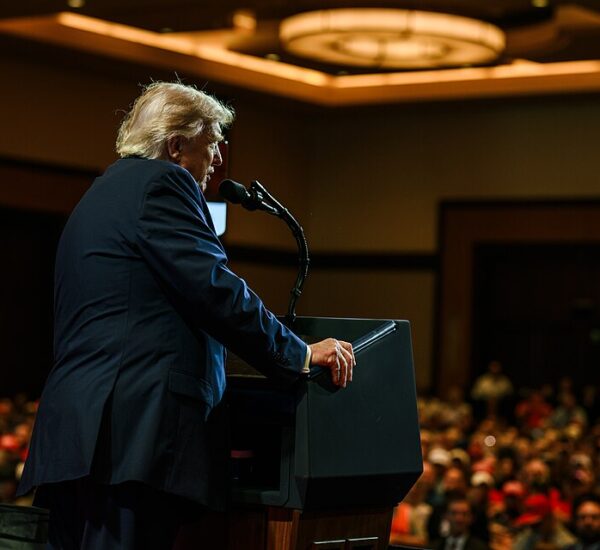
Trump announced the idea during the Republican midterm convention in Dallas, telling supporters that adult American citizens would receive $5,000 if Republicans maintain control of Congress following the November elections.
Trump has referred to the proposed payment as a “Trump dividend.”
Under the proposal as publicly described, eligible adults would receive a one-time $5,000 payment.
However, several important details remain unresolved.
The administration has not released comprehensive legislation specifying exactly who would qualify, when payments would be distributed or precisely how the federal government would finance them.
Those details could ultimately determine whether the proposal has enough support to pass Congress.
How Much Would $5,000 Checks Cost?
The potential cost is substantial.
If approximately 245 million adult U.S. citizens each received $5,000, the total would reach roughly $1.23 trillion.
That calculation alone is likely to make federal spending and the national debt central issues in any congressional debate over the proposal.
Lawmakers would have to determine where the money would come from and what effect the payments could have on the federal budget.
Possible funding questions include whether the government would rely on existing federal revenue, offsetting spending reductions, additional borrowing or another financing mechanism.
Until a detailed proposal is released, those questions remain unanswered.
Would Congress Have to Approve the Payments?
Another major question is whether Trump could distribute the proposed payments without congressional authorization.
Trump previously indicated that he did not believe congressional approval would necessarily be required.
Johnson has taken a different view, saying Congress would need to be involved.
The Constitution gives Congress authority over federal appropriations, making the legislative process a major consideration for any plan involving such a large amount of federal money.
There is also recent precedent.
The direct stimulus payments Americans received during the COVID-19 pandemic were authorized through legislation passed by Congress and signed into law.
For that reason, Americans should distinguish between Trump’s current proposal and the previous stimulus payments that had already received congressional authorization.
Senate Republicans Haven’t Guaranteed Approval
The proposal could also encounter questions in the Senate.
Senate Majority Leader John Thune has stopped short of committing Senate Republicans to approving the payments.
His response underscores the political and fiscal hurdles that would remain even if Republicans retain control of Congress.
A proposal potentially exceeding $1 trillion would need sufficient congressional support, and lawmakers concerned about deficits and federal spending could seek changes to the plan.
As a result, Republican control of Congress by itself would not automatically mean $5,000 payments would be distributed.
Legislation and funding would still have to be addressed.
Why the Proposal Could Get Attention From American Households
The proposal comes as household finances remain a major concern for many Americans.
For retirees, working families and people living on fixed incomes, expenses such as groceries, utilities, insurance and gasoline can have a significant effect on monthly budgets.
A $5,000 payment would therefore represent a meaningful amount of money for many households.
But its potential economic effects would also likely become part of the debate.
Lawmakers could examine the proposal’s impact on federal borrowing, government spending and the broader economy before deciding whether to support it.
Johnson Addresses Gas Prices and Iran
Johnson also discussed the continuing conflict involving the United States and Iran during his Sunday interview.
He rejected the suggestion that Congress had simply given the White House unlimited authority to continue military operations, arguing that the administration is now focused on bringing the situation to a resolution.
Energy prices remain an important part of that discussion.
Disruptions affecting shipping through the Strait of Hormuz have contributed to concerns about global energy supplies, putting additional attention on gasoline prices at home.
Johnson acknowledged the importance of lowering fuel costs for Americans and said the president continues to focus on the issue.
For households already dealing with everyday expenses, changes at the gas pump can quickly affect monthly budgets.
When Could the Iran Conflict End?
Trump has said he expects the conflict to conclude shortly after the November election.
Johnson said he hopes the situation can be resolved even sooner while acknowledging that the conflict remains complicated.
Asked about the longer-term timeline, Johnson expressed confidence that the administration expects the conflict to end well before the 2028 presidential election.
He also said he would prefer to see it resolved before the midterm elections, while recognizing the limited amount of time remaining.
What Happens Next With Trump’s $5,000 Proposal?
For Americans wondering whether they should expect a $5,000 check, the most important fact is simple:
No $5,000 federal payment has been approved at this point.
Trump has proposed the payments, and Johnson says Congress will work with the president on the idea. But lawmakers have not passed legislation authorizing the money.
Several major questions still have to be answered:
- Who exactly would qualify for the $5,000 payment?
- How would the federal government pay for it?
- Would there be income limits or other eligibility requirements?
- Would Congress approve more than $1 trillion in additional spending?
- When would payments actually be distributed?
- Would the final amount remain $5,000?
Until those details are resolved and any required legislation becomes law, Americans should regard the “Trump dividend” as a political and policy proposal rather than guaranteed money.
Johnson’s comments nevertheless show that the proposal could become a significant issue in Washington following the midterm elections.
For millions of Americans watching the cost of groceries, gasoline, utilities and other everyday necessities, the debate will likely come down to two fundamental questions: Will the $5,000 payments actually happen, and how would the federal government pay for them?