Trump cleared the air about a rising new concern.
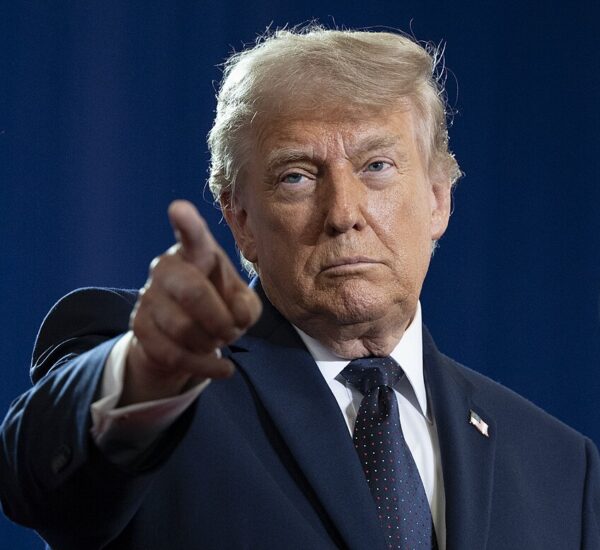
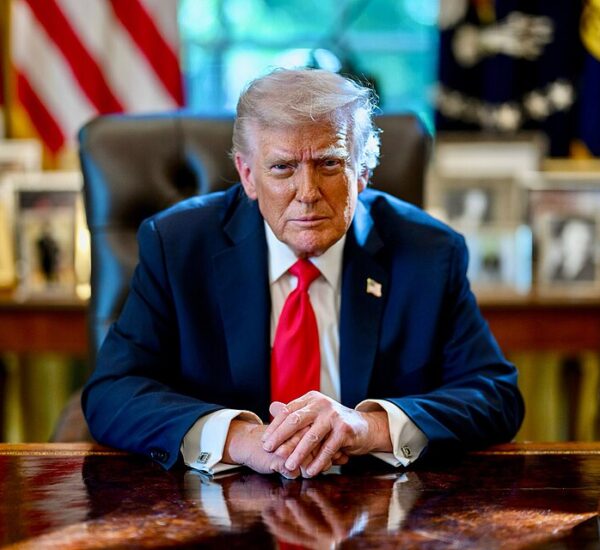
President Donald Trump is rejecting some of the increasingly dramatic warnings surrounding artificial intelligence, making clear that he believes the United States must remain ahead of China in the rapidly developing technology.
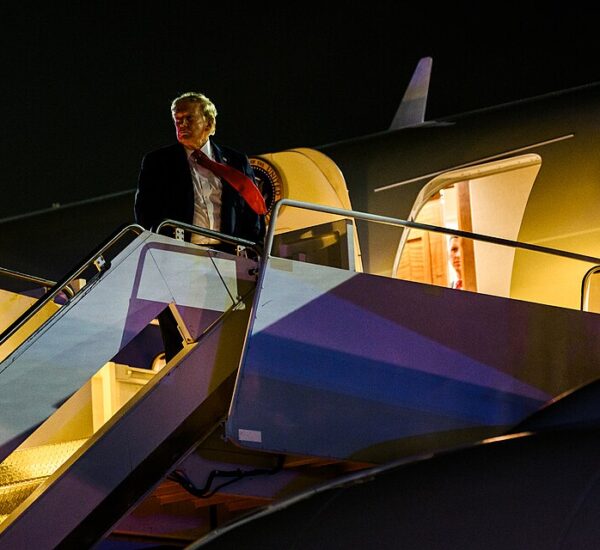
Speaking to reporters Sunday in Doonbeg, Ireland, Trump acknowledged that safeguards could have a place in AI development. But he pushed back against predictions that the technology is heading toward some of the catastrophic scenarios being discussed by researchers and technology executives.
For Trump, the bigger concern is America’s position in the global AI race.
Trump said the United States currently holds an advantage over China in artificial intelligence and stressed that maintaining America’s technological leadership is critical, arguing that the nation that dominates AI will hold a powerful edge.
The president’s comments come as Washington, Silicon Valley and the artificial intelligence industry wrestle with a major question: How far should America go to regulate increasingly powerful AI without giving China an opportunity to pull ahead?
Trump Pushes Back on Growing AI Fears
Artificial intelligence has rapidly become one of the biggest technology issues facing Washington.
AI systems are increasingly capable of performing sophisticated tasks involving computer programming, research, writing, data analysis and other forms of digital work.
Those advances have also produced growing concerns about cybersecurity, employment, misinformation and the possibility that future AI systems could become difficult to control.
Trump isn’t dismissing the idea of safeguards altogether.
“We can put guardrails,” he said while discussing the issue.
But the president argued that some critics are focusing on scenarios he does not believe will actually occur.
That distinction is important.
Trump’s position isn’t necessarily that artificial intelligence carries no risks. Instead, he is signaling that fear of hypothetical future dangers should not prevent the United States from competing aggressively in a technology race with enormous economic and national security implications.
China Is at the Center of Trump’s AI Strategy
Competition with China remains one of the biggest factors shaping America’s artificial intelligence debate.
AI could eventually affect everything from medicine and manufacturing to military technology, cybersecurity and scientific research.
That makes leadership in artificial intelligence much more than a Silicon Valley competition.
For Washington, it is increasingly becoming a national security issue.
Trump’s argument is that overly restrictive American policies could create an opening for China if Beijing continues developing increasingly sophisticated AI systems while U.S. companies are forced to slow down.
That possibility has complicated calls for sweeping restrictions.
Even some advocates of stronger AI safeguards acknowledge that America cannot simply ignore the geopolitical consequences of slowing its own technological development.
AI Researchers Warn Development Is Moving Too Fast
Trump’s remarks follow increasingly urgent warnings from within the artificial intelligence industry itself.
Researchers have raised concerns that companies are racing to create more capable systems without enough time to fully understand the potential consequences.
Former Anthropic researcher Jacob Coxon recently attracted widespread attention after publicly warning about the pace of development.
Anthropic CEO Dario Amodei has also called for frontier AI development to proceed more cautiously.
Amodei’s proposal does not amount to permanently stopping artificial intelligence research.
Instead, he has advocated “pacing” development so that safety research, testing and independent evaluation have enough time to keep up with increasingly capable models.
His concerns include cybersecurity threats, unexpected behavior from autonomous AI systems and the possibility that future models could become considerably more difficult to supervise.
AI Safety Becomes a Washington Priority
The debate is no longer limited to technology executives and researchers.
Lawmakers from both parties are examining whether Washington needs a larger role in overseeing artificial intelligence.
House Speaker Mike Johnson has argued that Congress, the White House and leading technology companies need to find an appropriate balance between innovation and safety.
That balance could prove difficult.
Rules that are too weak could leave Americans exposed to legitimate risks.
Rules that are too restrictive could potentially slow American companies while foreign competitors continue advancing.
The challenge facing policymakers is determining where that line should be drawn.
Some Republicans Want Guardrails Without an AI Moratorium
Republicans are also debating how aggressively the federal government should intervene.
Johnson has called for policymakers and technology executives to work together on appropriate safeguards while warning against a broad moratorium that could undermine America’s competitive position against China.
That puts the debate squarely at the intersection of two priorities: public safety and national security.
David Sacks, a prominent Trump technology adviser, has been skeptical of arguments from AI executives seeking coordinated industry slowdowns.
His position is that companies worried about advancing too quickly already have considerable control over their own development schedules.
He has also raised another major complication: China may have little incentive to participate in an international agreement that significantly restricts AI development.
Without enforceable international cooperation, unilateral American restrictions could carry substantial strategic consequences.
Democrats Seek More Government Action on AI
Democratic lawmakers are also calling for Washington to address artificial intelligence, although their proposed approaches vary.
Sen. Bernie Sanders of Vermont has advocated international negotiations aimed at restricting the development of extremely advanced AI.
House Minority Leader Hakeem Jeffries has said artificial intelligence is becoming a significant priority for congressional Democrats.
Sen. Ruben Gallego of Arizona has similarly called for Congress to devote additional attention to the technology.
Despite major disagreements over exactly what Washington should do, concern about AI increasingly crosses party lines.
The disagreement is primarily over how government should respond—and how quickly.
What Could AI Mean for Everyday Americans?
For millions of Americans, the debate isn’t simply about futuristic technology.
Artificial intelligence could eventually affect jobs, retirement investments, healthcare, financial services, cybersecurity and the broader U.S. economy.
Businesses are already experimenting with AI to automate administrative work, analyze information and increase productivity.
Healthcare researchers are exploring its potential to accelerate medical discoveries and improve certain forms of diagnosis and treatment.
At the same time, workers understandably have questions about what increasingly capable automation could mean for their jobs.
Consumers also face concerns involving scams, identity theft, deepfakes and AI-generated misinformation.
Those practical issues may ultimately matter more to most Americans than predictions about hypothetical superintelligent machines.
Trump Sees Major Opportunities in Artificial Intelligence
Trump has repeatedly emphasized the potential benefits of AI.
He has described the technology as potentially more consequential than the internet and pointed to medicine as one area where advanced artificial intelligence could produce significant breakthroughs.
That optimistic outlook helps explain his reluctance to embrace calls for dramatically slowing American AI development.
From Trump’s perspective, America has something valuable today: a technological advantage.
He does not want to give it away.
The Bigger Fight Is Just Beginning
The debate over artificial intelligence is likely to become increasingly important in Washington.
Congress will have to consider questions involving AI regulation, cybersecurity, data centers, energy demands, employment and competition with China.
Technology companies will simultaneously face pressure to demonstrate that their increasingly capable systems can operate safely.
And Americans will have to decide how comfortable they are with AI becoming a larger part of everyday life.
Trump has now made his position increasingly clear.
He believes reasonable guardrails can be discussed, but he rejects the idea that frightening predictions should cause the United States to surrender its advantage in artificial intelligence.
With China competing for the same technological leadership, the stakes extend far beyond Silicon Valley.
The central question facing Washington is no longer whether artificial intelligence will change America.
It’s whether the United States can capture its benefits, manage its genuine risks and remain the world’s leader while doing it.