Democrats Betting Big On Progressive
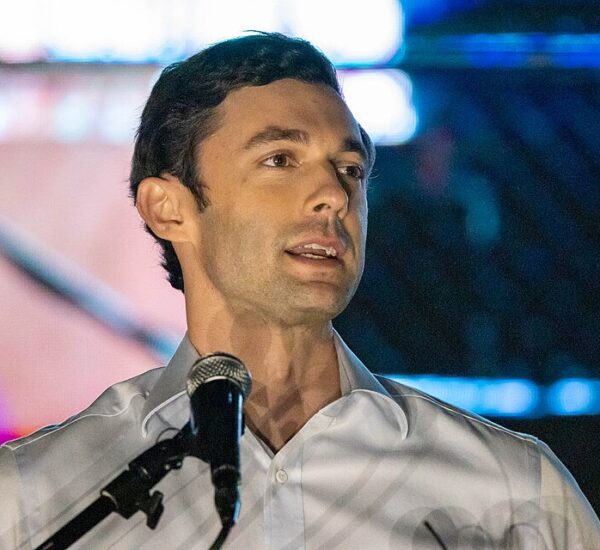
Democrats are trying a different strategy in one of the nation’s most closely watched congressional races, backing progressive Randy Villegas in an effort to defeat Republican Rep. David Valadao in California’s politically competitive San Joaquin Valley.
The contest for California’s 22nd Congressional District could become an important test for both parties as they battle for control of the House.
Villegas, a political science professor at College of the Sequoias who also helps with his family’s auto repair business, won the Democratic primary over state Assembly Member Jasmeet Bains.
The result was notable because Bains had been endorsed by the Democratic Congressional Campaign Committee, the national organization dedicated to electing Democrats to the House.
According to The Washington Post, the DCCC intervened in 18 Democratic primaries during the current election cycle. Villegas was one of only three candidates who defeated a DCCC-backed opponent.
The Democratic organization has since rallied behind Villegas, adding him to its Red to Blue program for competitive congressional races.
Democrats Try A Different Approach Against Valadao
Villegas is offering voters a noticeably different political profile from some of the Democrats who previously challenged Valadao.
Rather than distancing himself from progressive positions, Villegas has supported policies including Medicare for All and universal child care.
At the same time, he is attempting to present the campaign primarily as a fight over economic conditions and the interests of working families rather than traditional partisan divisions.
Villegas told The Washington Post that he does not view the election primarily as a battle between the political left and right. Instead, he characterized it as a contest between ordinary residents and established interests.
That argument could be tested in a district where party registration has not always translated directly into election results.
A Politically Unusual California District
California’s 22nd District covers part of the San Joaquin Valley, one of America’s most important agricultural regions.
Democrats have a sizable voter-registration advantage in the district, and a majority of residents are Latino. Yet Valadao has repeatedly found enough support from Republicans and crossover voters to remain in Congress.
Valadao was first elected in 2012 before losing his seat to Democrat TJ Cox during the 2018 midterm elections.
Two years later, Valadao won it back.
He secured another term in 2024 by approximately seven percentage points during an election in which Donald Trump also carried the district.
California’s congressional boundaries were subsequently changed under a map approved by voters in 2025, altering the political landscape ahead of the 2026 election.
Health Care Becomes A Major Campaign Issue
One of the biggest battles in the race involves Medicaid and federal food assistance.
Democrats are targeting Valadao over his 2025 vote for the One Big Beautiful Bill Act, which made substantial changes to federal spending on Medicaid and food-assistance programs.
The issue could have particular significance in this Central Valley district because a large percentage of its residents rely on government health coverage.
According to figures reported by The Washington Post, approximately 64% of Valadao’s constituents are enrolled in Medicaid, while roughly 26% receive federal food assistance.
That has given Democrats an opening to make health care and household expenses major themes of their campaign against the Republican incumbent.
Republicans, however, are pursuing a very different line of attack.
Republicans Focus On Villegas’ Progressive Positions
Republican campaign organizations are drawing attention to Villegas’ positions on health care, child care and foreign policy.
In addition to supporting Medicare for All and universal child care, Villegas has strongly criticized Israel over its military campaign in Gaza.
The National Republican Congressional Committee is attempting to use those positions to portray Villegas as politically outside the district’s mainstream.
NRCC spokesman Christian Martinez has contrasted the candidates by arguing that Valadao is working to protect vulnerable residents while accusing Villegas of defending a more radical political agenda.
Villegas has pushed back against that strategy, arguing that voters are less interested in ideological labels than in economic issues affecting their families.
The competing messages establish a clear strategic divide in the campaign: Republicans want the election focused on Villegas’ progressive record, while Democrats want voters focused heavily on Valadao’s record in Congress.
Outside Groups Prepare To Spend Millions
The importance of the district is also evident from the extraordinary amount of outside money flowing into the race.
The Republican-aligned Congressional Leadership Fund promoted Villegas during the Democratic primary, a move that suggested Republicans viewed him as a preferable general-election opponent.
Now that the primary is over, the organization is preparing to spend nearly $8 million on advertising supporting Valadao, according to The Washington Post.
Democrats are answering with a major investment of their own.
House Majority PAC, a leading Democratic super PAC focused on House races, is planning more than $8 million in advertising in the district, according to AdImpact figures reported by the Post.
Its television advertising campaign is scheduled to begin Tuesday.
With both sides committing millions of dollars, voters in the Central Valley can expect to see an increasingly intense advertising battle as Election Day approaches.
California Race Could Test Democratic Strategy
Beyond determining who represents California’s 22nd District, the Valadao-Villegas contest offers both parties an opportunity to test competing theories about what motivates voters in politically divided districts.
Democrats have previously challenged Valadao with candidates positioned closer to the political center. This time, their nominee is openly embracing several progressive economic policies while attempting to build his campaign around working-class concerns.
Republicans are betting that highlighting those progressive positions will persuade voters to stick with Valadao, who has repeatedly survived difficult elections despite the district’s Democratic registration advantage.
National Democrats, meanwhile, have fully embraced Villegas following his primary victory. The DCCC has officially placed him in its Red to Blue program, which provides organizational and fundraising assistance to candidates competing in targeted Republican-held districts.
The enormous outside spending now planned for the district underscores its national importance.
For Central Valley voters, however, the campaign is likely to revolve around more immediate concerns: health care, food assistance, agriculture, government spending and the cost of supporting a family.
Those issues — along with the sharply different records and political philosophies of the two candidates — are set to make California’s 22nd District one of the most closely watched House contests of the 2026 election cycle.