Trump Running Out of Time
President Donald Trump’s effort to impose new federal requirements on mail ballots has suffered another legal setback just as states begin sending absentee ballots for the November midterm elections.
A federal judge has temporarily blocked mandatory enforcement of key portions of the U.S. Postal Service’s new ballot-mail regulations, setting up another high-stakes legal battle over election security, federal authority and voting by mail.
The timing could prove especially important.
With Election Day set for Nov. 3, election officials in several states say there is little time remaining to make the extensive changes required under the new Postal Service system.
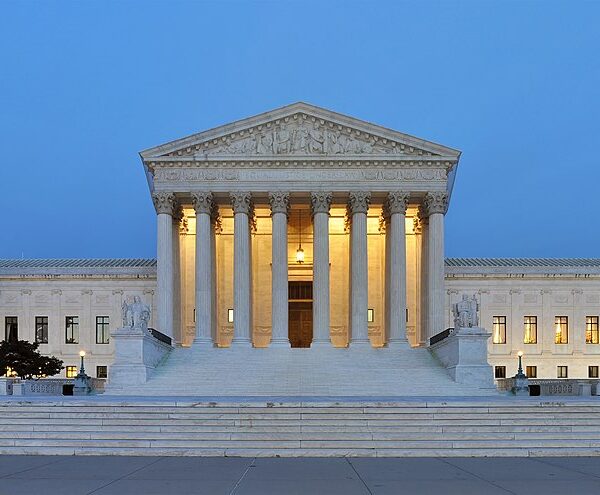
Meanwhile, the Trump administration is asking the Supreme Court to intervene.
Federal Judge Blocks Trump Administration’s Mail-Ballot Changes
U.S. District Judge Indira Talwani issued a preliminary injunction Friday preventing the Postal Service from enforcing mandatory portions of its new “Ballot Mail for Federal Elections” regulations for the November midterms.
Talwani, who was appointed to the federal bench by President Barack Obama, concluded that the challengers had shown sufficient grounds for the restrictions to remain blocked while the case proceeds.
The dispute centers on whether the Postal Service can impose new conditions on states and local governments that use the federal mail system to distribute absentee and mail-in ballots.
The Trump administration says it can.
States challenging the policy argue the federal government is going beyond its legal authority and interfering with election procedures traditionally administered by state and local governments.
The preliminary injunction is not a final ruling on the legality of the policy. Instead, it prevents mandatory enforcement of the challenged provisions while the legal dispute continues.
What Trump’s New Mail-Ballot Rules Would Require
The Postal Service issued its final rule in August as part of the administration’s broader effort to establish additional safeguards surrounding mail voting in federal elections.
The regulations establish several new requirements for jurisdictions using the Postal Service to distribute federal ballots.
Election officials would have to use approved ballot-mail designs, incorporate unique Intelligent Mail barcodes and submit ballot envelopes for Postal Service review.
Officials would also have to register for a new Federal Ballot Mail Portal.
The system requires participating jurisdictions to provide information associated with voters receiving mail ballots, including names, addresses and the unique barcodes connected to outgoing and return ballot envelopes.
Under the final rule, outbound federal ballot mail that fails the Postal Service’s verification process generally would not be accepted into the mail system until the problem was corrected.
That provision has become one of the most consequential parts of the dispute.
Trump Administration Says Changes Protect Election Integrity
The Trump administration and Postal Service argue that the new requirements are lawful safeguards governing the use of the federal mail system.
The Postal Service says the regulations are designed to increase visibility into ballot mail, improve operational efficiency and make it easier to identify potential problems that could warrant investigation.
The administration’s position is that states would remain responsible for deciding who is eligible to vote.
The Postal Service would not determine whether an individual can vote, maintain state voter rolls, decide whether a completed ballot should be counted or examine how an individual voted.
Instead, the government argues, the new regulations establish standards that states must follow when choosing to use the Postal Service to transmit federal ballots.
Critics see the issue differently.
They argue that conditioning access to the mail system on compliance with the new requirements effectively gives the federal government influence over state election administration.
That disagreement is now at the heart of the court battle.
Judge Raises Constitutional Concerns
Talwani’s decision raised questions about whether the Postal Service has sufficient authority from Congress to impose the disputed requirements.
The Constitution gives states an important role in administering elections while also granting Congress authority over federal election regulations.
The legal question is whether the executive branch and Postal Service can establish these particular requirements without additional congressional authorization.
The Trump administration argues that existing federal postal laws provide sufficient authority because the regulations govern the handling and preparation of mail.
The challengers contend that the policy crosses the line between regulating the postal system and regulating elections.
Ultimately, higher courts could have the final word.
Election Deadline Creates Another Problem
The constitutional dispute is only part of the controversy.
Timing has become another major issue.
The Postal Service’s final rule was published in the Federal Register on Aug. 26, leaving election administrators with a relatively short period to adapt before the Nov. 3 midterms.
Election offices would potentially need to make changes to ballot envelopes, implement unique barcode systems, complete Postal Service design reviews, establish portal accounts and upload required voter information.
Those changes would have to occur while election officials are already carrying out their normal preparations for November.
Some states have reached the point when absentee ballots must begin moving through the mail.
That means every additional day the legal battle continues makes a nationwide change more complicated.
North Carolina Begins Mailing Ballots
North Carolina is among the first major states confronting the issue.
County election boards began sending absentee ballots under the state’s existing procedures while the federal litigation was still unfolding.
State deadlines leave election officials little room to wait for the courts before beginning the process.
That creates an unusual situation.
Ballots can already be entering the postal system under existing procedures while the Supreme Court considers whether substantially different federal requirements should be permitted to take effect.
Wisconsin Republican Warns About Impact on Rural Voters
Concerns over the regulations are not entirely divided along partisan lines.
Don Millis, the Republican chairman of the Wisconsin Elections Commission, has warned that local clerks could have significant difficulty implementing the requirements on short notice.
Millis also raised an issue that could concern Republican campaigns.
Rural communities that lean Republican often operate with smaller election staffs and fewer resources than major cities.
If mail voting became more difficult, those jurisdictions could have less ability to expand in-person voting alternatives than larger metropolitan governments.
Millis has therefore argued that the changes could potentially hurt Republican turnout as well as Democratic turnout.
Wisconsin election officials, meanwhile, have continued preparing to mail absentee ballots under existing procedures.
Missouri Says Compliance Could Be Manageable
Not every Republican election official believes the requirements would be impossible to implement.
Missouri Secretary of State Denny Hoskins has indicated that his office was working through implementation details but believed compliance for the midterms could be relatively straightforward.
That disagreement illustrates an important aspect of the controversy.
America does not have one centralized election system.
States establish different rules and procedures, and elections are frequently administered by counties, municipalities and other local jurisdictions.
A federal requirement that one state considers manageable could create substantially greater logistical difficulties somewhere else.
Supreme Court Becomes Central to the Fight
The legal battle has already reached the Supreme Court and is now returning to the justices.
An earlier dispute over Trump’s executive order resulted in Supreme Court intervention on procedural grounds without resolving the ultimate constitutional questions surrounding the policy.
The Postal Service subsequently finalized its regulations.
Talwani later temporarily blocked important portions of those rules and then issued the broader preliminary injunction covering the November election.
The administration is again seeking emergency Supreme Court intervention.
That means the country’s highest court could determine whether the new requirements remain blocked while the underlying lawsuit continues.
Why Mail Voting Matters in the 2026 Midterms
Mail and absentee voting have become an increasingly important part of American elections.
Procedures vary widely by state.
Some states make mail voting broadly available, while others require voters to meet particular requirements before obtaining an absentee ballot.
That decentralized system is one reason the current legal dispute carries implications beyond the immediate fight over Postal Service procedures.
At issue is not simply whether barcodes should appear on envelopes.
The broader question involves the boundary between federal authority over the postal system and state authority over election administration.
Supporters of stronger ballot-mail safeguards argue that standardized procedures can improve tracking, transparency and confidence in the process.
Opponents argue that new federal requirements imposed immediately before an election could create confusion and interfere with eligible voters’ ability to receive ballots.
Those competing concerns will now be considered by the courts.
What Happens to Mail Ballots Now?
For the moment, the portions of the Postal Service rule covered by the preliminary injunction cannot be enforced as mandatory requirements for the Nov. 3 election.
Election officials can therefore continue operating without being compelled to satisfy those particular requirements while the injunction remains in effect.
That situation could change quickly if the Supreme Court intervenes.
The administration argues that the Postal Service has legal authority to establish standards governing mail traveling through its system and that the requirements provide additional safeguards for federal ballot mail.
The challengers argue that the government is attempting to exercise election-related powers that Congress has not delegated to the Postal Service.
What Voters Should Know
The court battle does not eliminate mail or absentee voting.
Voter eligibility and absentee-ballot procedures continue to depend primarily on the laws of each state.
Voters planning to cast ballots by mail should therefore pay attention to official instructions and deadlines issued by their state and local election authorities.
The legal dispute concerns the federal requirements governing how certain ballot mail would be prepared and accepted by the Postal Service—not a nationwide elimination of absentee voting.
A Major Election Case With the Clock Running
The most important factor may now be time.
Election Day is approaching, ballots are beginning to move and thousands of election administrators around the country need certainty about which procedures they are expected to follow.
The Trump administration says its regulations would strengthen safeguards surrounding federal ballot mail.
The states and organizations challenging the rules say implementing them so close to Election Day could disrupt established election procedures and exceeds the Postal Service’s authority.
With the preliminary injunction now in place and the administration seeking Supreme Court intervention, the dispute has entered a critical phase.
Whatever happens next could help define the federal government’s authority over ballot mail—not only during the 2026 midterms, but potentially in future federal elections as well.